
Trump's Tariffs Spark Crypto Market Bloodbath
President Trump's announcement of new tariffs on imports from Canada, Mexico, and China has sent shockwaves through the global market, with the crypto market being no exception. The tariffs, which are set to take effect on Tuesday, have sparked fears of mounting inflationary pressures and triggered a wave of selling in the crypto market.
The crypto market has witnessed a significant decline in the past 24 hours, with over $2 billion in leverage liquidations. Bitcoin, the world's largest cryptocurrency, has crashed to its lowest level since early January, falling below $100,000 on Saturday and continuing its decline to $92,000. Ethereum, the second-largest cryptocurrency, has also taken a hit, dropping 24% to $2,300.
The market turbulence has led to $1.7 billion in long position liquidations over 24 hours, with Ethereum traders experiencing $528 million in losses and Bitcoin traders facing $421 million in liquidations. The overall crypto market capitalization has shrunk by approximately 8%, with most crypto assets recording double-digit losses within a day. XRP and DOGE have fallen by 30%, ADA has declined by 35%, while SOL and BNB have each dropped by 15%.
Analysts believe that Trump's new tariffs could lead to increased demand for Bitcoin as a hedge against inflation. However, many caution that ongoing market volatility may continue to pressure prices downward in the short term. Jeff Park, head of alpha strategies at Bitwise Asset Management, suggests that the implementation of new tariffs could weaken the dollar and create conditions favorable for Bitcoin's growth. This comes as the US grapples with the Triffin Dilemma, where its role as the global reserve currency requires maintaining trade deficits to provide worldwide liquidity.
The tariffs are viewed as a strategic move to temporarily weaken the dollar, potentially leading to a multilateral agreement similar to "Plaza Accord 2.0" that could reduce dollar dominance and encourage countries to diversify their reserves beyond US Treasuries. The combination of a weaker dollar and lower US rates could create favorable conditions for Bitcoin adoption. As tariffs push inflation higher, affecting both domestic consumers and international trade partners, foreign nations may face currency debasement, potentially driving their citizens toward Bitcoin as an alternative store of value. Both 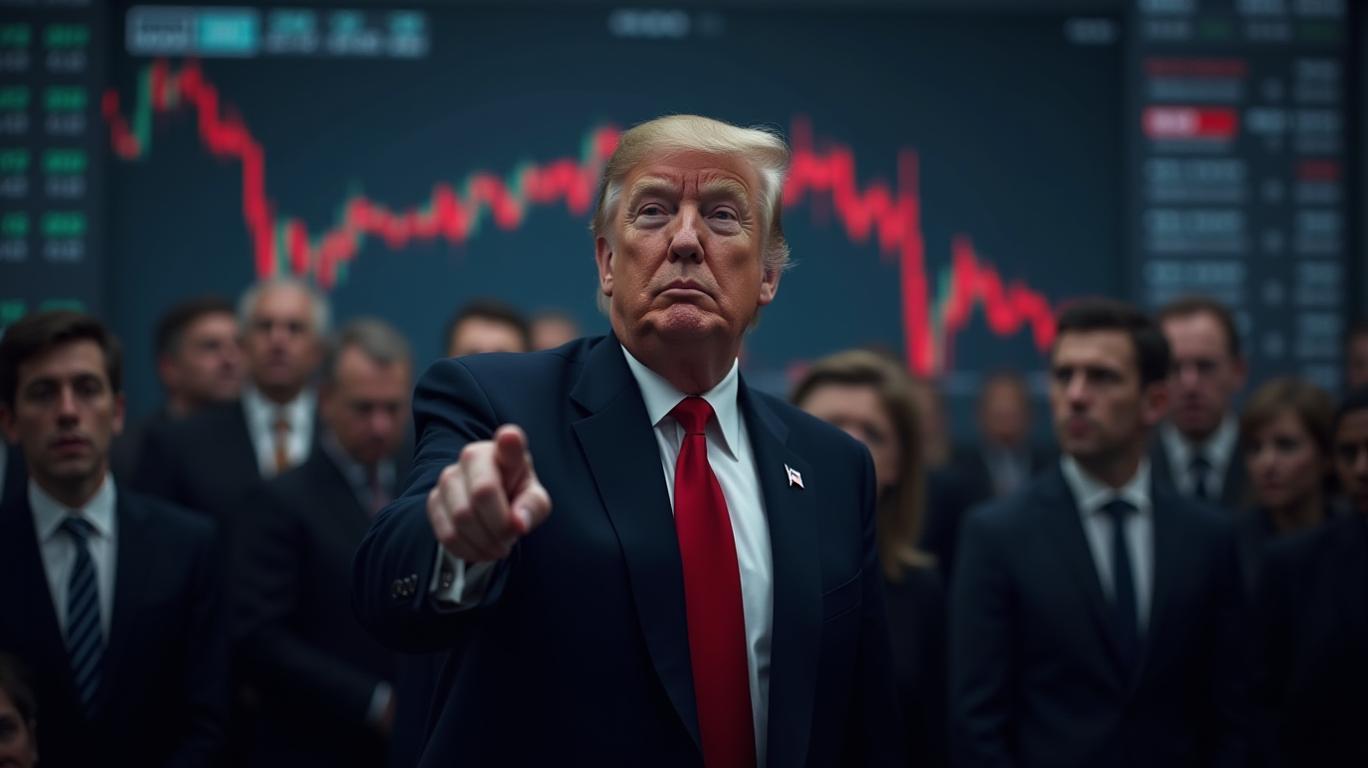

Stay ahead of the market.
Get curated U.S. market news, insights and key dates delivered to your inbox.






Comments
No comments yet