
Trump's Tariffs Spark Bitcoin's Wild Ride
Trump's Tariffs and Bitcoin: A Tale of Market Uncertainty and Recovery
In recent weeks, the global financial landscape has been rocked by U.S. President Donald Trump's decision to impose tariffs on major trading partners, including Canada, Mexico, and China. The move has sent shockwaves through markets, with cryptocurrencies, including Bitcoin, experiencing significant price fluctuations. This article explores the impact of Trump's tariffs on the cryptocurrency market, focusing on Bitcoin's performance and the broader market sentiment.
Trump's tariffs have led to a wave of uncertainty in financial markets, causing notable declines in cryptocurrency values and raising concerns among investors. The total market liquidation reached "at least around $8 billion - 10 billion," according to Bybit CEO Ben Zhou, highlighting the significant impact of these economic policies on digital assets.
The ramifications of Trump's new tariffs extend beyond traditional equities into the cryptocurrency realm, where Bitcoin and altcoins have experienced severe price fluctuations. Many analysts now categorize Bitcoin as a risk-on asset, suggesting that its valuation is increasingly linked to global liquidity. As investors navigate the complexities introduced by trade tensions, Bitcoin is likely to suffer further dips as global liquidity contracts due to tariffs.
Despite prevailing pessimism, there are signs of resilience in the crypto market. Many crypto enthusiasts advocate for a "buy the dip" approach, asserting that downturns could pave the way for future gains. Prominent financial commentator Alex Krüger notes that "aggressive tariffs are very negative for risk assets," suggesting that while short-term pain is inevitable, long-term recovery remains possible.
Long-term predictions about Bitcoin often consider economic policy orientations. Trump's tariffs, whether viewed as part of a tactical economic strategy or a bludgeoning tool, may inadvertently influence the demand for cryptocurrency as an alternative asset class. The dual narrative of possible short-term pain juxtaposed with potential long-term gains encapsulates the current market sentiment. Treasury yields' potential decline, coupled with rising inflation, may bolster interest in cryptocurrencies.
Investor sentiment remains markedly volatile, with contrasting views emerging on Trump's tariffs as a catalyst for potential gains or extended losses in the crypto space. The dissonance stems from the recent shifts in market trends leading to a transition towards a traders' market, adapting quickly to political 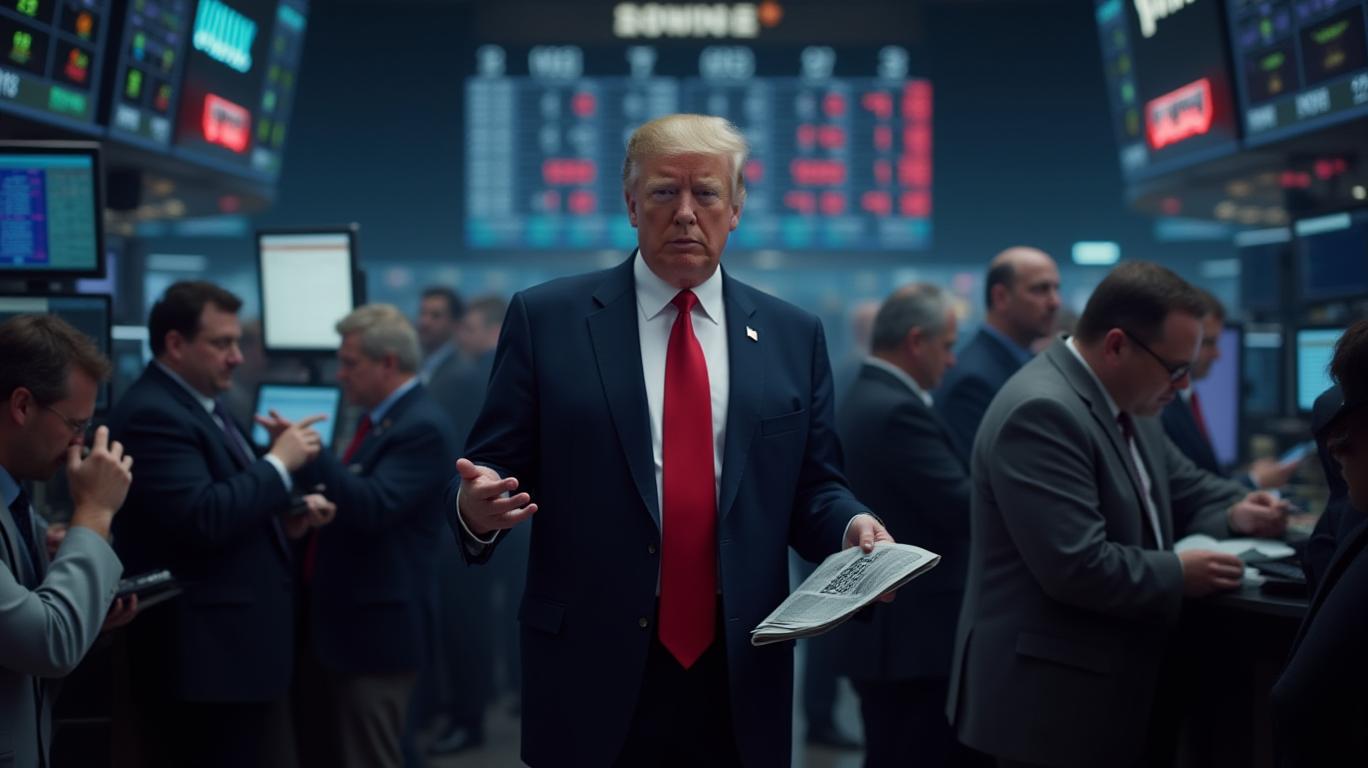

Stay ahead of the market.
Get curated U.S. market news, insights and key dates delivered to your inbox.






Comments
No comments yet