
Trump's Tariffs Spark 63.7% Bitcoin Dominance Amid Global Trade Turmoil
Donald Trump's recent actions have significantly influenced the global cryptocurrency landscape, marking a pivotal moment in the evolution of digital currency regulations. His administration has taken concrete steps to support cryptocurrencies, which has sparked a global conversation about the future of digital assets and their role in international trade and finance.
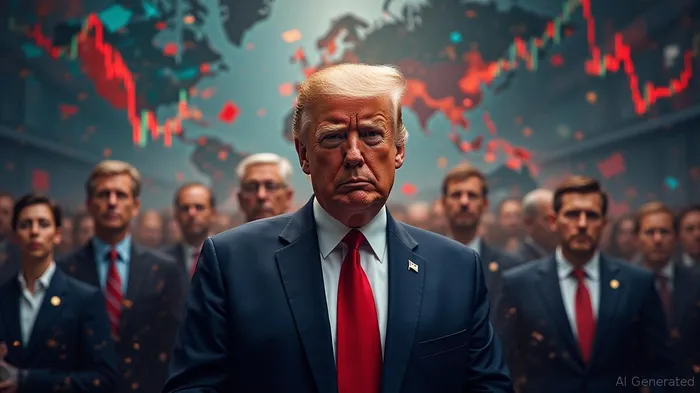
Trump's announcement of a 30% tariff on European Union exports, set to take effect in 2025, has sent ripples through the global marketplace. This move, which affects $605 billion worth of goods annually, has raised concerns about market instability and the potential for retaliatory measures from the EU. Historically, such tariffs have led to increased volatility in traditional markets, prompting investors to seek alternative assets for risk mitigation.
Amidst this geopolitical turmoil, there has been a noticeable shift in investor sentiment towards cryptocurrencies. During previous trade conflicts, such as the U.S.-China tariff skirmishes of 2018–2019, BitcoinBTC-- often thrived as investors turned to digital assets for stability. Currently, Bitcoin's valuation stands at around $118,000, with a market dominance of 63.7%. This resurgence highlights the growing appeal of cryptocurrencies as tools for preserving liquidity and hedging against economic uncertainty.
The decentralized nature of cryptocurrencies makes them an attractive option for investors during times of geopolitical strife. Unlike traditional assets, digital currencies are not subject to the same regulatory scrutiny and market fluctuations, making them a reliable hedge against economic insecurity. This trend is evident in the increased interest in Bitcoin and similar currencies following past tariff announcements, which often resulted in soaring trading volumes and market dominance for digital assets.
The broader implications of Trump's trade policies extend beyond immediate market impacts. They disrupt the balance between established fiat currencies and emerging digital ones, pushing innovative startups and decentralized organizations to integrate digital currencies into their economic activities. As regulatory scrutiny intensifies, heightened tariffs could accelerate advancements in financial technologies designed to navigate these challenges.
Trump's administration has also faced opposition from Democrats, who have introduced amendments to block stablecoin bills and the crypto market structure bills. This political tension adds another layer of complexity to the already intricate landscape of crypto regulation and enforcement. The Doge Savings plan, for instance, indicates a shift in Trump's perspective on cryptocurrencies, highlighting their growing influence in the global economy.
The interplay between trade dynamics and the adoption of digital currencies is reshaping the investment landscape. As the global community watches, the future of cryptocurrencies as trustworthy financial instruments in a world fraught with instability remains uncertain. The ongoing debate and regulatory developments will continue to shape the role of digital assets in international trade and finance, potentially redefining financial transactions and investment methodologies in the years to come.
In the UK, the stance on cryptocurrencies remains cautious. The Governor of the Bank of England, Andrew Bailey, has been vocal about his concerns regarding cryptocurrencies. He advocates for banks to interact with real money rather than tokenize assets linked to traditional currencies, emphasizing the importance of maintaining a stable value. Bailey suggests that tokenized deposits, a digital version of traditional money, would be a better alternative, preventing the outflow of money from the banking system and ensuring that funds available for credit are not risked.
As the chair of the Financial Stability Board, Bailey's cautious stance is likely to influence the UK’s position in the evolving world of cryptocurrencies. His views reflect a broader unease within the UK's financial institutions, which have maintained a cautious approach towards cryptocurrencies for years. This cautious stance is likely to affect the UK’s position in the evolving world of cryptocurrencies, potentially slowing down the adoption of digital currencies in the region.
Despite the cautious approach in the UK, the global trend towards cryptocurrency adoption continues to gain momentum. Financial giants like VisaV-- and MastercardMA-- have already integrated cryptocurrencies into their operations, and companies like Stripe and PayPalPYPL-- have long developed their relationships with crypto. This integration highlights the growing acceptance of digital currencies in the mainstream financial sector, despite regulatory challenges and market volatility.
However, the collapse of stablecoins and the subsequent forced liquidation of collateral assets pose significant market risks, according to the BOE Governor. He argues that if collateral assets cannot be quickly converted to cash, then why are they considered the safest cash-equivalent assets? US bonds are the most commonly used collateral for stablecoins, and if they can’t cover a few hundred billion dollars in emergency sales, the riskier aspect may be the existing traditional financial system rather than cryptocurrencies.
In summary, Trump's bold moves have significantly shaped the global cryptocurrency landscape, pushing for greater adoption and regulatory scrutiny. While the UK maintains a cautious stance, the global trend towards digital currencies continues to gain momentum, driven by their decentralized nature and potential as a hedge against economic uncertainty. The interplay between trade dynamics and the adoption of digital currencies is reshaping the investment landscape, with ongoing debate and regulatory developments set to define the future role of digital assets in international trade and finance.

Stay ahead of the market.
Get curated U.S. market news, insights and key dates delivered to your inbox.


AInvest
PRO
AInvest
PRO



Comments
No comments yet