
Trump's Tariffs Spark 61% Recession Odds, $5 Trillion Market Sell-Off
Traders on the Kalshi prediction market have placed the odds of a US recession in 2025 at over 61%, marking a significant increase from previous assessments. This shift in sentiment comes on the heels of President Donald Trump's executive order imposing reciprocal tariffs on various countries, which has sparked concerns about escalating trade tensions and their potential impact on the economy.
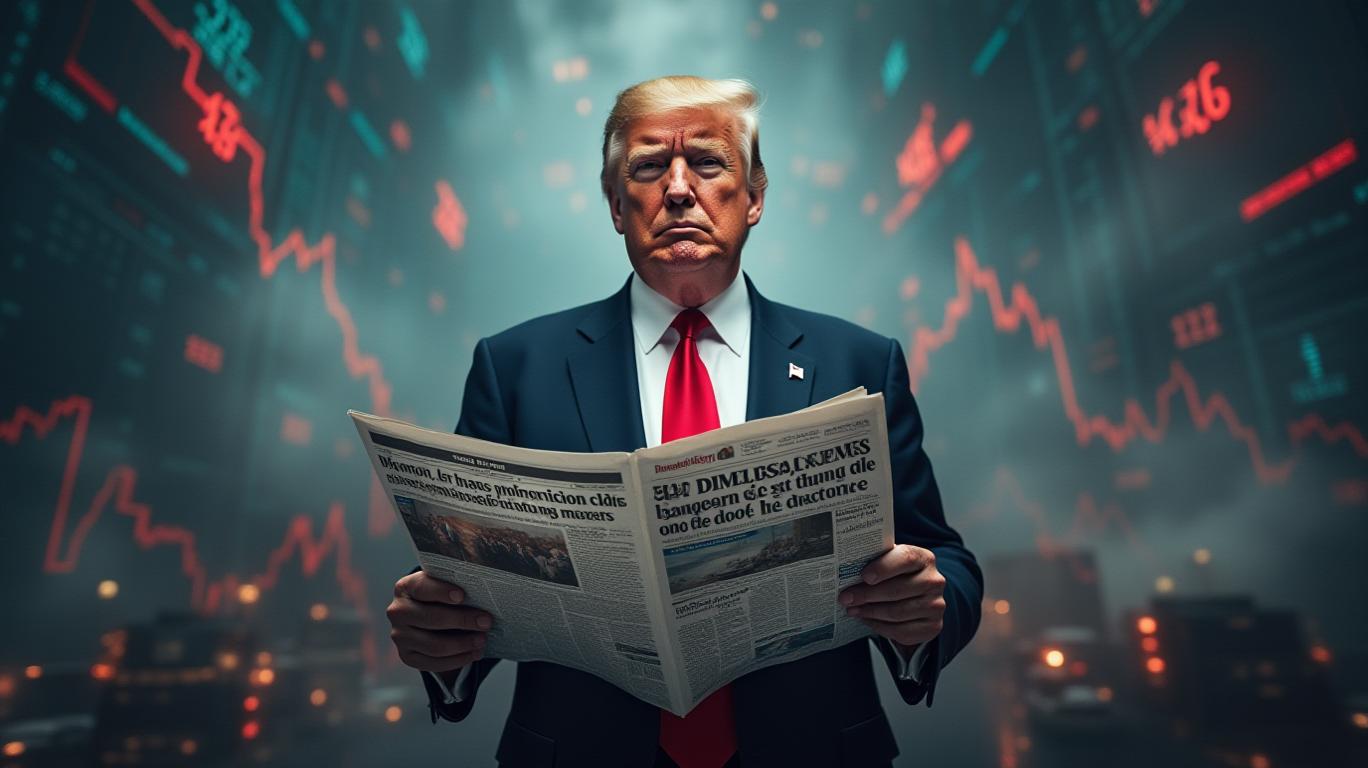
The tariffs, which establish a 10% baseline rate for all countries and different "reciprocal" rates for trading partners with existing tariffs on US import goods, have triggered an immediate sell-off in capital markets. This market reaction has wiped away over $5 trillion in shareholder value in a matter of days, reflecting the heightened uncertainty and anxiety among traders regarding the economic implications of these policies.
The macroeconomic outlook for 2025 has deteriorated rapidly following the tariff order, with fears of a prolonged bear market and a potentially protracted trade war that could negatively impact global markets and suppress risk asset prices. Market analysts warn that these developments could lead to a recession, as the tariffs and the ensuing trade tensions could disrupt supply chains, increase costs for businesses, and dampen consumer spending.
President Trump, however, has expressed confidence that the tariffs will strengthen the US economy in the long term and correct any trade imbalances. He described the current market sell-off as an expected part of the process and predicted that the markets would eventually boom. This optimism contrasts with the growing concerns among market participants and the increasing odds of a recession on prediction platforms like Kalshi and Polymarket, which currently place the likelihood of a US recession in 2025 at 60% and 61%, respectively.
The significant increase in recession odds on Kalshi underscores the sensitivity of financial markets to geopolitical and policy-related risks. Traders are closely monitoring the evolving trade landscape and its potential impact on economic growth, inflation, and overall market stability. The tariffs, coupled with other macroeconomic factors such as high debt levels and geopolitical tensions, have contributed to a more pessimistic outlook among market participants.
The Kalshi prediction market serves as a barometer for market sentiment and expectations, providing insights into how traders are positioning themselves in response to evolving economic conditions. The significant increase in recession odds reflects a growing consensus among traders that the risks of a downturn have risen, driven by the uncertainty surrounding trade policies and their potential consequences for the economy. As the situation continues to unfold, market participants will be closely watching for any developments that could further influence the economic outlook and their investment strategies.

Stay ahead of the market.
Get curated U.S. market news, insights and key dates delivered to your inbox.


AInvest
PRO
AInvest
PRO



Comments
No comments yet