
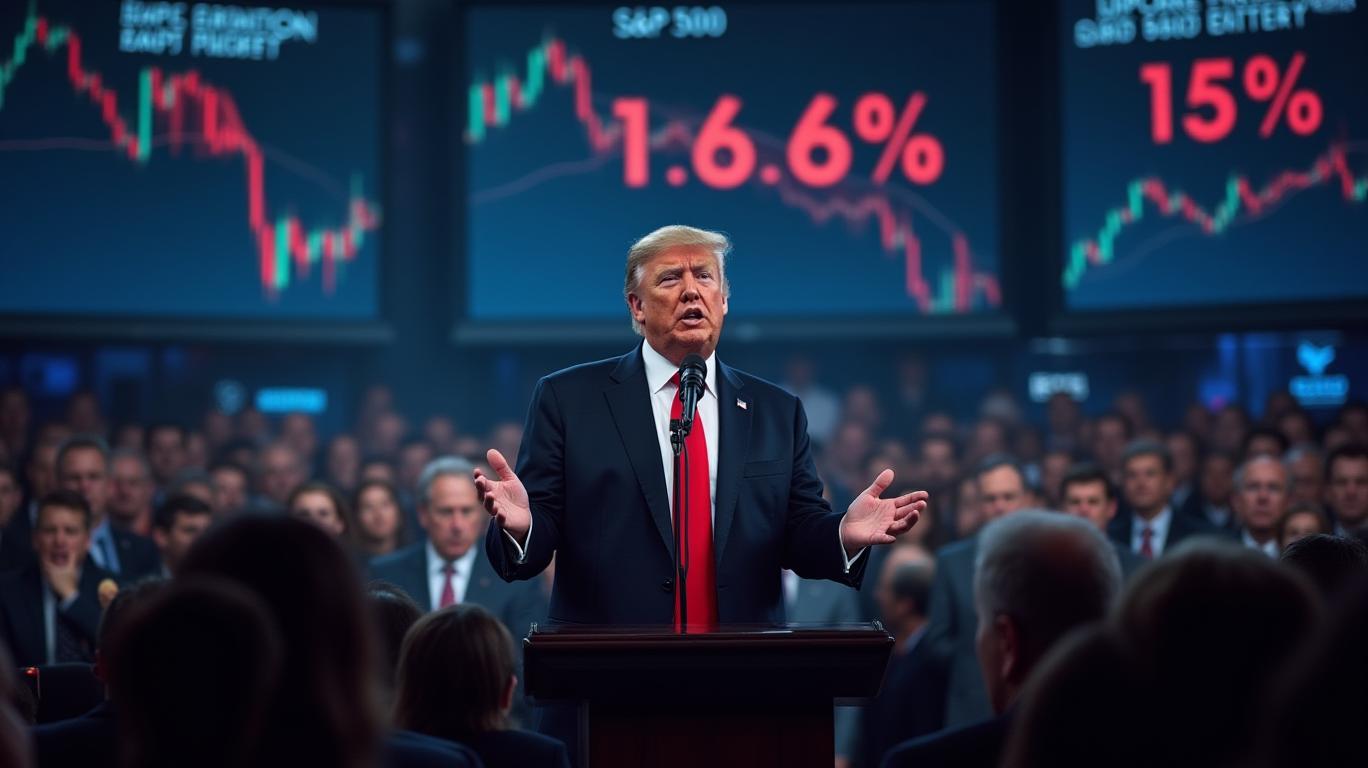
Trump's Tariffs Spark 15.6% S&P 500 Drop, $6.6 Trillion Loss
President Donald Trump's second term has seen a significant decline in stock market performance, with a nearly 20% drop compared to the last three presidencies. Since his inauguration on January 20, the S&P 500 has declined by approximately 15.6%, marking the most substantial downturn in the early months of a presidency since 2001. This decline has resulted in a loss of over $6.6 trillion in market value since April 2.
The primary cause of this market turmoil is the current administration’s hardline trade policies. The announcement of sweeping tariffs on April 2 initiated a global market sell-off, erasing an astronomical amount of money. In two days, the Dow lost over 4000 points (~9.5%), the S&P 500 fell 10%, and the Nasdaq slid 11%.
Trump's decision to pause the tariffs for 90 days provided a brief respite but also introduced further uncertainty. China was exempt from this pause, and the trade war between the two countries continues to escalate. At the moment, the USA’s tariff rate on Chinese imports now totals 145%, while China has raised its tariffs on US goods to 125%.
The volatility has also impacted other sectors. For example, the correlation between Brent crude oil and US equities has reached as high as 0.9. Oil prices now closely track stocks, likely reflecting worries about a global slowdown from Trump’s trade actions. The IPO market remains stagnant despite the ongoing situation, although companies like Klarna and StubHub delayed their IPO plans due to the high volatility.
With no end in sight regarding the escalating trade tensions, the stock market will likely react accordingly. While there are bound to be some changes in the coming days and weeks, either positive or negative, it seems that the usual market resilience mechanisms appear less effective amidst all this unpredictability.
The tariff hike, which targeted more than 180 countries, was a shock to the market. Trump's decision to impose levies in early April resulted in the stock market's worst single-day performance in recent history. The market's instability was further exacerbated by the announcement of sweeping tariffs, which led to significant losses across various sectors. The 90-day reprieve from the worst-case tariffs did little to alleviate market concerns, as investors remained wary of the ongoing trade tensions.
The impact of Trump's tariffs was not limited to the stock market. American companies with substantial exposure to China, such as Warner BrosWBD-- Discovery Inc., faced significant challenges. The China Film Administration warned that the aggressive tariff imposition by the U.S. government would negatively impact the domestic audience's favorability towards American films. This comment spelled bad news for Warner Bros, which has a substantial debt of $34.6 billion. The company's stock fell by 12.53 percent on Thursday, finishing at $8.10 per share, as investors sold off positions in response to the uncertainty.
The market's reaction to Trump's tariffs highlighted the broader economic implications of his policies. Despite the worst stock market downturn in 40 years, Trump's approval rating remained unaffected, indicating a deep political divide. The Left's efforts to capitalize on the market turmoil had little impact, as Trump's base remained steadfast in their support. The market's instability also had real-world consequences for American farmers, who faced retaliatory tariffs from China, raising tariffs on U.S. goods to 84 percent. This move further exacerbated the economic uncertainty and risk aversion among investors, as the market grappled with the fallout from Trump's tariff policies.

Stay ahead of the market.
Get curated U.S. market news, insights and key dates delivered to your inbox.


AInvest
PRO
AInvest
PRO



Comments
No comments yet