
Trump's Tariffs Spark 1.26% Dow Jones Drop, $2 Trillion S&P 500 Loss
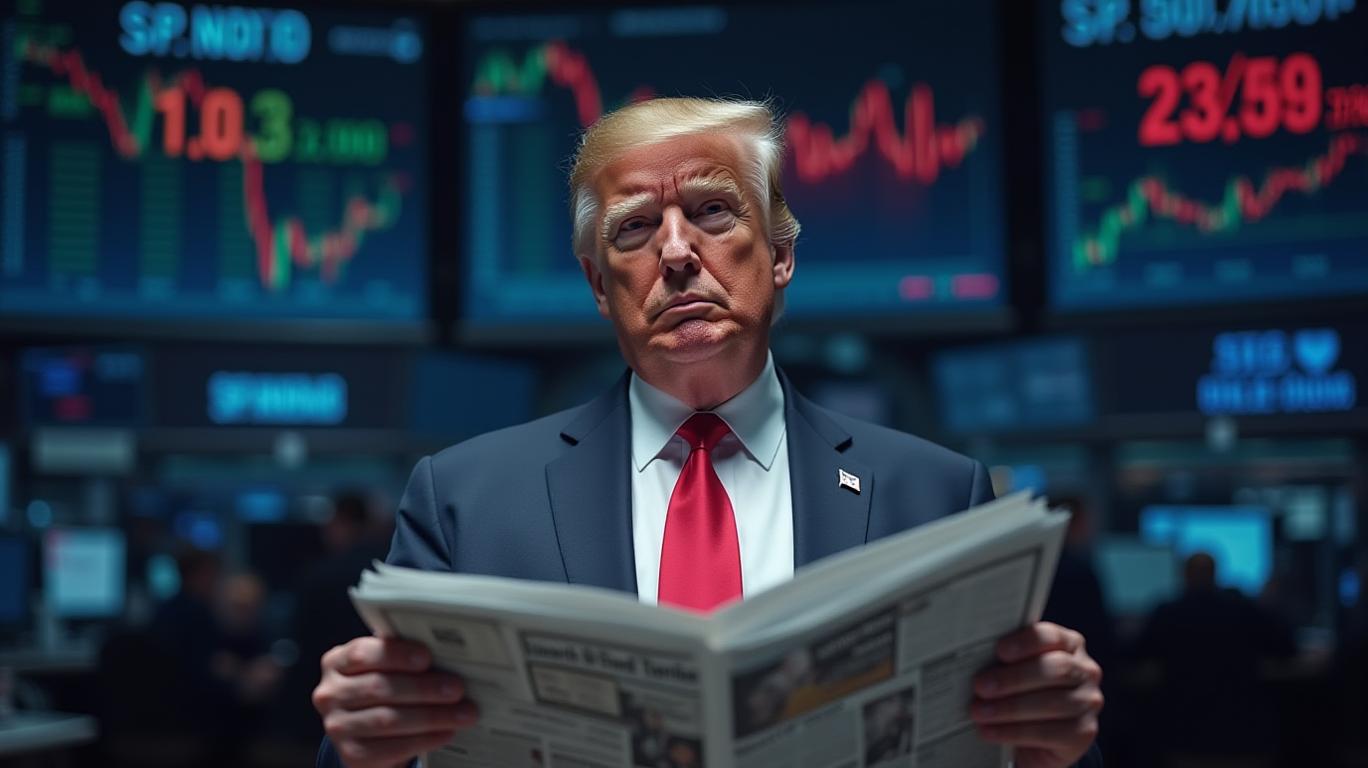
On Wednesday, U.S. equity markets and major cryptocurrencies experienced a sharp decline following President Donald Trump's announcement of sweeping new tariffs on 185 countries. This move rattled global markets and triggered a broad risk-off sentiment, leading to a significant erosion of market value.
The S&P 500 lost more than $2 trillion in market capitalization within a short span of time, highlighting the immediate and severe impact of the tariff announcement. The Nasdaq 100 futures also saw significant volatility, swinging nearly 900 points from peak to trough before closing off session lows. The Dow Jones, S&P 500, and Nasdaq 100 futures all experienced declines, with the Dow Jones futures down 1.26%, S&P 500 futures falling 1.16%, and Nasdaq 100 futures declining 1.20%.
The White House introduced a baseline 10% tariff on all imports, with significantly higher rates applied to select nations. China faces a 34% rate, while the European Union will be hit with 20%. Trump described these measures as “reciprocal tariffs,” stating that U.S. rates will be set at half the level other countries impose on American goods. This move is part of a broader strategy by the Trump administration to rebalance trade relationships and protect domestic industries.
Crypto markets, which have been moving in lockstep with equities over the last few financial quarters, also felt the impact. Bitcoin is down 2.3% to around $83,200, while Ethereum has shed 4.5% to $1,817. This decline underscores the growing interdependence between traditional financial markets and the cryptocurrency space, with both reacting to the same macroeconomic factors.
Joe McCann, founder and CEO of Asymmetric, noted that there is “very little reason to own risk here,” as crypto is at the behest of macro and traditional markets at this point. Without a clear and distinct catalyst, crypto is simply going to trade like any other risk asset. McCann also flagged rising inflation expectations, with one-year inflation swaps climbing above 3.3%, and warned the tariff shock could push Q2 GDP into negative territory.
In Washington, a resolution led by Sen. TimTIMB-- Kaine to revoke Trump’s emergency tariff powers over Canada picked up bipartisan support. At least four Republican senators, including RandRAND-- Paul and Mitch McConnell, have indicated they will vote in favor. However, the measure is unlikely to pass the GOP-controlled House or survive a presidential veto.
The scale and unpredictability of the tariff announcement have shifted investor focus sharply back to macroeconomic headwinds, as markets reassess inflation trajectories, growth risks, and policy responses heading into Q2. The tariffs have opened a new era of risk for global markets, with the potential to disrupt long-standing trade relationships and supply chains. The uncertainty has also led to a shift in investor sentiment, with many now favoring assets that are less sensitive to economic fluctuations.

Comprender rápidamente la historia y los orígenes de varias monedas conocidas
Latest Articles
Stay ahead of the market.
Get curated U.S. market news, insights and key dates delivered to your inbox.


AInvest
PRO
AInvest
PRO



Comments
No comments yet