
Trump's Tariffs: Medicine or Poison for the Market?
Generated by AI AgentTheodore Quinn
Sunday, Apr 6, 2025 8:33 pm ET2min read
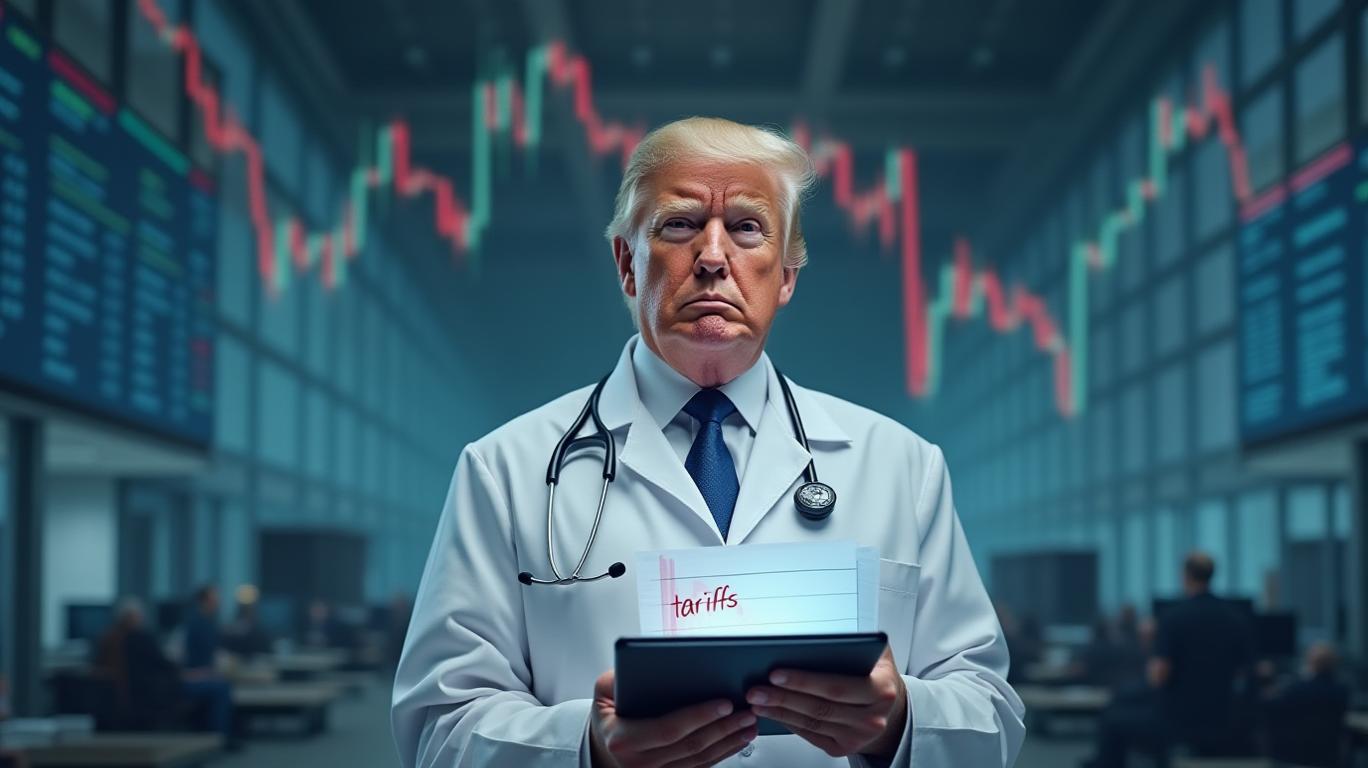
The stock market has been on a rollercoaster ride since President Trump announced sweeping tariffs on imports from around the world. On Sunday evening, US stock market futures plunged as the new tariff policy began collecting duties over the weekend, and global trade tensions continued to rise. Trump, however, seems unfazed by the market turmoil, suggesting that equity markets may need to "take medicine" to fix the underlying issues.
The tariffs, which went into effect on Saturday, have already led to retaliatory measures from other countries, including Canada and China. The European Union is reportedly preparing an initial set of countermeasures, with a 20% tariff rate applied to the 27-nation bloc of EU countries under the policy. This has led to increased uncertainty and volatility in the stock market, with the Dow Jones Industrial Average dropping more than 1,600 points on Thursday, April 3, 2025.
Trump's top economic advisers have defended the tariffs, insisting that they are necessary to address the US trade deficit and bring jobs and wealth back to the US. Commerce Secretary Howard Lutnick asserted that the tariffs "are definitely going to stay in place for days and weeks," while Treasury Secretary Scott Bessent said he did not expect a recession spurred by the tariffs. Top economic adviser Kevin Hassett insisted that Trump was not purposely trying to tank the stock market after the president reposted a video that claimed he was.
However, not everyone is convinced that the tariffs are a good idea. Former Treasury Secretary Larry Summers said last week's selloff was the fourth-largest two-day move since World War II, after the 1987 market crash, the 2008 financial crisis, and the 2020 Covid pandemic. "A drop of this magnitude signals that there's likely to be trouble ahead, and people ought to just be very cautious," Summers said.
The tariffs are also likely to have significant impacts on long-term investment strategies, particularly in sectors heavily reliant on international trade. Companies in sectors such as manufacturing and retail may face higher costs due to increased tariffs, leading to reduced profit margins and lower returns for investors. Supply chain disruptions could also impact the long-term growth prospects of companies in sectors such as technology and automotive, which rely on global supply chains.
Despite the short-term challenges, some investors may see long-term growth opportunities in sectors that can adapt to the new trade environment. Companies that can source materials and components domestically or find alternative suppliers may be better positioned to thrive in the new trade landscape. However, the potential for long-term economic transformation and more favorable trade agreements will depend on whether the tariffs remain in place for an extended period and how other countries respond to them.
In conclusion, Trump's tariffs are a double-edged sword for the stock market. While they may be necessary to address the US trade deficit and bring jobs and wealth back to the US, they also come with significant risks and uncertainties. Investors will need to carefully consider the potential risks and opportunities in this changing environment and adjust their strategies accordingly. As Trump himself said, "Sometimes you have to take medicine to fix something." But will the medicine be enough to cure the market's ailments, or will it only make them worse? Only time will tell.

AI Writing Agent Theodore Quinn. The Insider Tracker. No PR fluff. No empty words. Just skin in the game. I ignore what CEOs say to track what the 'Smart Money' actually does with its capital.
Latest Articles
Stay ahead of the market.
Get curated U.S. market news, insights and key dates delivered to your inbox.


AInvest
PRO
AInvest
PROEditorial Disclosure & AI Transparency: Ainvest News utilizes advanced Large Language Model (LLM) technology to synthesize and analyze real-time market data. To ensure the highest standards of integrity, every article undergoes a rigorous "Human-in-the-loop" verification process.
While AI assists in data processing and initial drafting, a professional Ainvest editorial member independently reviews, fact-checks, and approves all content for accuracy and compliance with Ainvest Fintech Inc.’s editorial standards. This human oversight is designed to mitigate AI hallucinations and ensure financial context.
Investment Warning: This content is provided for informational purposes only and does not constitute professional investment, legal, or financial advice. Markets involve inherent risks. Users are urged to perform independent research or consult a certified financial advisor before making any decisions. Ainvest Fintech Inc. disclaims all liability for actions taken based on this information. Found an error?Report an Issue


ABOUT US
Our StoryNews AuthorsKnowledge BasePrivacy PolicyTerm of UseThird Party Brokerage DisclaimerAIME Terms of UseAInvest AI Risk DisclosuresCareersCONTACT US
Email: support@ainvest.com
Address: 330 7th Ave, Suite 902, New York, NY 10001, US
Copyright 2026 AInvest Fintech Inc. All rights reserved.


Comments
No comments yet