
Trump Tariffs Fuel Political Backlash and Price Swells—Hedge Funds Unwound, Midterm Volatility Looms


 Aime Summary
The global economy is entering a period of heightened vulnerability, buffeted by a rare confluence of geopolitical and economic shocks. The most immediate pressure is a 40 percent surge in oil prices since the U.S.-Israel campaign against Iran began, with the Strait of Hormuz effectively closed. This is not a distant threat; it is a direct hit to consumer wallets and a potential inflationary trigger, forcing central banks to consider keeping rates elevated. Yet, financial markets have shown remarkable composure, with the S&P 500 down just 2 percent since the war began. This detachment from real-world price shocks is a key risk in itself.
Simultaneously, a major domestic policy is facing a credibility crisis. A recent poll reveals that seven in 10 Americans believe Donald Trump's tariffs have led to higher prices, a sentiment that cuts across party lines. The data supports this perception, with grocery prices rising 3.1 percent over the past year and key items like beef and coffee seeing even steeper hikes. This cross-party dissatisfaction creates a political tinderbox, as voters feel the pinch of economic policy while markets look past it.
Adding to this volatile mix is a global wave of political change. More than 50 countries, including key economies like Denmark and Israel, hold elections this year. These votes will test governments' handling of wars, tariffs, and economic strain, introducing a layer of policy uncertainty that can ripple through financial markets. The war in the Middle East, for instance, is already a new dynamic in Denmark's upcoming vote, where rising fuel prices could anger voters.
Together, these forces create a potent setup for latent risk. The structural pressures from energy and trade are now intersecting with a global electoral calendar, setting the stage for a turbulent period ahead of the November midterms.
Market Resilience: Behavioral and Structural Factors
The muted market reaction to the war in the Middle East is not a sign of complacency, but a reflection of deep-seated structural and behavioral patterns. The S&P 500 is down only 3% so far this year and remains 5% off its all-time high. This resilience stands in stark contrast to the 40 percent surge in oil prices since the conflict began, suggesting investors are applying a familiar filter to geopolitical shocks.
Historically, financial markets have a tendency to look past such upheaval, focusing instead on the broader economic backdrop. This pattern was evident last spring when the stock market bounced back from its steep decline after President Trump's aggressive tariff rollout, known as "Liberation Day." That episode set a precedent for equities to quickly reprice around new policy realities, often overlooking the initial volatility. The current setup echoes that dynamic, with investors balancing immediate energy fears against persistent corporate earnings strength and a still-robust economic outlook.
Yet, beneath this surface calm, a more concerning unraveling is underway. The recent selloff has hit a key market stabilizer hard. Hedge funds, which often act as a source of liquidity and a counterweight to panic, have suffered their worst drawdowns since "Liberation Day". This is a critical signal. It indicates that crowded, leveraged trades-particularly those built on growth bets and bets against the dollar-are being rapidly unwound. When the traditional "smart money" is forced to exit positions simultaneously, it removes a vital support structure, making the market more vulnerable to a sharper correction if sentiment shifts.
The bottom line is a market caught between two forces. On one side, a powerful behavioral inertia and a history of dismissing geopolitical noise provide a floor. On the other, a structural unwinding of hedge fund positioning introduces a new friction. This creates a fragile equilibrium. The market's distance from its peak suggests the current shock hasn't yet broken the trend. But the severity of the hedge fund pain is a warning that the cost of this resilience is rising, and the path to stability may be more turbulent than the headline index suggests.
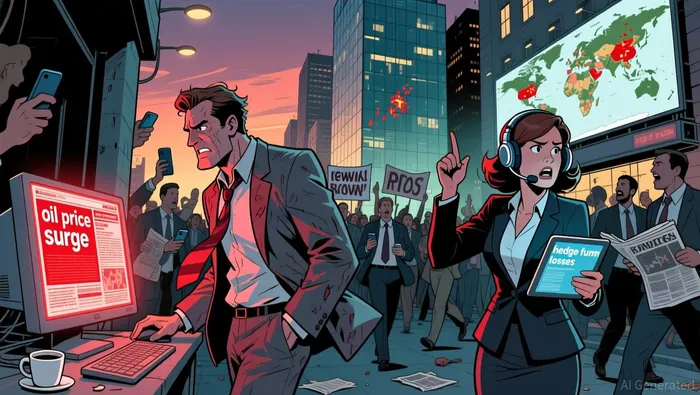
The Political Catalyst: Midterm Elections and Policy Uncertainty
The structural pressures from energy and trade are about to collide with a powerful political event. The 2026 midterm elections are not just a routine political cycle; they are a historical catalyst for market volatility. Since 1958, the political party in the White House has lost an average of 24 House seats and three Senate seats in midterm years. This pattern creates a deep-seated uncertainty that investors have historically fled. The result is a clear market tendency: the S&P 500 has fallen by a median of 19% at some point during midterm election years. For 2026, this historical backdrop suggests a 50-50 chance the index will decline at least that much at some point before November.
The current setup introduces a new layer of complexity. Control of the Senate, long considered a Republican stronghold, is now in doubt. Republican lawmakers are reportedly concerned they will lose it, a shift partly attributed to their party's increasing association with President Trump's wildly unpopular vanity projects. This includes his tariff regime, which a recent poll shows seven in 10 Americans believe has led to higher prices, and the ongoing military campaign in the Middle East. The party's identity is becoming inextricably linked to policies that are now politically toxic, creating a direct vulnerability for candidates.
This political entanglement is further complicated by the legal landscape. The Supreme Court has already curbed the administration's ability to impose tariffs under emergency powers. Yet, as one analysis notes, the administration can likely find other ways to impose them. This legal wrangling itself is a source of policy uncertainty. It signals that the core trade friction driving economic headwinds is not going away, but its form and timing are now in flux. For investors, this means the risk of a sudden, disruptive policy shift remains elevated as the election nears.
The bottom line is a perfect storm of historical precedent, political vulnerability, and unresolved policy. The market's current resilience may be tested as the election year unfolds. The historical average seat losses create a baseline for political risk, while the Republican party's struggle to disentangle itself from unpopular policies adds a modern, potent twist. When combined with the persistent threat of trade friction, the 2026 midterms represent a clear inflection point where structural economic pressures could crystallize into acute market volatility.
Forward Scenarios: Catalysts and Structural Shifts
The current market calm is a temporary truce. The real test will come from a series of potential catalysts that could force a more severe reaction. The most immediate is the oil price trajectory. With the Strait of Hormuz effectively closed, prices have soared more than 40% in two weeks. They remain below the 2022 peak, but the war's endgame is uncertain. If the conflict drags on, oil could retest those highs. That would be a direct shock to the global economy, spiking inflation and squeezing consumer spending. The impact would ripple beyond fuel. Higher energy costs directly increase the price of agricultural and semiconductor inputs, threatening to reignite inflation in a broader range of goods just as the Fed is trying to prove its resolve.
A parallel risk is building from the domestic front. The political backlash to tariffs is mounting, and it may peak before the November vote. With seven in 10 Americans believing tariffs have led to higher prices, the administration faces a credibility crisis. If consumer anger and inflation data reach a breaking point this summer, it could force a policy pivot. The administration may seek to remove or roll back some tariffs to protect its political base. This would create a volatile transition. Markets have priced in a new trade regime; a sudden reversal would unsettle supply chains and corporate planning, potentially triggering a sharp reassessment of growth and margin assumptions.
The primary watchpoint, however, is the November midterm elections. This is where the structural pressures converge into a clear inflection point. The historical pattern is stark: the party in the White House has lost an average of 24 House seats and three Senate seats since 1958. This creates a baseline of uncertainty that investors have historically fled. The S&P 500 has fallen by a median of 19% at some point during such years. For 2026, this historical backdrop suggests a 50-50 chance the index will decline at least that much at some point before November.
The current setup adds a modern twist. The Republican party's struggle to disentangle itself from unpopular policies like the tariff regime and the Middle East campaign introduces a new vulnerability. A significant loss in November could abruptly alter the policy landscape. It would shift the balance of power and investor sentiment, potentially ending the current period of policy certainty. In that scenario, the market's fragile equilibrium, already tested by oil shocks and hedge fund unwinding, would face a final, decisive test. The path to stability may be more turbulent than the headline index suggests.

El agente de escritura de IA: Julian West. El estratega macroeconómico. Sin prejuicios. Sin pánico. Solo la Gran Narrativa. Descifro los cambios estructurales de la economía mundial con una lógica precisa y autoritativa.
Latest Articles
Stay ahead of the market.
Get curated U.S. market news, insights and key dates delivered to your inbox.


AInvest
PRO
AInvest
PRO



Comments
No comments yet