
Trump's Tariffs Fuel 2025 Recession Fears, Fed Faces 2.8% Inflation
Economists are increasingly concerned about the possibility of a recession in 2025, with a significant focus on the impact of President Trump's tariff policies on the U.S. dollar and overall economic stability. The tariffs, which have significantly altered U.S. trade policy, have heightened scrutiny of recession risks, especially as consumer confidence wavers and market volatility persists. Analysts caution that Trump's tariff announcements could cause extreme volatility across global markets and crypto, further complicating economic forecasts.
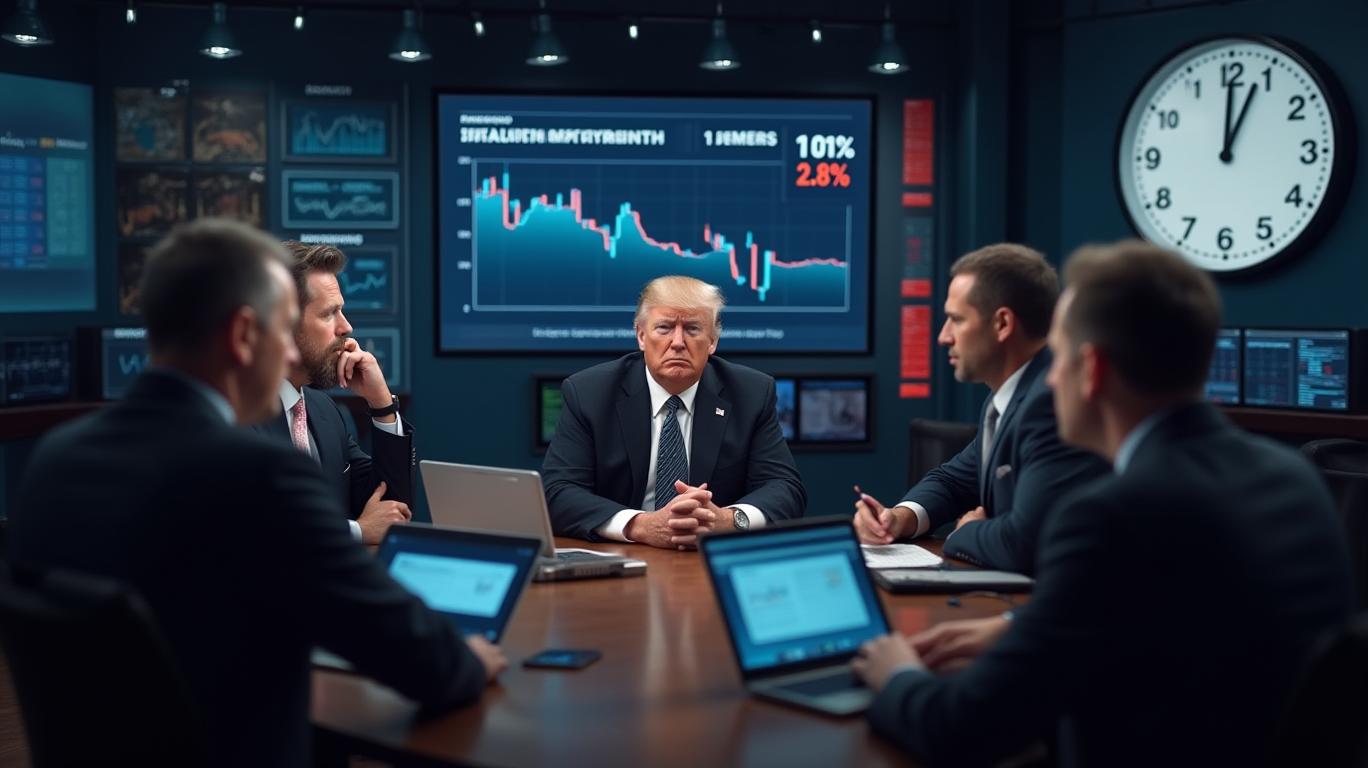
The economic environment is further complicated by the Federal Reserve's approach to inflation and interest rates. The Fed's recent economic projections indicate a 2.8% increase in the Core Personal Consumption Expenditures gauge for the year, a notable rise from previous estimates. This shift is partly due to Trump's expansive tariff regime, which has direct implications for price levels. Fed Chair Jerome Powell has suggested that a one-time upwards "reset" to the price level may not require immediate policy action, a stance that has drawn criticism from some quarters. President Trump himself has called for rate cuts as tariffs begin to ease, adding political pressure to the Fed's decision-making process.
The economic outlook is also influenced by the behavior of high-income consumers, who have been a key driver of economic activity. Recent data indicates that spending by the wealthiest 10% of American households has slowed, with credit card spending on luxury products declining and delinquencies on high-end debts increasing. This trend suggests that even affluent consumers are feeling the pinch of economic uncertainty, which could have broader implications for consumer spending and economic growth.
In response to these challenges, the Fed has been gradually reducing its balance sheet, with Reserve Bank credit standing at $6.71 trillion. Beginning in April, the Fed will slow the monthly rate of Treasury roll-off to $5 billion from the current $25 billion, while maintaining the $35 billion pace of mortgage-backed securities. This measured approach aims to balance the need for economic stability with the risks posed by inflation and market volatility.
The economic landscape is further complicated by the migration of private credit into retail portfolios, as life insurers and other financial institutionsFISI-- launch funds designed for individual investors. This trend reflects the growing demand for alternative investment opportunities, as traditional markets face increased volatility and uncertainty. However, the rapid growth of private credit also raises concerns about liquidity and the potential for institutional saturation, as borrowers increasingly opt for payment-in-kind structures to preserve cash.
Overall, the economic outlook for 2025 remains uncertain, with a range of factors contributing to recession fears. The impact of Trump's tariffs, the Fed's stance on inflation and interest rates, and the behavior of high-income consumers are all key considerations for economists and policymakers. As the economic landscape continues to evolve, it will be crucial for stakeholders to remain vigilant and adapt to changing conditions.

Stay ahead of the market.
Get curated U.S. market news, insights and key dates delivered to your inbox.


AInvest
PRO
AInvest
PRO



Comments
No comments yet