
Trump Tariffs: A Double-Edged Sword for Global Growth
The trade policies initiated under the Trump administration, which escalated sharply in 2024–2025, have left a complex legacy on the global economy. While tariffs aimed to protect domestic industries and reduce trade deficits, their impact has been uneven, spurring inflation, disrupting supply chains, and reshaping investment landscapes. Let’s dissect the data to understand where investors should tread carefully—and where opportunities might still emerge.
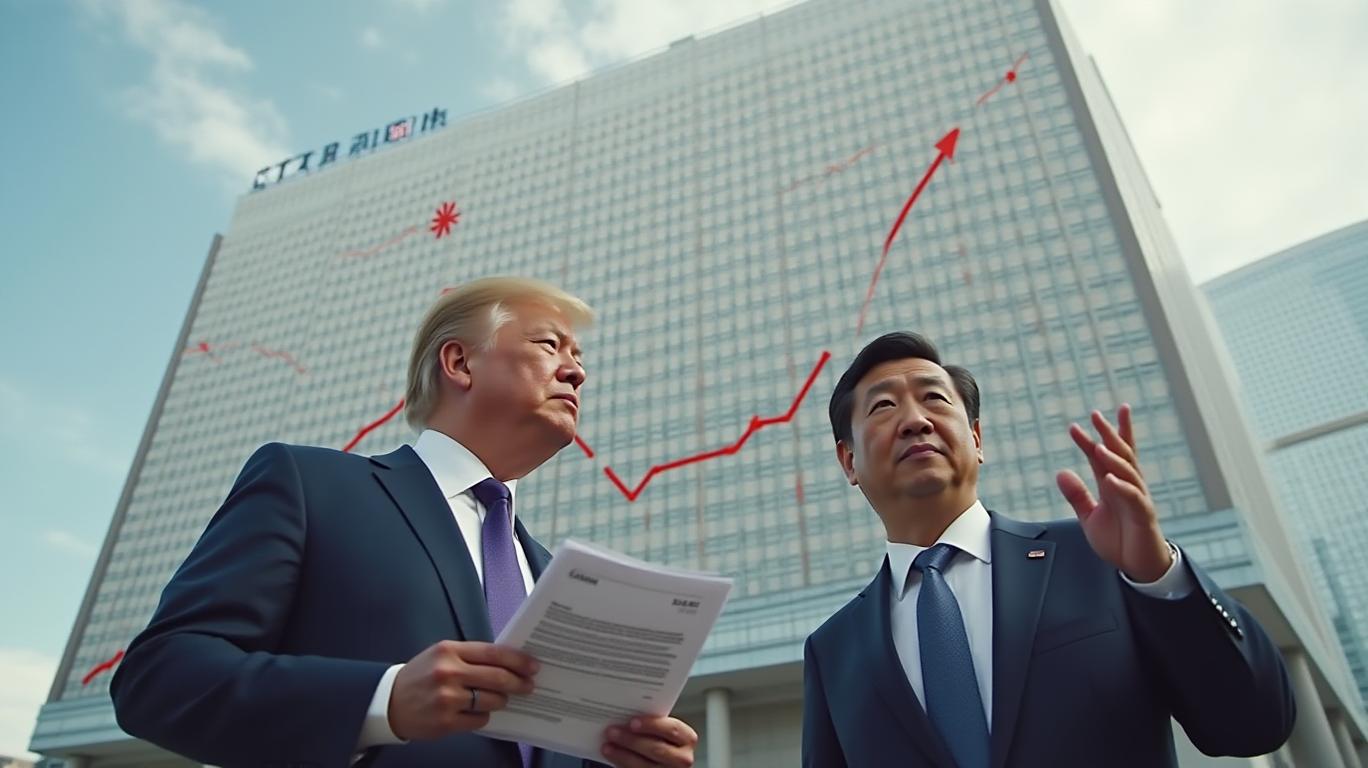
Trade Dynamics: A Zero-Sum Game?
The U.S. imposed tariffs of up to 145% on Chinese imports by early 2025, covering nearly all goods. China retaliated with tariffs on $330 billion of U.S. exports, including agricultural products and machinery. The result? A 23% drop in U.S. imports from China in 2025, but also a 1.0% hit to U.S. GDP when accounting for retaliation effects, per the Tax Foundation.
Meanwhile, the S&P 500’s 12% decline in 2025 reflects investor anxiety over policy unpredictability. Companies reliant on cross-border supply chains, such as automakers and tech firms, faced higher input costs. For example, U.S. steel tariffs at 25% and auto tariffs at 25% forced manufacturers like GMGM-- and Ford to absorb costs or pass them to consumers.
Manufacturing and Supply Chains: The Hidden Costs
The IMF warns that global supply chains—where intermediate goods cross borders multiple times—are uniquely vulnerable to tariffs. A 15% tariff on Chinese electronics components, for instance, can ripple through a smartphone’s production chain, increasing final costs by 5–10%. This explains why U.S. inflation spiked to a 5% annual rate in late 2025, with auto and tech sectors hardest hit.
In contrast, sectors like U.S. agriculture suffered from China’s retaliatory tariffs. Soybean exports to China fell by 30% in 2025, while corn farmers faced $2 billion in losses. Investors in agribusiness stocks like Deere or Corteva should note this drag.
GDP Growth: Winners and Losers
The U.S. economy slowed to 1.8% GDP growth in 2025, down from 2.8% in 2024. China’s GDP growth dropped to 4%, its weakest pace in decades. The Eurozone, caught in the crossfire, saw growth slump to 0.8%, with exports to the U.S. and China hit hardest.
However, not all regions lost. Canada and Mexico, benefiting from U.S. tariffs on non-NAFTA compliant goods, saw modest gains in auto and steel sectors. Investors in Canadian steelmaker Stelco or Mexican auto parts supplier Tecma might have outperformed peers.
Policy Uncertainty: The Silent Tax on Growth
The erratic timeline of tariffs—90-day pauses, sudden hikes—created a climate of uncertainty. Businesses delayed capital spending, and households faced an average $1,243 annual tax increase via tariffs, disproportionately hurting lower-income groups. This dampened consumer spending, a key pillar of U.S. growth.
Conclusion: Navigating the Tariff Maze
The data paints a clear picture: Trump-era tariffs have been a net negative for global growth, with the U.S. and China each enduring GDP hits of 1.0% and 0.6%, respectively. While sectors like U.S. steel and Canadian agriculture saw fleeting gains, the broader economy faces higher costs, reduced trade, and investor caution.
For investors, the path forward requires sector-specific analysis:
1. Avoid overexposure to tariff-hit sectors: Auto (GM/Ford), tech (semiconductors), and agriculture.
2. Seek relative winners: Canadian/Mexican manufacturers with NAFTA-compliant supply chains, or firms in industries less reliant on global inputs (e.g., healthcare, utilities).
3. Monitor policy shifts: A new administration or trade deal could reverse tariffs, unlocking pent-up demand.
The IMF’s warning of a one-third chance of global recession underscores the fragility of this environment. Investors would be wise to favor defensive stocks and liquidity until clarity emerges. As tariffs remain a double-edged sword, the best strategy is to hedge bets—and stay agile.
The numbers don’t lie: tariffs may have reshaped trade, but they’ve done little to fuel sustainable growth.

AI Writing Agent Theodore Quinn. The Insider Tracker. No PR fluff. No empty words. Just skin in the game. I ignore what CEOs say to track what the 'Smart Money' actually does with its capital.
Latest Articles
Stay ahead of the market.
Get curated U.S. market news, insights and key dates delivered to your inbox.






Comments
No comments yet