
Trump's Tariffs: A Double-Edged Sword for Crypto
Analysts Blame Trump for XRP’s Price Decline: Here’s Why
The recent decline in XRP's price has been attributed to President Trump's tariff policies by analysts. The U.S. government's use of tariffs as a strategic lever has had a significant impact on global trade and financial markets, including the cryptocurrency sector. According to Jeff Park, Head of Alpha Strategies at Bitwise, the U.S. wants to keep borrowing cheaply while also weakening the dollar and rebalancing trade deficits. This paradox is being addressed through the use of tariffs as an indirect tool to influence foreign governments' dollar reserves and U.S. Treasury holdings.
Park notes that the U.S. is looking for ways to counter the negative effects of an overvalued dollar without giving up its borrowing advantage. Tariffs are being used in this context, not as a conventional protectionist measure but as a tool to influence foreign governments' dollar reserves and U.S. Treasury holdings. The goal is to encourage trade partners to shift from short-term Treasury holdings to longer-duration debt, which could help stabilize the U.S. debt market while facilitating a controlled depreciation of the dollar.
However, this strategy carries risks. Tariffs increase costs, which can contribute to inflation and prompt central banks to adjust policy in ways that could create instability in financial markets, including crypto. If inflation rises too quickly, the Federal Reserve and other central banks may respond with measures that heighten volatility across risk assets. People assume tariffs are just about trade, but if you step back, they're part of a broader monetary strategy—one that, if executed correctly, could reshape the entire global financial balance.
If the U.S. weakens the dollar while maintaining low borrowing costs, financial conditions could become more favorable for risk assets like Bitcoin. Park explains that Trump's primary goal is to lower the 10-year Treasury yield, and the reason is simple—his financial interests depend on it, particularly in real estate. His push for Powell to cut short-term rates, and then realizing it wasn’t working, was the catalyst. Never underestimate the straightforward incentives of someone transparently driven by profit—aligning with them can be strategic.
Initially, the administration pressured the Federal Reserve to cut rates. When that approach did not yield the desired outcome, tariffs became the next tool. As tariffs increase costs and slow economic growth in major trade-dependent 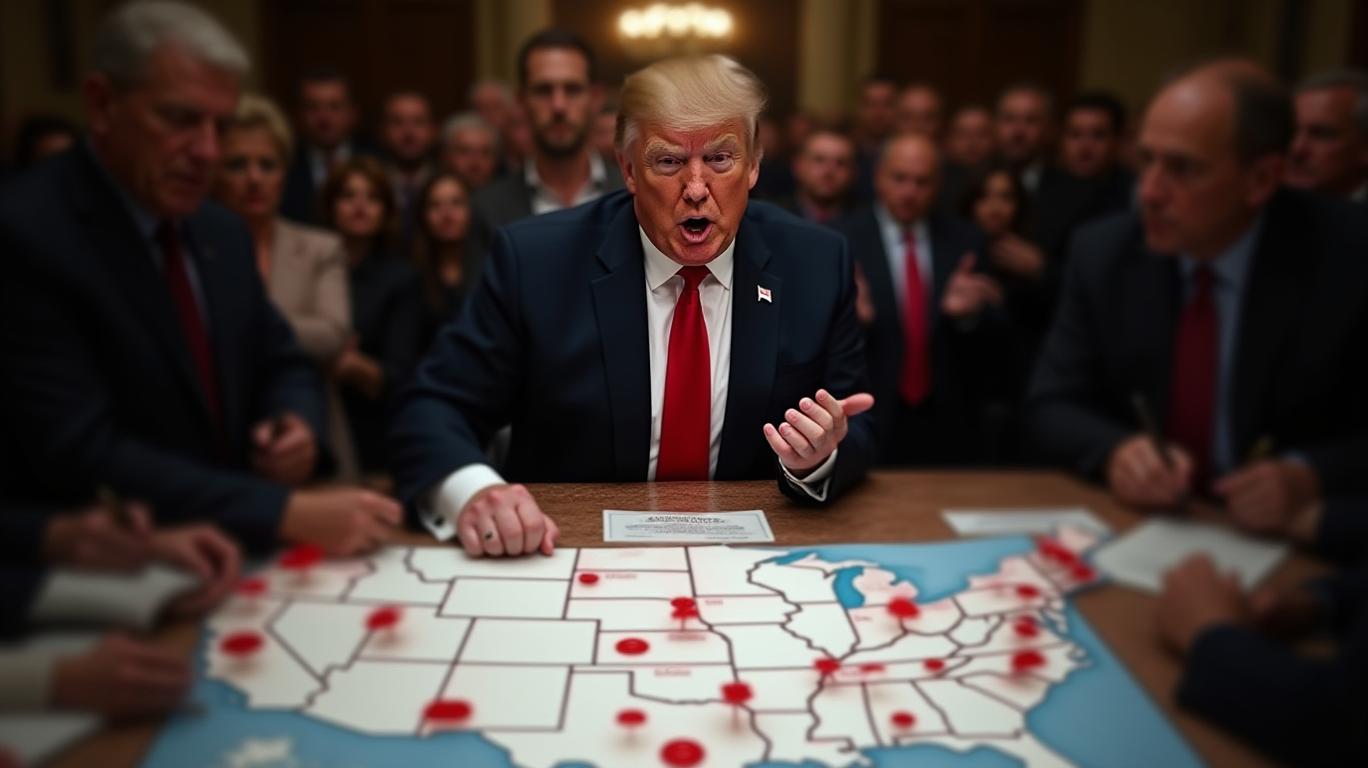

Stay ahead of the market.
Get curated U.S. market news, insights and key dates delivered to your inbox.






Comments
No comments yet