

Trump Tariffs Bury Consumers: Why This Matters for 2026 Inflation and Your Wallet
 Aime Summary
- A Kiel Institute study confirms that 96% of Trump’s tariffs are paid by U.S. consumers, not foreign exporters.
- Customs revenue surged by $200 billion in 2025, largely due to the tariff hikes.
- Federal Reserve officials and independent economists warn that these tariffs are fueling inflation, with prices expected to rise further in 2026.
- Amazon CEO Andy Jassy confirmed that tariffs are already driving up product prices on the platform.
- Trump plans to use tariff revenue for $2,000 dividend checks, but the plan’s viability depends on a pending Supreme Court decision on the tariffs’ legality.
In late January 2026, U.S. households are feeling the real-world impact of Trump’s sweeping tariff policies. For months, the administration has claimed that foreign countries are shouldering the brunt of these tariffs—but new research reveals a starkly different reality. Nearly all the cost, about 96%, is being passed on to American importers and consumers, with only a small fraction absorbed by foreign exporters. This has made the tariffs function more like a consumption tax, raising prices and shifting wealth from domestic buyers to the U.S. Treasury.
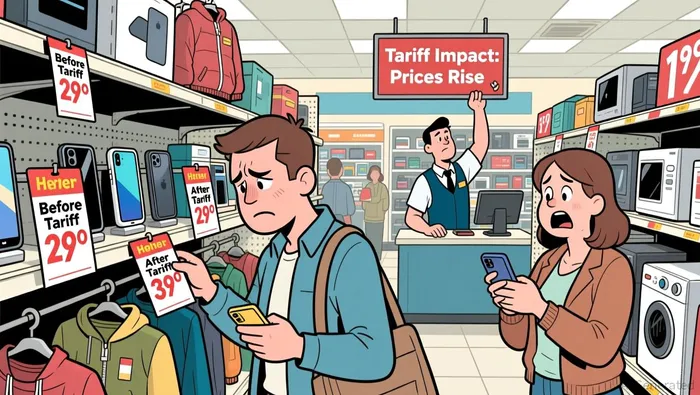
This development is particularly significant for investors and everyday Americans as the Federal Reserve grapples with inflation remaining above 2.7%. The Kiel Institute for the World Economy, in its analysis of over 25 million shipment records, found that Trump’s tariffs are acting as a regressive tax. The burden is being shouldered by a wide range of stakeholders, including consumers, importers, and domestic manufacturers that rely on imported components. The Treasury’s revenue has climbed to an eye-catching $200 billion in 2025, yet this surge in income is coming at a cost to the average consumer, with many noticing higher prices for goods that were once more affordable.
Why Is Trump's Tariff Policy Driving Inflation in 2026?
The inflationary effects of Trump’s tariffs are becoming more pronounced. According to the Kiel Institute and independent economists like Peter Orszag and Adam Posen, businesses have begun passing on the costs of these tariffs in the form of higher prices. What started as a policy designed to protect U.S. industries is now contributing to a broader inflationary environment. The Federal Reserve, which has long aimed for a 2% inflation target, is now faced with rising price pressures, and experts warn that the full impact may not be seen until mid-2026 as supply chain buffers from early 2025 are depleted.
Amazon’s CEO Andy Jassy recently confirmed what many analysts had predicted: the e-commerce giant is witnessing price increases on its platform as sellers respond to the cost pressures from tariffs. While some sellers are absorbing the costs to maintain demand, others are simply passing them on to consumers. This shift is not only affecting discretionary spending but also reducing the variety of products available, as foreign exporters—especially from Brazil and India—reduce shipments rather than lower prices to offset the tariffs.
How Are Americans Paying for Trump’s Tariffs in Practice?
The practical effects of Trump’s tariffs are becoming increasingly clear. A recent study by the Kiel Institute found that tariffs have led to a significant reduction in trade volumes with key markets, particularly in electronics and consumer goods. These tariffs are not just a tax on foreign goods—they are a tax on American consumers. With only 4% of the burden being absorbed by foreign exporters, the U.S. Treasury is collecting revenue at the expense of domestic buyers. This dynamic is especially concerning for investors and policymakers, as it challenges the idea that tariffs protect domestic industries.
The Trump administration has defended its tariff strategy by arguing that it protects American jobs and reduces the country’s reliance on foreign goods. However, the Kiel Institute’s research suggests that this has not led to an increase in U.S. manufacturing jobs. Instead, it has resulted in higher prices for a wide range of goods, from electronics to clothing. This trend is expected to continue in 2026, with inflation potentially climbing further as businesses continue to pass on costs to consumers.
What's Next for Tariffs and the U.S. Economy in 2026?
The Supreme Court’s upcoming ruling on the legality of Trump’s tariffs will be a major event for both investors and the general public. The Trump administration has cited the International Emergency Economic Powers Act to justify the widespread use of tariffs, but conservative and liberal justices have expressed skepticism about the administration’s legal argument. If the Court rules against the tariffs, the $2,000 dividend check plan—funded by tariff revenue—may face major hurdles.
Investors should also be watching for any changes in U.S. manufacturing activity and consumer spending patterns. If tariffs continue to drive inflation, the Federal Reserve may be forced to respond with tighter monetary policy, which could slow economic growth. Meanwhile, businesses that rely on imported goods may face margin pressures as they struggle to absorb the costs of these tariffs or pass them on to consumers.
As we move through 2026, the impact of Trump’s tariffs will continue to be a central economic and political issue. With inflation, consumer behavior, and the legal challenges all in play, the coming months will be a critical test of the administration’s trade policy and its long-term economic implications.

Stay ahead of the market.
Get curated U.S. market news, insights and key dates delivered to your inbox.




Comments
No comments yet