
Trump's Tariff U-Turn: Indian Agri-Exports Gain, But Key Barriers Remain


 Aime Summary
Trump's recent decision to roll back tariffs on agricultural products has sparked a significant shift in U.S. trade policy, with Indian exporters poised to benefit from the move. The White House announced the removal of duties on items such as coffee, tea, spices, and tropical fruits, a reversal that aligns with growing public pressure to curb inflation and stabilize supply chains. The exemptions, effective retroactively from November 13, 2025, are expected to boost Indian agricultural exports by an estimated $1 billion annually.
The tariff cuts mark a departure from Trump's earlier hardline stance on reciprocal tariffs, introduced in August 2025 to address trade imbalances. The administration initially resisted exemptions but gradually softened its approach as domestic inflation concerns mounted and legal challenges to the policy emerged. The latest adjustments exclude over 200 products, including beef, bananas, and cocoa, many of which are widely produced in the U.S. but still face competitive pressures from global suppliers. For Indian exporters, the removal of tariffs on high-value goods like spices and processed foods-categories where India holds a strong market presence-could enhance their competitiveness in the U.S. market.
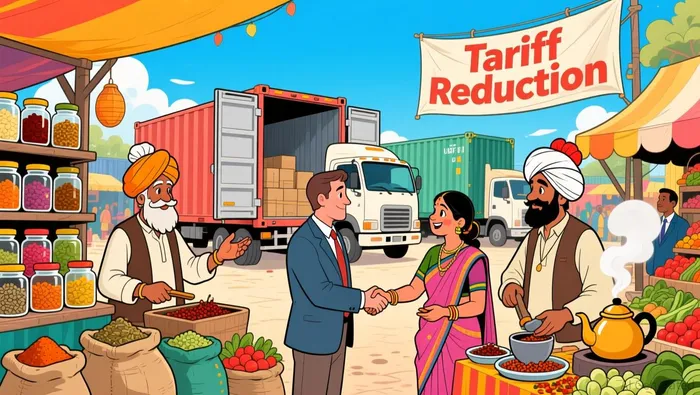 India's Commerce Ministry welcomed the move, noting that the exemptions create a "level playing field" for its agricultural exports, which totaled $2.5 billion to the U.S. in 2024. Key sectors such as tea, coffee, and spices are set to see immediate gains, with analysts estimating that 40% of India's 2024 agri-exports to the U.S. now qualify for zero-duty access. However, some experts caution that the benefits may be limited, as India has minimal presence in other exempted categories like citrus fruits and tomatoes, which are dominated by Latin American and Southeast Asian exporters.
The National Restaurant Association, which represents food service businesses, praised the decision, calling it critical for stabilizing supply chains and easing cost pressures for restaurants. "Restaurants depend on a steady, affordable supply of ingredients year-round," said Michelle Korsmo, the association's CEO, in a statement. "This action will help keep menus diverse and prices reasonable" according to the association's statement. The industry group highlighted that food costs have risen nearly 40% over the past four years, driven partly by tariffs on imported ingredients.
While the tariff cuts are seen as a win for Indian agri-exporters, the Trump administration has maintained higher duties on country-specific imports, such as Brazilian beef and Indian toys. These tariffs remain a point of contention, with Indian toy exporters reporting a slowdown in orders following the imposition of higher duties. The Commerce Ministry emphasized that further negotiations are needed to address these barriers and fully realize the potential of the U.S. market.
The administration's shift in policy also reflects broader geopolitical considerations. Recent trade agreements with countries like Ecuador and Argentina have paved the way for reduced tariffs on agricultural goods, signaling a strategic pivot toward fostering bilateral trade ties while addressing domestic economic challenges. Meanwhile, India's government has focused on improving its own export infrastructure, including rescinding quality control orders on key raw materials like viscose staple fiber to boost manufacturing competitiveness.
As the U.S. and India navigate these evolving trade dynamics, the immediate impact of the tariff exemptions is likely to be felt most strongly in the agricultural sector. For Indian exporters, the move offers a rare opportunity to expand market share in a critical trading partner, though long-term gains will depend on addressing supply chain inefficiencies and diversifying export baskets to capture a broader share of the U.S. market.

¡Entienda rápidamente la historia y el origen de varias monedas bien conocidas!
Latest Articles
Stay ahead of the market.
Get curated U.S. market news, insights and key dates delivered to your inbox.


AInvest
PRO
AInvest
PRO



Comments
No comments yet