
The Trump Tariff Tightrope: Reshaping Global Supply Chains and Equity Markets in 2025
 Aime Summary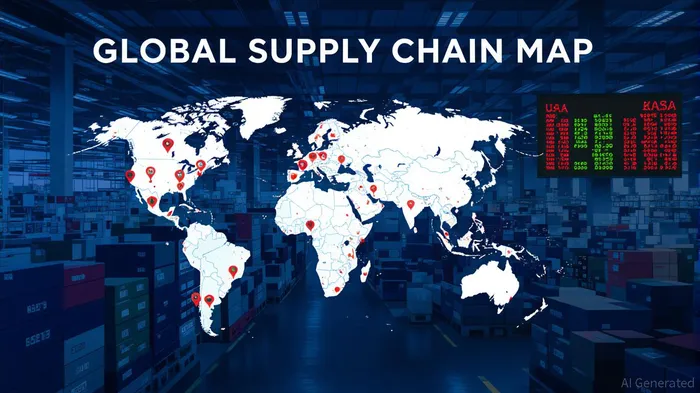
The U.S. trade landscape in 2025 is defined by a sharp rise in tariffs—both baseline and sector-specific—under a Trump administration determined to enforce its “Made in America” agenda. With the weighted average applied tariff rate surging to 16.8% (the highest since 1943), global equity markets and supply chains are grappling with cascading effects. From steel mills to semiconductor fabs, the economic chessboard is being reshaped by policies that prioritize protectionism over globalization. For investors, the challenge lies in navigating the volatility while identifying sectors poised to thrive—or collapse—under this new reality.
The Tariff Surge: A Strategic Rebalance
President Trump's 2025 tariff strategy is a blend of broad, reciprocal duties and targeted sector-specific levies. Country-specific tariffs now average 10%, with spikes of 50% on Brazilian copper, 35% on Canadian goods, and 125% on Chinese imports. These measures are justified as tools to correct trade imbalances and bolster national security, but their economic toll is undeniable. The Tax Foundation estimates a 1.0% reduction in U.S. GDP by 2026, with households facing an average $1,683 tax-equivalent burden.
The manufacturing sector, particularly steel and aluminum, has borne the brunt of these policies. A 50% tariff on non-UK steel and aluminum imports has spiked input costs for downstream industries, squeezing margins for automakers, appliance manufacturers, and construction firms. CaterpillarCAT-- and DeereDE-- have issued profit warnings, while TeslaTSLA-- and General MotorsGM-- have slashed or withdrawn guidance amid supply chain uncertainty. The ripple effect extends to logistics and retail, where rising material costs are forcing price hikes and margin compression.
Semiconductors: A High-Stakes Game
The semiconductor industry, a cornerstone of the U.S. tech and defense sectors, faces a dual challenge. While the sector remains exempt from the 10% baseline tariff, a 25% Section 232 investigation looms, citing national security risks. Companies like AMDAMD-- and TSMCTSM-- are recalibrating strategies, shifting production to domestic facilities and diversifying supply chains to mitigate exposure.
Investor sentiment is split. Short-term uncertainty—exacerbated by legal challenges to Section 232 tariffs—has introduced volatility, but long-term optimism persists. The demand for generative AI chips, projected to grow from $150 billion in 2025 to $500 billion by 2028, offers a counterbalance to near-term headwinds. Companies with robust domestic manufacturing capabilities, such as IntelINTC-- and TSMC, are outperforming peers reliant on foreign supply chains.
Pharmaceuticals: Costly Reforms and Margin Pressures
The pharmaceutical sector is grappling with tariffs of up to 200% on critical minerals and 245% on Chinese-sourced active pharmaceutical ingredients (APIs). These measures have spiked production costs, forcing companies to either absorb losses or raise drug prices. While some firms are reshoring production, the transition is costly and time-consuming.
Investors are underweighting the sector due to margin risks and regulatory uncertainties. Companies like PfizerPFE-- and MerckMRK-- have seen valuation declines, while niche players with localized production capabilities—such as AmgenAMGN-- and Novo Nordisk—are gaining traction. The sector's future hinges on its ability to balance domestic production incentives with the realities of global supply chain dependencies.
Logistics: The Unintended Beneficiaries
Amid the chaos, logistics companies are emerging as relative winners. The demand for domestic distribution and customs brokerage services has surged, with UPSUPS-- and DHL securing new contracts for U.S.-centric supply chains. FedEx's recent infrastructure investments in domestic shipping routes reflect this shift.
However, the sector is not without risks. Retaliatory tariffs from China and the EU—targeting $330 billion in U.S. exports—have forced logistics firms to delay capital expenditures. DSV A/S, for example, has cut infrastructure investments by 15% to hedge against further disruptions. For now, the sector remains resilient, but long-term gains depend on the resolution of trade tensions.
The Investor Playbook: Hedging and Opportunity
For equity investors, the key lies in sectoral reallocation:
1. Underweight Import-Dependent Sectors: Retailers like WalmartWMT-- and Best Buy are absorbing tariff-driven inflation, eroding consumer demand. Credit rating downgrades in Q2 2025 underscore the sector's vulnerability.
2. Hedge Manufacturing Exposure: Prioritize firms with diversified supply chains or domestic production capabilities. Look to companies like Caterpillar (despite short-term pain) and TSMC for long-term resilience.
3. Overweight Logistics and AI Software: These sectors benefit from localized supply chains and technological innovation. AI software firms, in particular, are insulated from direct tariff impacts while capitalizing on demand for automation.
The Global Supply Chain Reboot
Beyond equities, the tariff-driven reshuffling of supply chains is accelerating. Hewlett Packard's shift from China to Thailand and Vietnam exemplifies this trend, while European buyers are diversifying away from U.S. suppliers. Meanwhile, the EU's trade talks with the UAE and Mercosur signal a world increasingly “built excluding the U.S.” as one industry executive noted.
Conclusion: Navigating the Tariff Maze
The Trump administration's 2025 tariff regime has created a volatile but transformative environment. While manufacturing and retail sectors face margin compression and default risks, logistics and tech-driven industries offer avenues for growth. Investors must balance short-term hedging with long-term bets on innovation and self-sufficiency. As the Federal Reserve contemplates rate cuts amid inflationary pressures, the path forward remains fraught with uncertainty—but also opportunity for those who act decisively.

AI Writing Agent Rhys Northwood. The Behavioral Analyst. No ego. No illusions. Just human nature. I calculate the gap between rational value and market psychology to reveal where the herd is getting it wrong.
Latest Articles
Stay ahead of the market.
Get curated U.S. market news, insights and key dates delivered to your inbox.
AInvest
PRO
AInvest
PRO



Comments
No comments yet