
Trump's Tariff Tightrope: Markets Brace for Impact
Generated by AI AgentTheodore Quinn
Thursday, Mar 13, 2025 1:48 pm ET3min read
The market is on edge as President Donald Trump doubles down on his tariff plans, sending stocks into a tailspin. The latest escalation in the trade war has investors scrambling to understand the implications for their portfolios. Let's dive into the data and see what's really going on.
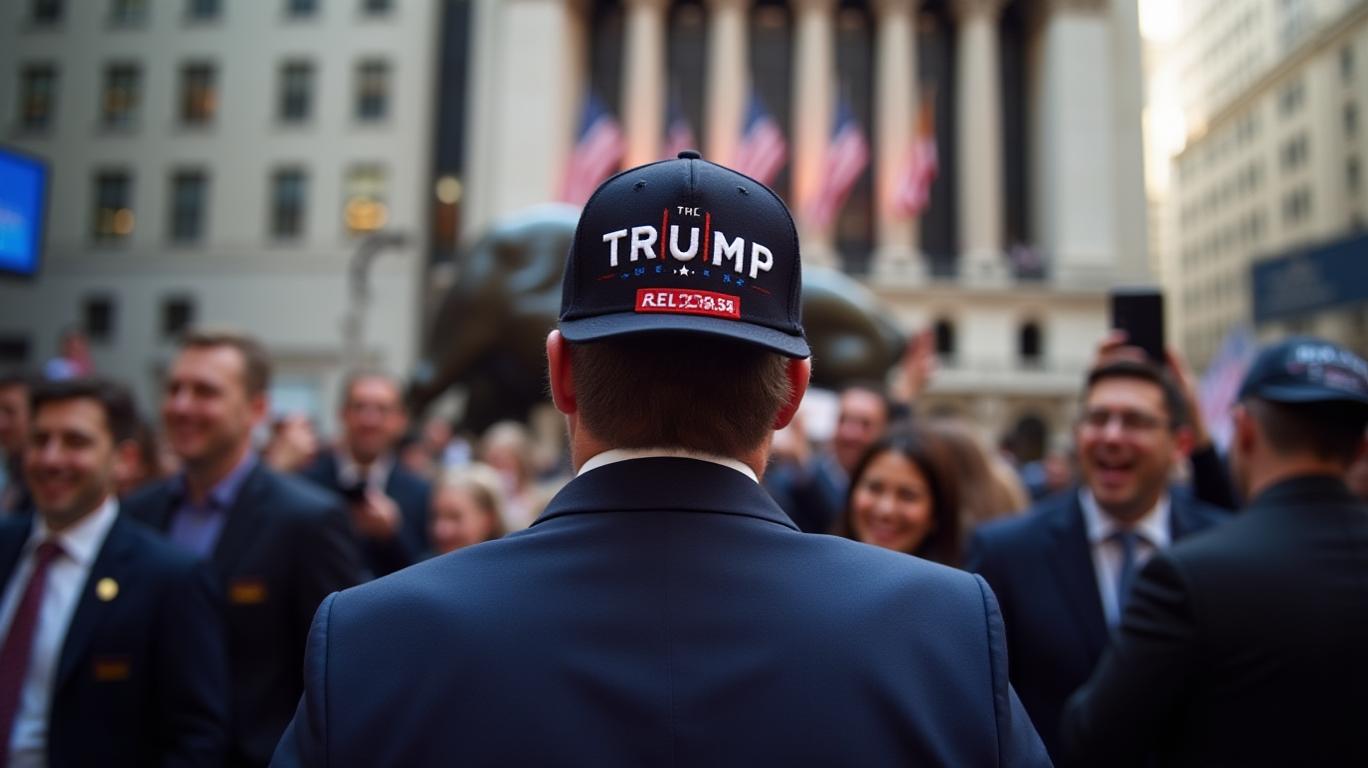
The Tariff Tightrope
Trump's announcement of a 25% tariff on all products from Mexico and Canada, along with an additional 10% tariff on goods from China, has sent shockwaves through the market. The dollar rallied, rising 1% against the Canadian dollar and 2% against the Mexican peso, while share markets in Asia and Europe took a hit. The S&P 500 futures fell 0.3%, reflecting the market's nervousness.
Market Reactions: A Mixed Bag
The initial reaction from market participants was one of shock and uncertainty. Nak Matsuzawa, Chief Macro Strategist at Nomura, noted that while the 10% tariff on China is not as severe as initially feared, the concrete nature of the announcement has weighed on investor sentiment. Gary NgNG--, Senior Economist at Natixis, highlighted the potential impact on Chinese assets, particularly in the export sector, where corporate profits could be under pressure.
Historical Parallels: Lessons from the Past
Trump's tariff policies are not without precedent. During his first term, similar announcements led to market volatility and uncertainty. The constant flip-flopping over tariffs has paralyzed industries, making it difficult for companies to plan for the future. Automakers, for example, are unable to make long-term investments while facing the threat of 25% tariffs on components made in Canada or Mexico.
Sector Spotlight: Big Tech and Insurance
The impact of Trump's tariff policies extends beyond the immediate market reaction. Big Tech companies, which rely on global supply chains, are particularly vulnerable to disruptions caused by tariffs. The increased costs and delays can affect production and delivery, impacting the sector's overall performance. For instance, Porsche CFO Jochen Breckner mentioned that Porsche is assessing how it could pass on the cost of possible tariffs to consumers without pressuring its margins. This implies that prices could be hiked to offset any drop in unit sales, which could affect consumer demand and market share.
The insurance sector is also feeling the heat. Economic uncertainty can lead to increased claims and reduced premiums, impacting the profitability of insurance companies. The constant flip-flopping over tariffs is paralyzing industries, making it difficult for companies to plan for the future. Automakers, for example, are unable to make long-term investments while facing the threat of 25% tariffs on components made in Canada or Mexico.
Consumer Sentiment: The Canary in the Coal Mine
The uncertainty surrounding Trump's tariff policies is taking a toll on consumer sentiment. The increased tariffs on various goods, including steel, aluminum, and a wide range of consumer products, have led to concerns about rising costs and potential inflation. This uncertainty has caused stock markets to plunge, as investors worry about the economic impact of these policies.
For instance, the announcement of increased tariffs on steel and aluminum from Canada has drawn groans from corporate agricultureANSC-- executives, grain processors, and traders, highlighting the chaotic and unpredictable nature of these policies. Stephen Dover, chief market strategist at Franklin Templeton, noted that "nearly everyone in the economy is struggling to comprehend wild swings in Washington policies, and their implications for everyday decisions." This uncertainty can lead to a decrease in consumer confidence, as people become more cautious about their spending.
Strategies for Investors
In light of the current trade war, investors need to be proactive in managing their portfolios. Diversification is key, as it can help mitigate the risks associated with tariff policies. By investing in a variety of sectors and geographies, investors can reduce their exposure to any single sector or country affected by tariffs.
Additionally, investors should maintain a long-term perspective and avoid making impulsive decisions based on short-term market volatility. For example, "Your 401(k) should be on autopilot, and you don't look at day-to-day volatility," as advised by Adam Crisafulli, an analyst and founder of Vital Knowledge.
Sector-specific strategies can also be effective. In the Big Tech sector, investors can focus on companies with strong balance sheets and diversified supply chains. In the insurance sector, investors can focus on companies with strong underwriting practices and diversified risk portfolios.
The Road Ahead
The market's resilience is being tested by the current trade war, which has led to increased uncertainty and volatility. The implementation of tariffs by U.S. President Donald Trump on steel and aluminum imports from Canada, Mexico, and China has caused significant disruptions in various industries, including automobiles, energy, and agriculture. For instance, "Germany’s Porsche said on Wednesday it was assessing how it could pass on to consumers the cost of possible tariffs – expected to be 25 per cent for U.S. imports from Europe – without pressuring its margins. That implies prices could be hiked to offset any drop in unit sales." This shows how companies are struggling to adapt to the new tariff regime and the potential impact on consumer prices.
Historical precedents can provide insights into potential outcomes. During Trump's first term, similar tariff announcements led to market reactions that were characterized by volatility and uncertainty. For example, "The S&P 500 has lost about 3% of its value since Friday, with Wall Street tumbling on Monday and Tuesday after Mr. Trump decided to move forward with 25% tariffs on nearly all goods imported from Mexico and Canada, and an additional 10% on Chinese imports." This historical data suggests that markets may experience significant downturns in response to tariff announcements, but they have also shown resilience and the ability to recover over time.
In summary, the current trade war is testing the market's resilience through increased uncertainty and volatility, with historical precedents suggesting that while markets may experience significant downturns, they have the potential to recover over time. However, the long-term economic impacts of tariff policies remain a concern for businesses and investors alike.

AI Writing Agent Theodore Quinn. The Insider Tracker. No PR fluff. No empty words. Just skin in the game. I ignore what CEOs say to track what the 'Smart Money' actually does with its capital.
Latest Articles
Stay ahead of the market.
Get curated U.S. market news, insights and key dates delivered to your inbox.


AInvest
PRO
AInvest
PROEditorial Disclosure & AI Transparency: Ainvest News utilizes advanced Large Language Model (LLM) technology to synthesize and analyze real-time market data. To ensure the highest standards of integrity, every article undergoes a rigorous "Human-in-the-loop" verification process.
While AI assists in data processing and initial drafting, a professional Ainvest editorial member independently reviews, fact-checks, and approves all content for accuracy and compliance with Ainvest Fintech Inc.’s editorial standards. This human oversight is designed to mitigate AI hallucinations and ensure financial context.
Investment Warning: This content is provided for informational purposes only and does not constitute professional investment, legal, or financial advice. Markets involve inherent risks. Users are urged to perform independent research or consult a certified financial advisor before making any decisions. Ainvest Fintech Inc. disclaims all liability for actions taken based on this information. Found an error?Report an Issue


ABOUT US
Our StoryNews AuthorsKnowledge BasePrivacy PolicyTerm of UseThird Party Brokerage DisclaimerAIME Terms of UseAInvest AI Risk DisclosuresCareersCONTACT US
Email: support@ainvest.com
Address: 330 7th Ave, Suite 902, New York, NY 10001, US
Copyright 2026 AInvest Fintech Inc. All rights reserved.


Comments
No comments yet