
Trump Tariff Strategy at Risk as Supreme Court Considers IEEPA Authority in November 2025
 Aime Summary
The U.S. Supreme Court’s pending decision on President Donald J. Trump’s executive authority under the International Emergency Economic Powers Act (IEEPA) could have significant implications for his ongoing tariff strategy. Legal experts and trade analysts have highlighted that a ruling concluding Trump lacks the statutory authority to impose large-scale tariffs could curtail or halt the enforcement of key provisions of his trade agenda.
Under , the president is granted broad powers to regulate commerce during a declared national emergency. Trump has relied on this legal framework to justify a series of tariffs on imports from various countries, including China, Canada, and Mexico. These tariffs have been a cornerstone of his economic policy, aimed at protecting domestic industries and reducing trade deficits.
However, the Supreme Court’s review of these actions raises the possibility that the legal basis for such tariffs may be deemed insufficient or misapplied. The case, which is among several consolidated legal challenges, centers on whether the president’s use of IEEPA was within the scope of its intended purpose. If the court rules that the executive overstepped its authority, Trump may be compelled to revise or rescind certain tariff measures.
The potential for a court-imposed limitation on executive trade power has already triggered discussions among lawmakers and industry representatives. Businesses that have adapted production and supply chains in anticipation of continued high tariffs are now assessing the risk of sudden policy reversals. have emphasized that a ruling against the administration’s interpretation of IEEPA could set a precedent for future executive actions, reinforcing judicial oversight in trade policy.
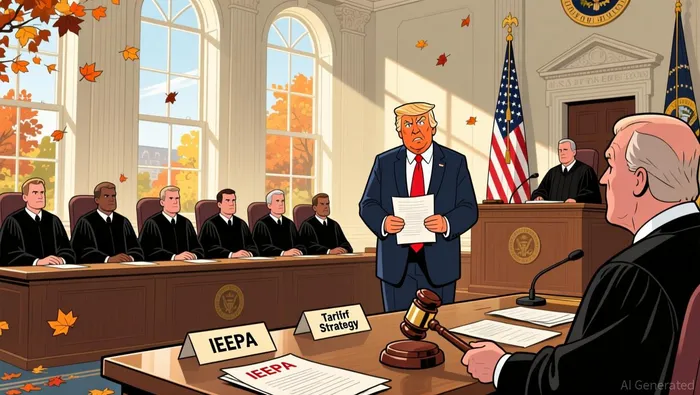
The case marks a pivotal moment in the evolving relationship between the executive and regarding the scope of emergency powers. Past rulings have occasionally constrained presidential authority in areas of national security and economic regulation, and this case could further define the boundaries of such powers in a globalized economic environment.
If the court rules against Trump’s interpretation of IEEPA in November 2025, the impact on trade relations and domestic markets may be immediate. The administration would be required to either halt new tariffs or seek alternative legal justifications, potentially slowing the implementation of its broader trade strategy. This could lead to a recalibration of trade negotiations and domestic economic policies, especially if the ruling prompts a broader re-evaluation of executive actions.
are closely monitoring the legal developments, as uncertainty surrounding the future of the tariff program could affect investor confidence and trade flows. The decision will not only shape Trump’s remaining term but also influence the legal landscape for future administrations seeking to use similar emergency powers to implement trade measures.

Stay ahead of the market.
Get curated U.S. market news, insights and key dates delivered to your inbox.


AInvest
PRO
AInvest
PRO



Comments
No comments yet