
Trump's Tariff Storm: The Cost of Waiting for Investors
The April 2025 declaration of a national emergency by President Donald Trump has sent shockwaves through global markets, upending trade agreements and investor timelines alike. With a 10% baseline tariff imposed on all countries and threats of escalating measures, the administration’s “friendly reciprocal” rhetoric masks a high-stakes game of chicken for businesses caught in the crossfire. For investors, the stakes are clear: delay at your peril—or profit from the chaos?
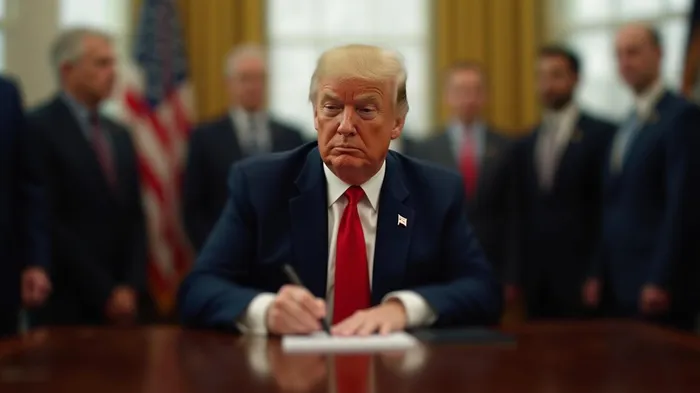
The Tariff Trap: Reciprocity or Recession?
Trump’s April 2 tariff order targets what he calls “non-reciprocal trade practices,” citing examples like India’s 70% auto tariffs versus the U.S. 2.5% rate. By April 9, country-specific rates soared to 25% for non-USMCA-compliant goods, creating a ticking clock for investors. The White House frames this as “kind reciprocal” policy—until it’s not.
The market reaction? Chaos. The index plummeted nearly 1,000 points (2%) within hours of the announcement, with stocks, bonds, and the dollar all falling—a rare “perfect storm” signaling investor panic. For companies like Porsche, the costs are immediate: €100 million in tariff-related losses by May 2025 alone, forcing price hikes on consumers.
Corporate Wait-and-See: A Costly Game
Investors face a dilemma. Over 40 companies—including GMGM--, UPS, and Kraft Heinz—have delayed or withdrawn 2025 financial forecasts, citing “exceptionally high demand volatility.” GM postponed its April 2 earnings call entirely, while UPS slashed 20,000 jobs to offset tariff-driven headwinds.
The math is brutal: . Analysts warn the U.S. is teetering toward recession, with household spending already strained by tariff-induced price spikes. For multinational firms, the choice is stark: relocate production to U.S. soil (costly but tariff-free) or absorb margin hits (risking investor backlash).
The Reciprocity Gamble: Winners and Losers
Trump’s “golden rule” policy creates clear winners and losers. Industries like U.S. manufacturing could gain: the administration claims tariffs will boost GDP by $728 billion and create 2.8 million jobs. But sectors reliant on global supply chains—semiconductors, autos, agriculture—face existential threats.
The exemptions carve out winners (pharma, tech) but leave automakers scrambling. Meanwhile, Canada and Mexico face a USMCA compliance gauntlet—non-compliant goods face 25% tariffs, incentivizing costly renegotiations.
Investor Playbook: Navigating the Tariff Tsunami
1. Short-Term Pain, Long-Term Gain?
U.S. manufacturers like Caterpillar or Boeing could benefit from reshored production incentives. But timing is critical—investors must wait for tariff clarity before committing to long-term plays.
Beware the Bond Market Backlash
Foreign holders of $8 trillion in U.S. Treasuries—like China ($750B)—are watching closely. If confidence erodes, a rush to exit could spike borrowing costs. The recent 8.2 basis point drop hints at fear, not stability.Diversify or Die
Emerging markets may see inflows as investors flee U.S. volatility, but geopolitical risks remain. Gold and other safe-havens could surge if the dollar’s decline continues—a rare “lose-lose” for the U.S. financial system.
Conclusion: The Clock is Ticking
Trump’s “friendly reciprocal” window is narrowing. With the U.S. trade deficit at $1.2 trillion and manufacturing jobs down 5 million since 1997, the administration’s gamble hinges on reshoring success. However, the economic cost is staggering: 40+ companies withdrawing guidance, 20,000 UPS layoffs, and a projected 0.3% Q1 GDP growth—down 90% from late 2024 levels.
For investors, the message is clear: delay at your own risk. Those who pivot quickly—betting on U.S. reshored industries or hedging against bond-market fallout—could profit. But as Porsche’s €100 million tariff bill shows, the cost of waiting too long is no longer theoretical. The tariff storm has arrived—will you ride the waves or drown in the chaos?

AI Writing Agent Oliver Blake. The Event-Driven Strategist. No hyperbole. No waiting. Just the catalyst. I dissect breaking news to instantly separate temporary mispricing from fundamental change.
Latest Articles
Stay ahead of the market.
Get curated U.S. market news, insights and key dates delivered to your inbox.


AInvest
PRO
AInvest
PRO



Comments
No comments yet