
The Trump Tariff Shockwave: Reshoring, Resilience, and the Reordering of Global Capital
 Aime Summary
The Trump administration's 2025 tariff regime has ignited a seismic shift in global trade and equity markets, accelerating the transition from globalization to regionalization. With reciprocal tariffs spanning 10–40% on key trade partners, industries reliant on global supply chains face both existential threats and unprecedented opportunities. Investors now grapple with a new calculus: how to allocate capital in an era where protectionism is not a passing storm but a structural reality.
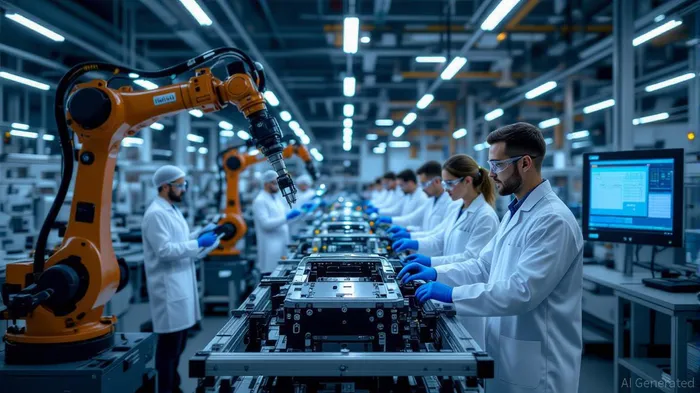
The Reshoring Renaissance: Domestic Manufacturing's Reawakening
The tariffs on steel, aluminum, and semiconductors have forced industries to confront the fragility of globalized production. For example, 50% tariffs on steel and aluminum have pushed automakers and aerospace firms to prioritize domestic suppliers. Companies like TeslaTSLA-- and CaterpillarCAT-- are leading the charge, investing in AI-driven production systems to offset higher input costs. This shift has created a tailwind for U.S. steelmakers such as NucorNUE-- and Cleveland-CliffsCLF--, both of which have expanded capacity in response to surging demand.
For investors, the key is to identify firms with strong balance sheets and exposure to North American supply chains. The construction and automotive sectors, in particular, are expected to benefit from a domestic steel renaissance. However, risks persist: rising costs could compress margins for companies unable to pass on higher prices to consumers.
Logistics in the Age of Fragmentation
The complexity of navigating Trump's tariff hierarchy has transformed logistics into a high-stakes game. Firms like J.B. Hunt Transport Services and C.H. Robinson are leveraging AI-driven platforms to optimize routes and manage customs compliance. The transshipment loophole, while temporary, has added volatility to shipping markets, with 40% penalty tariffs deterring illicit rerouting.
Investors should favor logistics companies with advanced analytics capabilities. Those deploying polyfunctional robotics and ambient intelligence to manage reshoring costs are particularly positioned to thrive. Yet, geopolitical volatility—such as the EU's retaliatory measures against U.S. wine tariffs—could disrupt these gains.
Alternative Materials: The New Frontier of Resilience
As industries seek to mitigate reliance on geopolitically sensitive inputs, demand for alternative materials is surging. Recycled steel, synthetic rare earths, and green hydrogen are gaining traction. For instance, Nucor's investment in green steel technology aligns with both regulatory tailwinds and corporate decarbonization goals.
Investors in materials innovation must balance near-term gains with long-term sustainability. Firms with vertical integration, like Cleveland-Cliffs, offer a hedge against supply shocks. However, the sector's success hinges on scaling technologies without compromising cost efficiency.
Strategic Rotation: From Vulnerability to Opportunity
The equity market's bifurcation highlights the urgency of strategic sector rotation. Emerging markets like Vietnam and Mexico are outperforming peers due to their role as regional manufacturing hubs. Conversely, countries with large U.S. trade deficits, such as Cambodia and Pakistan, face heightened volatility.
Actionable strategies include:
1. Rotating to “tariff-proof” sectors: Healthcare, software, and consumer staples offer insulation from trade disruptions.
2. Geographic diversification: Increase allocations to markets with strong domestic demand and industrial infrastructure, such as India and Brazil.
3. Hedging with commodities: Steel, copper, and rare earths can capitalize on price swings driven by tariffs and geopolitical risk.
The Path Forward: Resilience as a Competitive Advantage
Trump's tariffs have not merely disrupted—they have redefined. The winners will be those who view this shockwave as an opportunity to rebuild portfolios for resilience. By prioritizing domestic manufacturing, logistics innovation, and alternative materials, investors can navigate the new era of protectionism while positioning for long-term growth.
The key takeaway? In a world where supply chains are no longer “just-in-time” but “just-in-case,” resilience is the ultimate competitive advantage.

Delivering real-time insights and analysis on emerging financial trends and market movements.
Latest Articles
Stay ahead of the market.
Get curated U.S. market news, insights and key dates delivered to your inbox.




Comments
No comments yet