
Trump's Tariff Regime: Geopolitical Risks, Supply Chain Shifts, and Tactical Opportunities in Emerging Markets
 Aime Summary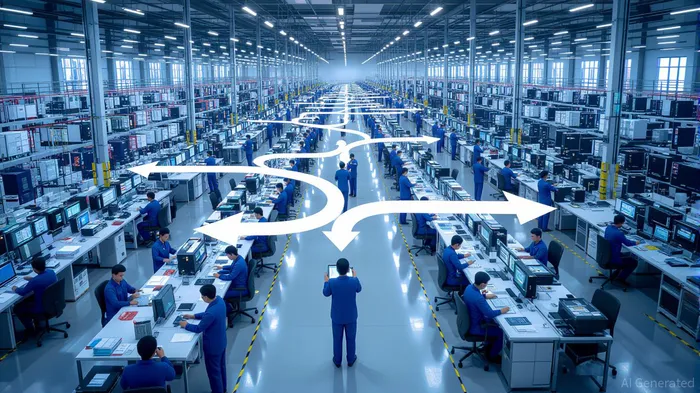
The global trade landscape has entered a new era of volatility, driven by President Trump's July 2025 executive order imposing sweeping tariffs on 67 countries, the EU, and Taiwan. This aggressive reshaping of U.S. trade policy—framed as a tool to reduce deficits and “level the playing field”—has triggered a seismic realignment of multinational supply chains and heightened geopolitical risks, particularly in Asia-Pacific emerging markets. For investors, the challenge is clear: navigate the turbulence of protectionism while identifying pockets of resilience and growth.
The Tariff Shockwave: Reshaping Trade Flows
Trump's tariffs, ranging from 10% to 41%, have disrupted decades-old trade patterns. The immediate impact is evident in the exodus of manufacturing from China and Southeast Asia. A 2025 World Economic Forum study reveals that 60% of multinational firms have accelerated onshoring or nearshoring, with India and Vietnam emerging as top beneficiaries. For example, India's FDI inflows surged to $81.04 billion in fiscal year 2024–25, driven by its 100% foreign ownership policies and strategic alignment with U.S. geopolitical goals. Meanwhile, Vietnam's electronics sector grew 12% year-to-date, as AppleAAPL-- shifted iPhone production there to evade U.S. tariffs.
However, these shifts are not without risks. The U.S.-China trade war has intensified, with tariffs on Chinese goods spiking to 50%. Retaliatory measures from Beijing, coupled with U.S. pressure on allies like Japan and South Korea to reduce reliance on Chinese inputs, are creating a fragmented global supply chain. Investors must weigh the short-term gains of nearshoring against the long-term instability of fractured trade networks.
Geopolitical Risks and Strategic Alliances
The Asia-Pacific region is a battleground for geopolitical influence. Trump's “Liberation Day” tariffs on China and Vietnam are part of a broader strategy to counter Chinese economic dominance, aligning with the Quad alliance (U.S., India, Japan, Australia). India, however, remains a complex partner. While it has attracted $500 billion in projected bilateral trade with the U.S. by 2030 if a deal is struck, New Delhi's reluctance to fully support U.S. positions on issues like the Russia-Ukraine war has created friction. The 90-day tariff reprieve for India—extended to August 1—has given negotiators time to resolve disputes over agricultural access, but a breakdown could trigger retaliatory tariffs and a capital exodus to Southeast Asia.
For investors, the key is to monitor the August 1 deadline for U.S.-India trade talks. A successful agreement could unlock India's defense and tech sectors, while a failure may redirect investments to Vietnam and Indonesia.
Sector Opportunities in Emerging Markets
Amid the chaos, certain sectors in Asia-Pacific emerging markets are gaining traction:
- Semiconductors and Advanced Manufacturing: India's semiconductor industry is booming, with four of the world's top ten greenfield projects located there. However, bottlenecks like energy shortages and land acquisition delays remain risks. Investors should favor companies with strong government partnerships, such as Tata Group or WiproWIT--.
- Automotive and EVs: Mexico's automotive sector is thriving under USMCA, with Ford and General MotorsGM-- benefiting from duty refunds. Meanwhile, South Korea's EV battery exports are surging, driven by global demand for high-performance computing chips.
- Agriculture and Food Security: India's dairy and agricultural sectors are central to U.S. trade negotiations. While protectionist policies pose risks, a U.S. agreement could open new export avenues for Indian agribusinesses.
Tactical Investment Strategies
- Diversify Supply Chain Exposure: Avoid overconcentration in any single emerging market. For example, pair investments in India's manufacturing with Vietnam's electronics or Mexico's automotive sectors.
- Hedge Geopolitical Risks: Allocate capital to defensive sectors like utilities or gold, which can offset volatility. Gold, though down in July 2025, remains a long-term hedge against trade wars.
- Leverage AI and Data Analytics: Use AI-driven tools to monitor tariff-sensitive industries and reroute investments in real time. For instance, track shipment rerouting patterns to identify underappreciated markets.
- Prioritize Resilient Sectors: Focus on industries with strong domestic demand, such as India's pharmaceuticals or Vietnam's consumer electronics.
Conclusion: Adapt or Be Left Behind
Trump's tariff regime has created a paradox: short-term pain for long-term structural shifts. While the U.S. dollar's strength and U.S. tech outperformance are shortening investors' horizons, the broader trend toward supply chain resilience is irreversible. For those willing to navigate the geopolitical chessboard, emerging markets like India and Vietnam offer compelling opportunities—but only for those who enter with caution, agility, and a clear strategy.
In this new era of protectionism, the winners will be those who see beyond the noise and invest with foresight.

Delivering real-time insights and analysis on emerging financial trends and market movements.
Latest Articles
Stay ahead of the market.
Get curated U.S. market news, insights and key dates delivered to your inbox.
AInvest
PRO
AInvest
PRO



Comments
No comments yet