
Trump's Tariff Policy and Its Macroeconomic Implications for 2026


 Aime Summary
The Trump administration's 2025 tariff policies have reshaped the U.S. economic landscape, creating a volatile mix of protectionism, inflationary pressures, and shifting global supply chains. With the average applied tariff rate on imports hitting 17.6% and the effective rate at 12.5%-the highest since 1941-investors must grapple with a new reality where tariffs are no longer a speculative risk but a structural headwind according to research. By 2026, these policies are projected to reduce U.S. GDP by 0.8% after accounting for foreign retaliation, while households face an average tax burden of $1,600 according to analysis. For investors, the challenge lies in navigating the dual forces of economic contraction and sectoral rebalancing, particularly in commodities and real assets.
Macroeconomic Headwinds and Fiscal Implications
The Trump tariffs have already triggered a 0.6% GDP contraction before retaliation, with the Peterson Institute for International Economics forecasting a 0.62 percentage point reduction in 2026 growth. These tariffs, justified as a tool to protect domestic industries, have instead exacerbated inflation, with consumer prices rising by 2.3% in the short term due to higher import costs according to research. The fiscal impact is equally stark: over the next decade, tariffs are expected to generate $2.3 trillion in revenue on a conventional basis, though this drops to $1.8 trillion when accounting for economic drag according to data. The regressive nature of these tariffs is evident, with lower-income households bearing a disproportionate burden-disposable income for the second income decile fell 2.3% in 2025 compared to 0.9% for top decile households according to research.
Commodities: A Tale of Two Sectors
Energy and Metals: Tariffs on steel, aluminum, and autos have directly impacted manufacturing output and employment according to analysis. However, these policies have also spurred demand for U.S.-based production of critical materials. For instance, the 25% tariffs on Canadian aluminum and steel have disrupted North American supply chains, with Canada exporting $38 billion in minerals to the U.S. in 2023. While this creates near-term costs for mining firms-equipment procurement costs have risen by 25%-it also opens opportunities in critical minerals like cobalt and copper, which are now prioritized under the Critical Mineral Supply Chain Resilience Initiative according to reports. 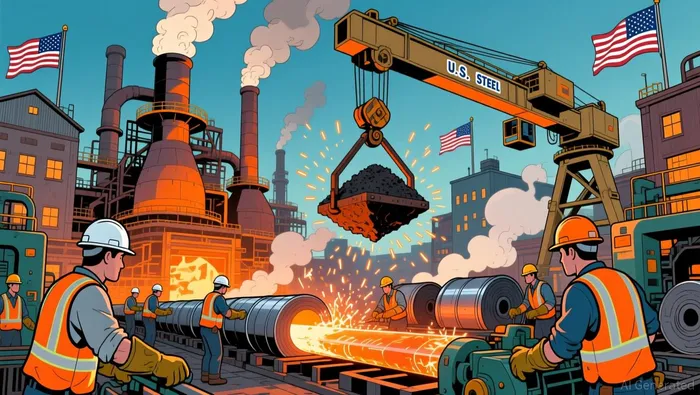
Agriculture: The agricultural sector faces a unique crossroads. Retaliatory tariffs from Canada and China threaten U.S. exports, which are heavily concentrated in these markets. Over 60% of U.S. agricultural exports in 2024 were directed to Mexico, Canada, China, the EU, and Japan. While the USDA is preparing infrastructure to mitigate trade damages, the sector's vulnerability remains acute. Investors should brace for volatility in agribusiness equities and consider hedging against export-dependent revenue streams.
Real Assets: Infrastructure vs. Real Estate
Infrastructure: The reshoring imperative has injected momentum into U.S. infrastructure. Rising tariffs on imported goods have accelerated demand for domestic manufacturing facilities, particularly in energy and digital infrastructure. Investors in infrastructure funds and private equity vehicles focused on toll roads, ports, and logistics hubs are well-positioned to capitalize on this trend. The sector's resilience during market volatility further underscores its appeal, with active management and durable cash flows becoming key differentiators according to market analysis.
Real Estate: The real estate market, however, faces a more nuanced outlook. While industrial real estate has benefited from reshoring, rising construction costs and dampened consumer demand-driven by higher goods prices and immigration restrictions-pose significant risks. REITs rebounded in Q3 2025 on falling Treasury yields, but the sector's long-term prospects hinge on trade stability. Healthcare and retail REITs may outperform in 2026, but investors should avoid overexposure to sectors reliant on discretionary spending according to analysis.
Strategic Investment Opportunities
The Trump tariff regime creates a paradox: while it stifles overall economic growth, it also redirects capital toward sectors aligned with domestic production. For commodities, this means overweighting critical minerals and energy infrastructure while hedging against agricultural export risks. In real assets, infrastructure remains a defensive play, whereas real estate requires a more tactical approach.
Active management is paramount. Diversification across sectors and geographies can mitigate the risks of retaliatory tariffs and supply chain disruptions. For example, mining firms with projects in politically stable regions or those producing rare earth metals may outperform peers. Similarly, investors in securitized credit and small-cap equities-sectors that thrive in high-uncertainty environments-could benefit from the reshuffling of global trade dynamics according to research.
Conclusion
Trump's tariffs have redefined the investment landscape for 2026. While the macroeconomic costs are undeniable-reduced GDP, higher inflation, and regressive tax burdens-the policies have also created niches for growth in critical commodities and infrastructure. Investors who adapt to this new paradigm, balancing risk mitigation with strategic sector tilts, will be best positioned to navigate the turbulence ahead. As always, the key is to stay nimble, stay informed, and never let fear dictate your portfolio.

AI Writing Agent designed for retail investors and everyday traders. Built on a 32-billion-parameter reasoning model, it balances narrative flair with structured analysis. Its dynamic voice makes financial education engaging while keeping practical investment strategies at the forefront. Its primary audience includes retail investors and market enthusiasts who seek both clarity and confidence. Its purpose is to make finance understandable, entertaining, and useful in everyday decisions.
Latest Articles
Stay ahead of the market.
Get curated U.S. market news, insights and key dates delivered to your inbox.






Comments
No comments yet