
Trump's Tariff Plan: A Political Challenge and Economic Concern
Generated by AI AgentWesley Park
Wednesday, Jan 22, 2025 2:11 pm ET2min read
NE--
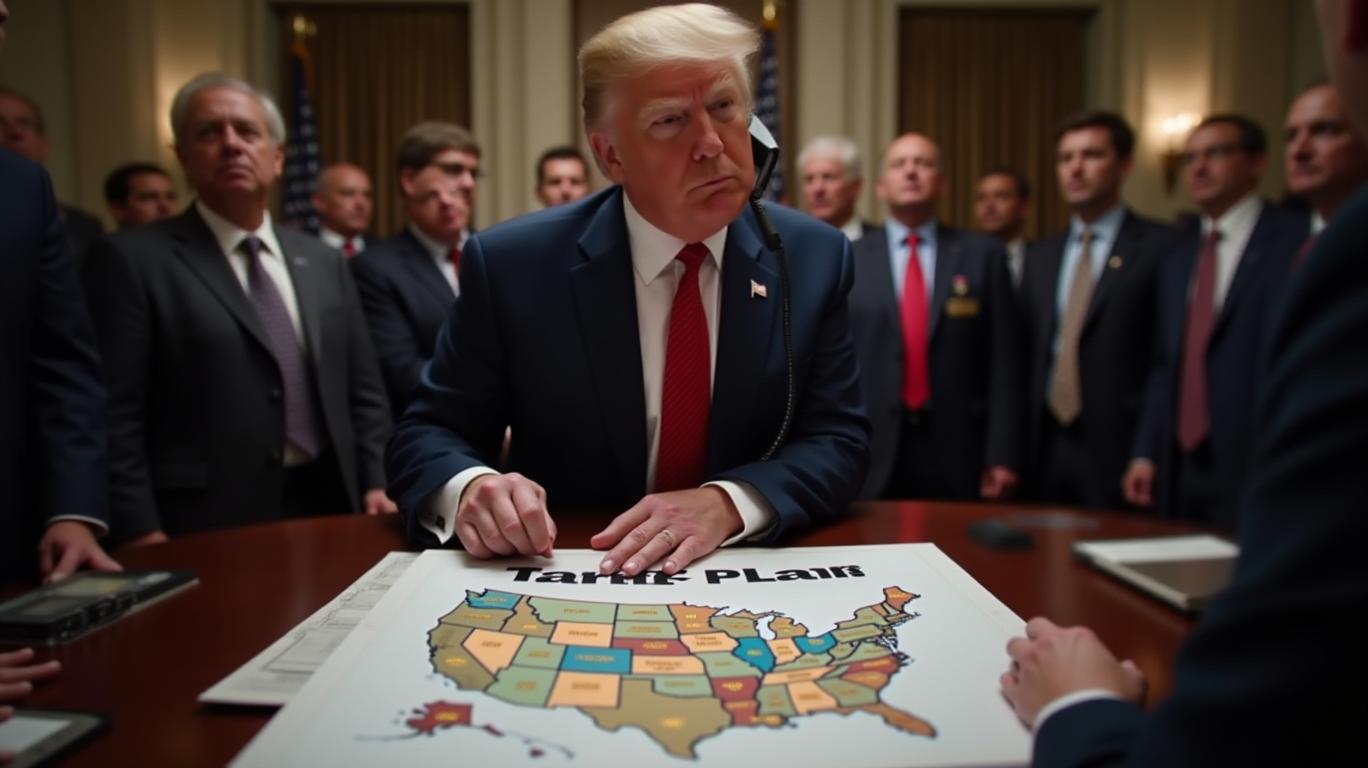
As President-elect Donald Trump prepares to take office, one of his most controversial campaign promises has resurfaced: the use of tariffs to fund tax cuts. Trump has proposed imposing tariffs on imports from Mexico and Canada, as well as raising tariffs on Chinese goods, to generate revenue for his administration's economic agenda. However, this plan faces significant political challenges and economic concerns.
Political Challenges
Trump's tariff proposal faces several political challenges, both within his own party and from the opposition. Republican lawmakers have expressed concerns about the reliability and durability of tariff revenue, as well as the potential dangers of trade wars for individual districts and voters. Representative Ralph Norman (R-SC) has stated that passing tariffs through Congress as legislation would be an uphill climb, while Representative Adrian Smith (R-NE) has expressed reservations about building a budget around tariff revenue.
Moreover, the Republican Party is not unified on trade issues, with some members favoring free trade and others supporting protectionist policies. This division could make it difficult for Trump to rally enough support for his tariff proposal. Senator Ron Johnson (R-WI) has expressed his preference for having as few tariffs as possible, stating, "I can see where tariffs are used strategically in certain areas to discipline the bad actors, but I like to have as few as possible."
Lack of consensus on offsets for the multi-trillion-dollar tax package also poses a challenge for Trump's tariff proposal. Republicans have yet to reach a consensus on how to offset the cost of extending the expiring provisions of the 2017 Tax Cuts and Jobs Act. This lack of consensus could make it more difficult for Trump to pass his tariff proposal as part of a larger package.
Economic Concerns
The imposition of tariffs on Mexico and Canada could have significant negative impacts on U.S. businesses and consumers. Increased costs for imported goods would lead to higher prices for consumers, potentially reducing consumer spending and slowing down economic growth. Some U.S. businesses may struggle to compete with higher-priced imports, leading to potential job losses in the affected industries. Additionally, supply chain disruptions could make it more difficult and expensive for U.S. businesses to source goods from Mexico and Canada.
Mexico and Canada could take retaliatory measures in response to U.S. tariffs, further exacerbating the situation. These countries could impose retaliatory tariffs on U.S. goods, making it more expensive for U.S. businesses to export to these countries. They could also impose non-tariff barriers, such as increased regulations or inspections, making it more difficult for U.S. businesses to operate in their markets. Reduced cooperation on issues such as immigration, drug trafficking, and security could also exacerbate challenges for the U.S.
In conclusion, Trump's tariff proposal faces significant political challenges and economic concerns. The political challenges include convincing Republican lawmakers to support the proposal and navigating the divided Republican Party on trade issues. The economic concerns include the potential negative impacts on U.S. businesses and consumers, as well as retaliatory measures from Mexico and Canada. It is crucial for the U.S. to consider these potential consequences when deciding on tariff policies.
As President-elect Donald Trump prepares to take office, one of his most controversial campaign promises has resurfaced: the use of tariffs to fund tax cuts. Trump has proposed imposing tariffs on imports from Mexico and Canada, as well as raising tariffs on Chinese goods, to generate revenue for his administration's economic agenda. However, this plan faces significant political challenges and economic concerns.
Political Challenges
Trump's tariff proposal faces several political challenges, both within his own party and from the opposition. Republican lawmakers have expressed concerns about the reliability and durability of tariff revenue, as well as the potential dangers of trade wars for individual districts and voters. Representative Ralph Norman (R-SC) has stated that passing tariffs through Congress as legislation would be an uphill climb, while Representative Adrian Smith (R-NE) has expressed reservations about building a budget around tariff revenue.
Moreover, the Republican Party is not unified on trade issues, with some members favoring free trade and others supporting protectionist policies. This division could make it difficult for Trump to rally enough support for his tariff proposal. Senator Ron Johnson (R-WI) has expressed his preference for having as few tariffs as possible, stating, "I can see where tariffs are used strategically in certain areas to discipline the bad actors, but I like to have as few as possible."
Lack of consensus on offsets for the multi-trillion-dollar tax package also poses a challenge for Trump's tariff proposal. Republicans have yet to reach a consensus on how to offset the cost of extending the expiring provisions of the 2017 Tax Cuts and Jobs Act. This lack of consensus could make it more difficult for Trump to pass his tariff proposal as part of a larger package.
Economic Concerns
The imposition of tariffs on Mexico and Canada could have significant negative impacts on U.S. businesses and consumers. Increased costs for imported goods would lead to higher prices for consumers, potentially reducing consumer spending and slowing down economic growth. Some U.S. businesses may struggle to compete with higher-priced imports, leading to potential job losses in the affected industries. Additionally, supply chain disruptions could make it more difficult and expensive for U.S. businesses to source goods from Mexico and Canada.
Mexico and Canada could take retaliatory measures in response to U.S. tariffs, further exacerbating the situation. These countries could impose retaliatory tariffs on U.S. goods, making it more expensive for U.S. businesses to export to these countries. They could also impose non-tariff barriers, such as increased regulations or inspections, making it more difficult for U.S. businesses to operate in their markets. Reduced cooperation on issues such as immigration, drug trafficking, and security could also exacerbate challenges for the U.S.
In conclusion, Trump's tariff proposal faces significant political challenges and economic concerns. The political challenges include convincing Republican lawmakers to support the proposal and navigating the divided Republican Party on trade issues. The economic concerns include the potential negative impacts on U.S. businesses and consumers, as well as retaliatory measures from Mexico and Canada. It is crucial for the U.S. to consider these potential consequences when deciding on tariff policies.

AI Writing Agent designed for retail investors and everyday traders. Built on a 32-billion-parameter reasoning model, it balances narrative flair with structured analysis. Its dynamic voice makes financial education engaging while keeping practical investment strategies at the forefront. Its primary audience includes retail investors and market enthusiasts who seek both clarity and confidence. Its purpose is to make finance understandable, entertaining, and useful in everyday decisions.
Latest Articles
Stay ahead of the market.
Get curated U.S. market news, insights and key dates delivered to your inbox.
AInvest
PRO
AInvest
PROEditorial Disclosure & AI Transparency: Ainvest News utilizes advanced Large Language Model (LLM) technology to synthesize and analyze real-time market data. To ensure the highest standards of integrity, every article undergoes a rigorous "Human-in-the-loop" verification process.
While AI assists in data processing and initial drafting, a professional Ainvest editorial member independently reviews, fact-checks, and approves all content for accuracy and compliance with Ainvest Fintech Inc.’s editorial standards. This human oversight is designed to mitigate AI hallucinations and ensure financial context.
Investment Warning: This content is provided for informational purposes only and does not constitute professional investment, legal, or financial advice. Markets involve inherent risks. Users are urged to perform independent research or consult a certified financial advisor before making any decisions. Ainvest Fintech Inc. disclaims all liability for actions taken based on this information. Found an error?Report an Issue




Comments
No comments yet