
The Trump Tariff Impact on European Auto Giants: Strategic Risk and Sector Reallocation
 Aime Summary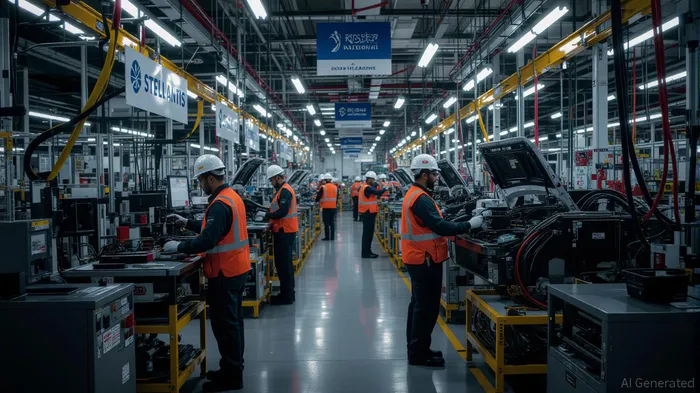
The Trump-era tariffs on EU automobiles, implemented between 2018 and 2020, have left a lasting scar on European automakers. These tariffs, justified under national security provisions, initially targeted steel and aluminum but cascaded into broader trade tensions. By 2025, the financial toll was evident: StellantisSTLA--, the multinational automaker, reported a preliminary net loss of €2.3 billion ($2.68 billion) in the first half of the year, with tariffs costing it €300 million directly. This case study underscores a broader industry crisis, as EU-based automakers grapple with reshaped supply chains, eroded profit margins, and a reevaluation of global manufacturing strategies.
The Tariff Shockwave and Stellantis' Struggle
The Trump administration's 25% tariff on foreign-made vehicles and 10%–25% tariffs on steel and aluminum, initially imposed in 2018, created a perfect storm for European automakers. Stellantis, which relies heavily on EU-based production for U.S. exports, faced a dual hit: higher material costs from tariffs on raw materials and reduced competitiveness due to tariffs on finished vehicles. By 2025, the company had slashed shipments to North America by 25% and suspended its 2025 financial guidance, citing “tariff-driven uncertainty.”
The financial pain is not isolated. BMW reported a $1.1 billion earnings decline in 2025, while Volvo's operating profit plummeted to 2.9 billion Swedish kronor ($302.3 million) in Q2 2025 from 8 billion kronor a year earlier. These numbers reflect a sector under pressure, with automakers forced to reengineer supply chains or risk further losses.
Reshoring and the New Manufacturing Paradigm
The most immediate response has been reshoring. Stellantis shifted production of its XC60 SUV to its South Carolina plant, while Volvo followed suit. BMW is investing $700 million in a U.S. battery plant to support EV production, aiming to localize critical components. These moves are not just about tariffs; they signal a strategic pivot toward nearshoring to insulate against trade volatility.
However, reshoring is costly. Stellantis incurred a €3.3 billion pre-tax charge in 2025 for restructuring and program cancellations, including the abandonment of a hydrogen fuel cell project. For investors, the key question is whether these costs are offset by long-term resilience.
Long-Term Vulnerabilities and Retaliatory Risks
Beyond tariffs, European automakers face retaliatory measures from the EU. The bloc's $72 billion list of U.S. imports subject to potential tariffs—including aircraft and EVs—could escalate the conflict. A 50% EU tariff on U.S. goods would disrupt sectors like semiconductors and agriculture, creating a trade war with cascading effects. For automakers, this means navigating a minefield of overlapping duties on steel, aluminum, and finished vehicles, which amplify costs and strain supply chains.
Moreover, the EU's trade deficit with China ($160 billion in 2024) complicates diversification efforts. While some companies, like Renault, are shifting production to China and Belgium, geopolitical tensions and rising labor costs in Asia pose new risks. The U.S.-UK trade deal offers limited relief for luxury brands, but for the broader industry, market diversification remains a stopgap solution.
Investment Opportunities in a Tariff-Resistant Future
The crisis has, however, created openings for investors. Automakers with U.S. production footprints or EV-focused strategies are better positioned to thrive. BMW's $700 million battery plant in South Carolina and its EV transition exemplify this trend. Similarly, Stellantis' shift to U.S. manufacturing and focus on hybrid models in Europe could mitigate future risks.
Investors should also consider companies leveraging supply chain diversification. For example, Volkswagen's suspension of Mexican imports to the U.S. and adoption of import surcharges reflect a proactive stance. Meanwhile, firms like LVMH, with diversified U.S. manufacturing, offer resilience in the luxury sector.
Strategic Reallocation: Beyond the Auto Sector
The ripple effects of Trump-era tariffs extend beyond automakers. Trade-exposed equities in agriculture, steel, and semiconductors are also at risk. For instance, U.S. agricultural exports to the EU face retaliatory tariffs, while EU steel producers grapple with Trump's 25% import duties. Investors may want to overweight sectors less sensitive to trade policy, such as renewable energy or domestic infrastructure.
Conclusion: Navigating Uncertainty with Agility
The Trump-era tariffs have reshaped the automotive landscape, forcing European automakers to adapt or perish. While short-term losses are evident, the long-term winners will be those that embrace reshoring, EV innovation, and supply chain agility. For investors, the lesson is clear: prioritize companies with localized production, diversified markets, and a clear path to profitability in an era of trade volatility. The auto sector's future lies not in resisting tariffs, but in reimagining the global supply chain.

Delivering real-time insights and analysis on emerging financial trends and market movements.
Latest Articles
Stay ahead of the market.
Get curated U.S. market news, insights and key dates delivered to your inbox.
AInvest
PRO
AInvest
PRO



Comments
No comments yet