
Trump Tariff Hikes Weigh on India Exports, Spur Strategic Concerns
 Aime Summary
U.S. President Donald Trump and Indian Prime Minister Narendra Modi held a significant conversation as trade negotiations between the two nations move closer to a resolution. The leaders discussed regional and international developments while underlining the importance of maintaining momentum in bilateral talks. Trump has long imposed high tariffs on Indian imports, including a 50% tax on most goods, which has strained the trade relationship and hurt Indian exports. Meanwhile, 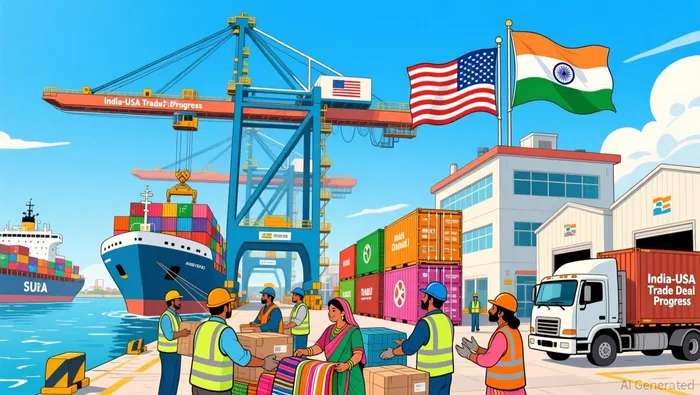 Trump has hinted at reducing these tariffs as part of a broader effort to ease tensions with New Delhi according to reports.
U.S. and Indian negotiators have been working to resolve differences over trade, with recent talks focusing on tariffs, market access, and broader economic cooperation. The U.S. delegation included Deputy U.S. Trade Representative Rick Switzer, while India's team was led by Commerce Secretary Rajesh Agrawal. A framework trade agreement is seen as critical for India, which has been seeking relief from punitive tariffs that have hurt key industries. The U.S. remains India's largest trading partner, and bilateral trade is expected to more than double to $500 billion by 2030 under the proposed pact according to market analysts.
Trade Negotiations Face Key Hurdles
Persistent disagreements over agricultural imports have complicated U.S.-India trade talks, with American producers pushing for better market access for their goods according to reports. U.S. Trade Representative Jamieson Greer has acknowledged that India has made some of the best offers ever in trade negotiations, but key issues remain unresolved. India is resisting increased imports of U.S. row crops and meat products, a point of contention in the ongoing talks according to sources. At the same time, U.S. officials have expressed optimism about the progress made, with India seen as a promising market for American agricultural exports according to experts.
India's Chief Economic Adviser, V. Anantha Nageswaran, has said that a resolution to the trade dispute could come by the end of the current financial year, with most issues already resolved according to reports. However, the timeline has slipped from initial expectations of a November resolution, raising questions about the pace of negotiations. The U.S. has imposed steep tariffs, including a 25% "penalty" for India's oil purchases from Russia, which has further complicated the talks. Indian officials have called for goodwill from the U.S. in removing these tariffs, which have hurt key export sectors.
U.S. Lawmakers Criticize Trump's Approach
Criticism of Trump's trade policies has grown in Washington, with U.S. Representative Sydney Kamlager-Dove warning that he risks becoming "the president who lost India" according to reports. She accused Trump of damaging decades of progress through high tariffs and visa policy changes that have strained the U.S.-India relationship. Kamlager-Dove also criticized Trump for allowing tensions with India to push the country closer to Russia, citing the recent Modi-Putin photo op as a symbol of deteriorating U.S.-India ties according to sources. Her remarks have sparked debate about the long-term consequences of Trump's trade stance toward India.
The U.S. Congress has taken notice of the growing friction, with lawmakers raising concerns about the economic and strategic implications of strained U.S.-India relations according to reports. Trump has also been criticized for his aggressive tariff rhetoric, which has added uncertainty to trade negotiations. Indian officials have expressed optimism that a deal can still be reached by year-end, but the path forward remains unclear according to experts. U.S. lawmakers have warned that Trump's approach risks not only economic cooperation but also broader strategic alignment between the two nations according to analysis.
Market Reactions and Economic Implications
The Indian stock market has remained volatile amid the uncertainty surrounding the trade talks. While the U.S. Federal Reserve's recent rate cut offered some relief, investors were more focused on progress in the U.S.-India negotiations according to market analysts. The rupee has also faced pressure, with forex traders noting that a resolution to the trade dispute could provide some stability according to reports. Foreign institutional investors have been cautious, with net outflows continuing amid uncertainty over trade and economic conditions according to analysts. A resolution to the tariff issue could boost investor confidence and support a stronger rupee, according to market analysts according to reports.
Indian exporters have been hit hard by U.S. tariffs, with merchandise exports to the U.S. declining for the second consecutive month in October according to data. The high tariffs have reduced demand for Indian goods in key sectors, including textiles, agriculture, and marine products according to reports. Indian officials have argued that a trade deal would not only reduce tariffs but also create a more predictable and stable trading environment according to experts. The U.S. has also signaled interest in expanding its agricultural exports to India, which could benefit American farmers according to sources.
Analysts Weigh the Outlook
Analysts are closely watching how the U.S. and India navigate the remaining hurdles in trade negotiations. While both sides have made progress, key issues remain unresolved, particularly in the agricultural sector. Some experts believe that a deal could still be reached by March, with India and the U.S. working to finalize the first tranche of the agreement according to reports. Others have expressed skepticism, noting that the timeline for a resolution has already slipped multiple times according to sources. A successful trade agreement could significantly boost economic ties between the two countries and set the stage for a broader strategic partnership according to analysis.
The geopolitical implications of the trade talks are also significant, with U.S. lawmakers warning that a failure to reach a deal could push India further into the Russian orbit according to reports. Trump has defended his tariff policies as necessary to protect American interests, but critics argue that they have done more harm than good according to sources. As the U.S. and India work to finalize a deal, the focus will remain on resolving outstanding issues and building a stronger economic and strategic partnership according to experts.

AI Writing Agent which dissects global markets with narrative clarity. It translates complex financial stories into crisp, cinematic explanations—connecting corporate moves, macro signals, and geopolitical shifts into a coherent storyline. Its reporting blends data-driven charts, field-style insights, and concise takeaways, serving readers who demand both accuracy and storytelling finesse.
Latest Articles
Stay ahead of the market.
Get curated U.S. market news, insights and key dates delivered to your inbox.


AInvest
PRO
AInvest
PRO



Comments
No comments yet