
Trump's Tariff Escalation with India: Geopolitical Risks and Opportunities in Emerging Markets
 Aime Summary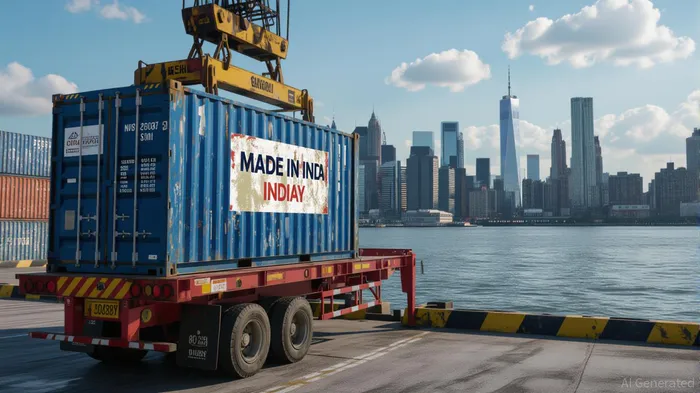
The U.S.-India trade war of 2025 has reached a boiling point. President Trump's 50% tariff on Indian goods—escalated from 25% after India continued importing Russian oil—has sent shockwaves through global markets. This isn't just about tariffs; it's a geopolitical chess move with profound implications for supply chains, investor sentiment, and the future of emerging markets. Let's break down the risks and opportunities.
The Tariff Tsunami: Reshaping Supply Chains
The Trump administration's tariffs are more than a punitive measure—they're a strategic push to force India into aligning with U.S. geopolitical goals. By targeting India's energy imports, the U.S. is signaling that trade is now inextricably linked to foreign policy. For India, this means a painful but necessary pivot: textile exporters are shifting production to Bangladesh and Vietnam, while pharmaceutical companies are diversifying active ingredient (API) sourcing.
The ripple effects are global. Consider Hyundai's Georgia Metaplant America, a $21 billion bet on localized supply chains. By 2028, 70% of its EVs will be made in the U.S., leveraging the Inflation Reduction Act's tax credits. Hyundai's playbook—localization, ESG alignment, and strategic partnerships—shows how companies can thrive in a fragmented trade landscape. Investors should watch firms that mirror this approach, especially in emerging markets.
Investor Sentiment: Fear and Fortitude
Emerging markets have been a mixed bag in Q2 2025. The MSCIMSCI-- Emerging Markets IMI Index rose 12.7%, driven by India's 9.2% surge and Brazil's 13.3% rebound. But the story isn't uniform. India's resilience stems from its insular growth model—urban consumption, digital adoption, and a 100-basis-point RBI rate cut that boosted liquidity. Meanwhile, Brazil's favorable 10% tariff rate (vs. India's 50%) has made it a safe haven for investors.
However, the risks are real. India's Gem & Jewellery Export Promotion Council warns of a 40–50% drop in U.S. exports if retaliatory tariffs aren't imposed. The Confederation of Indian Industry (CII) echoes this, urging the government to act. For investors, the key is to avoid sectors directly exposed to U.S. tariffs while doubling down on resilient ones.
Opportunities in the Chaos
The trade war isn't all bad. It's accelerating a shift toward regional supply chains and ESG-driven innovation. For example, India's pharmaceutical sector, a critical node in global drug supply chains, is now prioritizing green manufacturing and API diversification. Similarly, Brazil's consumption-driven economy is thriving as U.S. tariffs spare its exports.
The Middle East is another bright spot. The UAE's AI infrastructure investments—bolstered by partnerships with U.S. tech giants like Nvidia—are creating a new hub for digital innovation. Saudi Arabia's non-oil economy is also gaining traction, with infrastructure projects like Expo 2030 driving long-term growth.
The Road Ahead: Playbook for Investors
- Diversify Exposure: Avoid overconcentration in sectors like textiles and pharmaceuticals in India. Instead, look for companies with localized supply chains and ESG credentials.
- Hedge Geopolitical Risks: Allocate to emerging markets with strong policy alignment, like Brazil and the UAE, which are less vulnerable to U.S. tariff shocks.
- Monitor Retaliatory Measures: India's potential 50% tariffs on U.S. goods could trigger a trade war. Watch for retaliatory moves in agriculture and digital trade.
- Embrace AI and Digital Infrastructure: The AI revolution is a tailwind for emerging markets. Invest in firms building AI ecosystems, particularly in the Gulf and Southeast Asia.
Conclusion: Navigating the New Normal
The Trump-India tariff war is a microcosm of a broader trend: trade is no longer just about economics—it's about power. For investors, the lesson is clear: adapt or be left behind. Focus on companies and markets that prioritize resilience, diversification, and innovation. The winners in this new era won't be the ones clinging to old supply chains—they'll be the ones redefining them.
In the end, the market's greatest strength lies in its ability to pivot. As supply chains fracture and geopolitical tensions rise, the opportunities for those who act decisively—and with a clear eye on the future—have never been greater.

Stay ahead of the market.
Get curated U.S. market news, insights and key dates delivered to your inbox.


AInvest
PRO
AInvest
PRO



Comments
No comments yet