
Trump's Tariff Dividend Proposal and Its Implications for Fiscal Policy and Market Sentiment


 Aime Summary
Economic Feasibility: A Revenue Gap and Macroeconomic Risks
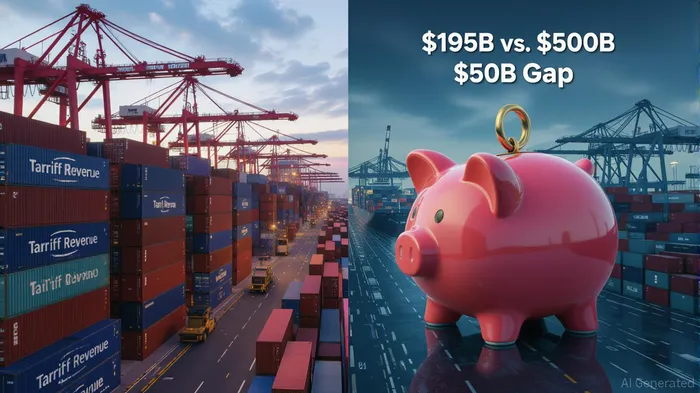
The administration's plan hinges on the premise that tariffs have generated "trillions of dollars" in revenue, with a People.com report . However, , as noted in a article. Analysts like highlight that even a $300 billion payout for adults alone would strain the current tariff revenue stream, as detailed in that same San Diego Union-Tribune article. Trump's rhetoric of "trillions" appears to conflate cumulative collections with annual inflows, creating a disconnect between political messaging and fiscal reality.
Economically, the plan risks exacerbating inflation. While Trump claims tariffs have reduced inflation, , as detailed in a report. Tariffs often shift costs to consumers, and distributing dividend checks could further fuel demand-side pressures. Additionally, trade partners like China and the EU have already signaled retaliatory measures, which could disrupt supply chains and dampen corporate profits, as noted in the San Diego Union-Tribune article.
Political Durability: Legal Challenges and Congressional Gridlock
The proposal's survival depends on overcoming two major political hurdles. First, the Supreme Court is reviewing the legality of Trump's tariffs under the (IEEPA). Justices from both ideological camps have expressed skepticism about the administration's broad interpretation of the law, , as reported in a Vermont Digger article. If invalidated, the administration may pivot to alternative legal frameworks like Section 301 of the Trade Act of 1974, but this could prolong uncertainty.
Second, congressional approval is required to enact the dividend. With the government currently in a shutdown, legislative momentum is stalled, as noted in a article. While Trump's base may rally behind the populist appeal of direct payments, bipartisan support remains unlikely. The plan's exclusion of "high-income individuals" could attract moderate Republicans, but Democratic lawmakers are likely to oppose it as regressive or fiscally reckless, as noted in the People.com report.
Investment Risks: Market Volatility and Sectoral Shifts
The proposal has already triggered market reactions. Upon its announcement, , , as noted in a Coinotag article. However, this optimism may be short-lived. A prolonged legal battle over tariffs could heighten volatility, particularly in export-dependent sectors like manufacturing and agriculture.
Moreover, trade retaliation risks could weigh on multinational corporations. , particularly for firms in the tech and automotive industries, as detailed in the Yale Budget Lab report. Conversely, .
Conclusion: A High-Stakes Gamble
Trump's tariff dividend proposal represents a bold, if economically precarious, attempt to blend populist economics with fiscal policy. While the idea of direct payments resonates with a segment of the electorate, its feasibility is undermined by revenue shortfalls, legal vulnerabilities, and macroeconomic risks. For investors, the plan underscores the importance of hedging against trade-related volatility and monitoring the Supreme Court's ruling, which could reshape the entire fiscal landscape.


Delivering real-time insights and analysis on emerging financial trends and market movements.
Latest Articles
Stay ahead of the market.
Get curated U.S. market news, insights and key dates delivered to your inbox.


AInvest
PRO
AInvest
PRO



Comments
No comments yet