
Trump's TACO Trade Resurfaces Amid Iran War Pause: What Investors Need to Know
 Aime Summary
The TACO trade, based on Trump's tendency to de-escalate geopolitical tensions after market shocks, is being revisited as he pauses military strikes against Iran. Recent conflicting statements from Trump and Iran have triggered market swings, with the S&P 500 rallying on the news but showing technical signs of a potential short-term correction. Analysts warn that the TACO pattern may not be reliable in this scenario due to the complexity of the Middle East conflict and the risk of continued energy infrastructure attacks. The Greenland deal in 2026 serves as a recent example of a TACO trade, with Trump initially threatening force but eventually backing down. The current situation highlights the difficulty in predicting how geopolitical events will play out, with both U.S. and Iranian officials denying ongoing talks.
Market volatility is on the rise as investors attempt to decipher the implications of Donald Trump's recent decision to pause U.S. military strikes against Iranian power plants and energy infrastructure. This move, labeled as a potential "TACO trade" by analysts, refers to the pattern of Trump escalating threats and then backing down, often leading to market rebounds. The S&P 500 and other indices surged in response to the news, but technical analysts remain cautious about the sustainability of the rally.
This shift has rekindled a familiar dynamic in financial markets—buying dips and selling rallies—based on Trump's tendency to "chicken out" of high-stakes conflicts. But as this situation unfolds, it remains unclear whether the pattern will hold or whether the warlike nature of this conflict will render the TACO trade ineffective.
What Is a TACO Trade and How Has It Worked in the Past?
The term TACO—short for "Trump Always Chickens Out"—was coined by financial analysts to describe a consistent pattern in Trump's behavior during periods of heightened geopolitical or economic tension. The process typically follows three stages: first, Trump makes an aggressive statement or announcement that triggers market panic; second, investors sell off assets in anticipation of economic or market instability; and third, Trump unexpectedly softens his stance or backs down altogether, leading to a market rebound.
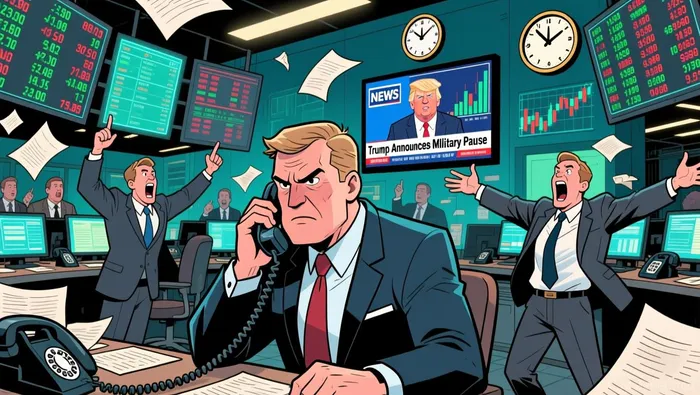
This pattern was evident in the 2026 Greenland deal, where Trump initially threatened to annex the island and impose tariffs on European allies, triggering global uncertainty. However, after facing diplomatic resistance, he abandoned the idea and settled for negotiations instead according to financial reporting. Similarly, in past trade wars, Trump's rhetoric often sent markets861049-- tumbling, only for him to later announce tariff rollbacks or delays, resulting in rebounds.
The TACO pattern has since expanded to include foreign policy decisions, including Trump's recent actions in the Middle East. The current five-day pause in military strikes has been interpreted by some as a classic TACO moment, with markets reacting accordingly. The FTSE 100 and U.S. futures initially surged on the news, while bond yields and oil prices fluctuated sharply. However, the pattern's reliability is being called into question due to the more volatile and prolonged nature of this conflict.
Why Investors Should Be Cautious About the TACO Trade in This Scenario
While the TACO trade has historically been a useful tool for predicting market reactions to Trump's actions, the current situation in the Middle East presents several unique challenges that could make the pattern less effective. One of the key concerns is that the warlike nature of the conflict makes it harder for Trump to back down without suffering political or military setbacks. Unlike trade-related tensions, which are often domestic or economic in nature, this conflict involves complex geopolitical entanglements, including Israel's independent military actions and global energy supply risks.
Iran has also denied any communication with the U.S., casting doubt on the authenticity of Trump's claims about "productive talks." This lack of clarity is a red flag for investors, who are now left to interpret conflicting signals from both sides. RBC Capital and other analysts have warned that investors should not rely on a quick resolution, as Iran's attacks on energy infrastructure could continue to disrupt global markets regardless of de-escalation efforts.
The technical indicators also suggest that while the S&P 500 may experience a short-term rebound, the longer-term trend remains bearish. The index has already fallen below its 200-day moving average, a key technical signal of a downward trend. Analysts like Katie Stockton and Craig Johnson have advised investors not to chase the rally, as increased downside risk remains.
What to Watch for in the Coming Weeks
As the situation develops, investors should closely monitor several key indicators to assess the potential impact on financial markets. First, any further confirmation of U.S.-Iran talks will be crucial in determining whether a de-escalation is on the horizon. If negotiations lead to a ceasefire or a reduction in military actions, markets may respond positively. However, if no progress is made, the TACO trade may fail to deliver the expected rebound.
Second, energy market data will be a critical barometer of the conflict's economic impact. Continued attacks on oil and gas861002-- infrastructure in the Gulf could lead to sustained volatility in oil prices, which would have ripple effects across global markets. Investors should watch for changes in crude oil futures, energy sector861070-- ETFs, and related commodities to gauge market sentiment.
Finally, technical indicators such as the S&P 500's performance relative to its 200-day and 20-day moving averages will provide insights into the broader market trend. A sustained breakout above these levels could signal a more durable recovery, while a further decline into correction territory could indicate deeper trouble.
At the end of the day, the TACO trade remains a useful framework for understanding market behavior in response to Trump's actions. However, the complexity and unpredictability of the current conflict with Iran mean that investors should approach this strategy with caution and remain prepared for a range of possible outcomes.

Stay ahead of the market.
Get curated U.S. market news, insights and key dates delivered to your inbox.


AInvest
PRO
AInvest
PRO



Comments
No comments yet