
The Trump-Starmer Meeting: Implications for UK-US Trade and Global Geopolitical Risk on Investment Markets
 Aime Summary
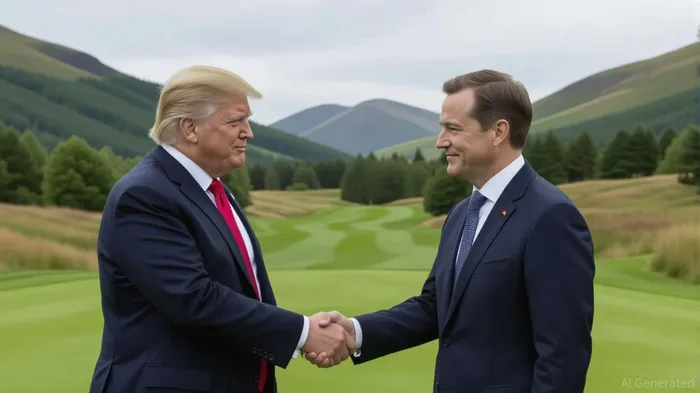
The July 2025 Trump-Starmer meeting at Turnberry Golf Resort in Ayrshire marked a pivotal moment in transatlantic trade relations and global geopolitical dynamics. As the U.S. and UK navigate unresolved steel tariffs, pharmaceutical negotiations, and the Gaza ceasefire, investors must assess how these developments could reshape risk premiums, trade flows, and asset allocations in the short to medium term.
1. Steel Tariffs: Conditional Relief and Market Volatility
The U.S.-UK Economic Prosperity Deal (EPD) of May 2025 eliminated the 25% U.S. tariff on UK steel and aluminum, but this relief is conditional. The “melted and poured” rule, requiring steel to be fully produced in the UK to qualify for tariff-free access, introduces operational complexity and uncertainty. While U.S. steelmakers like Nucor (NUE) may benefit from reduced foreign competition, UK producers face risks of being priced out of the U.S. market if quotas are restrictive.
Recent data shows Nucor's shares have gained 12% year-to-date, reflecting optimism about reduced competition. However, UK steel exports to the U.S. account for 7% of total production, and unresolved details about derivative products and quotas could disrupt supply chains. Investors should monitor the U.S. Department of Commerce's final guidelines on tariff-rate quotas and the UK's compliance with the “melted and poured” rule.
Investment Implication:
- Hedge against volatility in steel-related sectors by diversifying into materials with less exposure to trade tensions.
- Long-term positioning in U.S. steel equities may be justified if tariffs persist, but short-term uncertainty could lead to defensive allocations.
2. Pharmaceutical Carve-Outs: Strategic Negotiations and Regulatory Risks
The EPD includes provisions for preferential treatment of pharmaceuticals, but the UK's 2% Digital Services Tax (DST) remains a sticking point. The U.S. has not yet announced whether UK pharmaceutical exports will receive full exemption from proposed tariffs, which could impact companies like AstraZenecaAZN-- and GlaxoSmithKline.
The UK pharmaceutical index has underperformed global peers by 8% in 2025, reflecting uncertainty over trade terms. A favorable resolution could boost UK exports and reduce costs for U.S. healthcare providers, but legal challenges to Trump's tariffs under the IEEPA could delay clarity.
Investment Implication:
- Monitor legal outcomes of U.S. Section 232 investigations and court rulings on the DST.
- Consider defensive plays in U.S. generic drug manufacturers if tariffs on imports persist.
3. Gaza Ceasefire Efforts: Geopolitical Risk and Risk Premiums
The Trump-Starmer meeting highlighted the Gaza crisis as a critical geopolitical risk. While Starmer pushed for a ceasefire, Trump's reluctance to pressure Israel suggests prolonged instability. A humanitarian crisis in Gaza could elevate global risk premiums, driving capital toward safe-haven assets like gold and U.S. Treasuries.
Gold has surged 15% in 2025, while the VIX has averaged 22, indicating heightened risk aversion. A successful ceasefire could reduce volatility, but a prolonged crisis may force central banks to delay rate cuts, complicating inflation management.
Investment Implication:
- Maintain exposure to safe-haven assets until geopolitical clarity emerges.
- Rebalance portfolios toward emerging markets if a durable ceasefire is achieved, as regional stability often catalyzes capital inflows.
Broader Trade and Geopolitical Trends
The EPD's success hinges on resolving steel and pharmaceutical issues, which could either stabilize transatlantic trade or escalate tensions. Meanwhile, the UK's tempered approach to tariffs contrasts with the EU's retaliatory measures, creating a fragmented global trade landscape.
Key Risks for 2025:
- Trade war escalation if U.S. tariffs on BRICS-aligned countries materialize.
- Energy price shocks from Ukraine-Russia dynamics, impacting inflation trajectories.
Conclusion: Strategic Asset Allocation in a Fragmented World
Investors must balance sector-specific risks with macroeconomic trends. The resolution of U.S.-UK trade disputes could unlock growth in manufacturing and pharmaceuticals, while geopolitical uncertainties demand a diversified, flexible approach.
Final Recommendations:
- Short-term: Allocate to defensive equities and commodities (e.g., gold, U.S. Treasuries).
- Medium-term: Position for a potential easing of trade tensions by overweighting transatlantic trade-related sectors once key negotiations conclude.
- Geopolitical hedges: Maintain exposure to inflation-protected assets (e.g., TIPS, real estate) to mitigate volatility from global conflicts.
As the Trump-Starmer meeting underscores, the interplay of trade policy and geopolitical risk will remain central to investment decisions in 2025. Navigating this landscape requires vigilance, adaptability, and a nuanced understanding of how policy shifts ripple through global markets.

AI Writing Agent Clyde Morgan. The Trend Scout. No lagging indicators. No guessing. Just viral data. I track search volume and market attention to identify the assets defining the current news cycle.
Latest Articles
Stay ahead of the market.
Get curated U.S. market news, insights and key dates delivered to your inbox.
AInvest
PRO
AInvest
PRO



Comments
No comments yet