
Trump's “Made in U.S.A.” Smartphone: A Case Study in Supply Chain Vulnerability and Geopolitical Risks
The Trump Organization's June 2025 announcement of the T1 smartphone, marketed as “proudly designed and built in the United States,” has become a flashpoint in debates over U.S. manufacturing independence. Yet behind the patriotic branding lies a stark reality: the device's supply chain is deeply embedded in global networks dominated by China and Asia. This case study offers a microcosm of the broader geopolitical risks and opportunities shaping offshoring strategies—and why investors must scrutinize exposure to U.S.-China trade dynamics now more than ever.
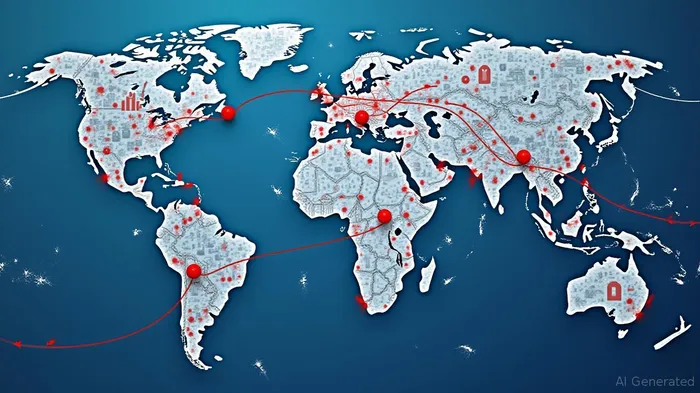
The T1's Supply Chain: A Global Web, Not a U.S. Factory
The Trump Organization's claims about domestic production are undercut by the T1's component origins:
- Display: Likely sourced from Samsung (South Korea), LG (South Korea), or BOE (China).
- Processor: Probably manufactured in Taiwan by MediaTek or QualcommQCOM--.
- Camera sensors: Dominated by Sony (Japan) or smaller Chinese firms.
- Memory: Could include U.S.-made Micron chips but faces competition from Samsung (South Korea).
Even if the phone were assembled in the U.S., experts like Francisco Jeronimo of IDC note that “the U.S. lacks the scale for smartphone assembly.” Analysts at Counterpoint Research add that the $499 price point—$700 less than an iPhone—requires reliance on off-the-shelf components, likely produced by a Chinese original design manufacturer (ODM).
Why the T1's Story Matters for Investors
The T1's saga underscores two critical trends:
1. Geopolitical Risks of Offshoring:
- Supply Chain Disruptions: Over 70% of smartphone components are produced in China or Taiwan. Trade tensions, sanctions, or logistical bottlenecks (e.g., chip shortages) could cripple production.
- Technology Sanctions: The U.S. has increasingly restricted Chinese firms like Huawei from accessing U.S. tech. A similar crackdown on ODMs could strand companies reliant on Asian manufacturing.
- Opportunities in Reshoring and Diversification:
- U.S. Manufacturing Revival: Tax incentives like the CHIPS Act aim to boost domestic semiconductor production. Companies like Intel (INTC) and GlobalFoundries are ramping up U.S. facilities, reducing reliance on Taiwan.
- Nearshoring to Mexico/Asia Alternatives: Vietnam and Thailand are emerging as alternatives to China for assembly. Foxconn's expansion in the U.S. and Mexico, for instance, could attract investors seeking supply chain resilience.
The Ethical Elephant in the Room—and Why Investors Should Care
Beyond manufacturing, the T1's launch raises red flags about conflicts of interest. The Trump Organization's financial disclosures show significant income from branded ventures, including cryptocurrency and real estate. While the White House claims Donald Trump is “distant” from business operations, critics argue that ventures like T1 Mobile LLC blur the line between public office and private profit.
For investors, this underscores a risk: politically tied ventures may face regulatory scrutiny or public backlash, especially during election cycles. The CREW watchdog's warnings about the T1's “patriotic branding” mirror broader concerns about corporate influence in policymaking—a reputational risk for firms entangled in trade disputes.
Investment Takeaways: Positioning for Geopolitical Shifts
- Avoid Overexposure to Offshored Supply Chains:
- Sell or reduce stakes in firms (e.g., consumer electronics, semiconductors) overly reliant on China/Taiwan.
Bet on Reshoring Plays:
- Buy stocks in firms investing in U.S. manufacturing (e.g., ON Semiconductor (ON), Lam Research (LRCX)), which benefit from CHIPS Act subsidies.
Consider ETFs like iShares U.S. Industrial (IYJ) or VanEck Semiconductor (SMH) for diversified exposure.
Nearshore to Mexico/SE Asia:
- Explore companies expanding production in Vietnam (e.g., Samsung Electronics (005930.KS)), Thailand, or Mexico.
Conclusion: The T1's Lesson—Global Supply Chains Are a Gamble
The T1's “Made in the U.S.A.” claims are a mirage. Its reliance on foreign components and assembly highlights a systemic vulnerability: the U.S. lacks the infrastructure to produce complex goods like smartphones without global partners. For investors, this means:
- Risk Mitigation: Diversify supply chains or reduce exposure to companies stuck in China's orbit.
- Opportunity Seeking: Back reshoring initiatives and nearshore alternatives to capitalize on geopolitical realignments.
The T1 may not survive the scrutiny of reality, but its story is a wake-up call. In an era of trade wars and supply chain fragility, investors ignoring geopolitical risks are playing with fire.

Stay ahead of the market.
Get curated U.S. market news, insights and key dates delivered to your inbox.




Comments
No comments yet