
Trump Signs GENIUS Act Regulating Dollar-Backed Stablecoins
 Aime Summary
The GENIUS Act, officially known as the Guiding and Establishing National Innovation for U.S. Stablecoins Act, has been signed into law by President Donald Trump. This landmark legislation marks the first comprehensive federal regulation specifically targeting dollar-backed stablecoins, transitioning the United States from a period of regulatory uncertainty to a structured legal framework.
The GENIUS Act clearly defines the entities that can issue payment stablecoins and the conditions under which they can operate. Issuers must fall into one of three categories: subsidiaries of insured depository institutions, federally chartered nonbanks approved by regulators, or state-regulated entities from jurisdictions certified by the Treasury as meeting federal standards. The law also prohibits the commingling of customer funds, ensures bankruptcy priority for stablecoin holders, and mandates asset-backed reserves comprised of cash equivalents like Treasuries and overnight repos. While annual audit requirements only apply to issuers with assets exceeding $50 billion, all issuers must maintain verifiable, 1-to-1 backing.
Trump’s endorsement of the GENIUS Act signals a strategic shift within the Republican Party, positioning it as pro-structure rather than anti-crypto. This move aligns conservative regulatory policy with the maturing institutions of the crypto industry. For Trump, the GENIUS Act provides political capital by differentiating his administration from previous ones that struggled with crypto policy or focused on enforcement-first approaches. The federal government is now actively writing the rules for stablecoins, sending a clear message to the market.
During the signing ceremony, Trump emphasized the significance of the GENIUS Act, stating that it creates a clear and simple regulatory framework to establish and unleash the immense promise of dollar-backed stablecoins. He compared this development to the greatest revolution in financial technology since the birth of the internet.
The implications of the GENIUS Act for the industry are profound. Stablecoin issuers that have operated in a gray zone will now face hard choices: register, restructure, or retreat. The law is particularly unfriendly to offshore protocols and permissionless smart contracts without identifiable entities, which will likely lose access to U.S. users unless they partner with compliant issuers. Institutional players, such as banks and payment processors, now have the green light to build around stablecoins without fearing surprise enforcement, opening the door to broader integrations into payment rails, digital wallets, and eventually, wholesale settlement systems.
With the law signed, the regulatory clock has started. The Treasury Department must begin certifying state regimes, the OCC must design chartering procedures for nonbank issuers, and the SEC and CFTC must clarify jurisdictional boundaries to avoid overlap. The law’s interoperability provision, which encourages but does not mandate technical standards, remains a policy wildcard. As stablecoins become infrastructural, questions about how they interact across chains, wallets, and institutions will take center stage. Regulatory agencies must avoid duplicative compliance regimes and foster a functional national framework.
The GENIUS Act sends a clear message to the market: stablecoins can be issued, but only if issuers act like responsible financial institutionsFISI--. The era of stablecoin regulation has begun, and the hard part—implementation—is just starting. 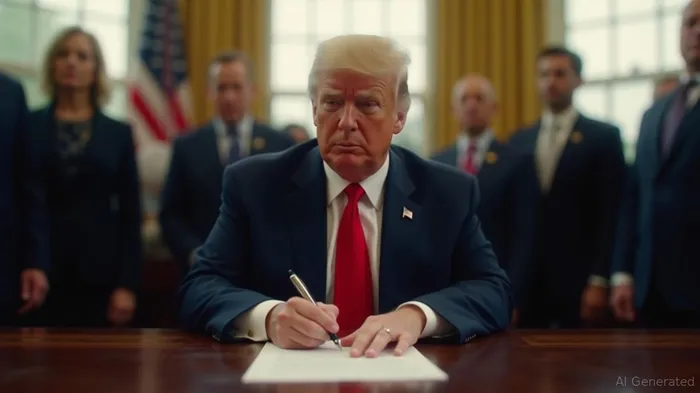

Stay ahead of the market.
Get curated U.S. market news, insights and key dates delivered to your inbox.






Comments
No comments yet