
Trump Signs GENIUS Act Establishing Stablecoin Regulations
 Aime Summary
In a landmark move, US President Donald Trump signed the GENIUS Act into law, marking the first major federal legislation governing cryptocurrency in the United States. The bill, which received bipartisan support in the House of Representatives, establishes a regulatory framework specifically for stablecoins, a type of digital currency tied to stable assets such as the U.S. dollar. This legislation is a pivotal step in legitimizing and mainstreaming the cryptocurrency industry, which has experienced rapid growth and increasing public interest in recent years.
The GENIUS Act aims to enhance the accessibility of stablecoins by outlining specific regulations designed to increase public trust in these assets. Traditionally, stablecoins serve as a bridge between personal bank accounts and more volatile cryptocurrencies like Bitcoin. By providing a clearer regulatory environment, the bill is expected to foster industry growth and encourage wider adoption.
The signing of the GENIUS Act culminates years of congressional efforts to bring clarity to the payment stablecoin sector. President Trump, who has become a vocal advocate for cryptocurrency, highlighted the significance of this legislation in positioning the United States as the global leader in the crypto industry. "I pledged that we would bring back American liberty and leadership and make the United States the crypto capital of the world. And that's what we've done under the Trump administration," he stated during the signing ceremony.
Despite the bipartisan support, some Democrats raised concerns about the bill's potential to benefit public officials and their personal crypto ventures. Democratic Rep. Maxine Waters criticized the legislation, noting that it does not grant the federal government the full authority needed to regulate stablecoins effectively. She pointed out potential conflicts of interest, particularly with a firm associated with the Trump family that recently launched its own stablecoin.
The passage of the GENIUS Act was not without obstacles. The bill faced a nine-hour stalemate among House Republicans before it was finally brought to a debate. However, the eventual bipartisan support underscores the growing recognition of the importance of regulating the cryptocurrency industry.
Following the signing of the GENIUS Act, federal regulators will have six months to develop specific regulations to implement the new framework. This period will be crucial in determining how the legislation will be enforced and its impact on the cryptocurrency market. The House also passed the CLARITY Act, a broader market structure bill that sets rules for assets overseen by the Securities and Exchange Commission and commodities regulated by the Commodities Futures Trading Commission. This measure is now headed to the Senate for further consideration.
The signing of the GENIUS Act represents a significant milestone in the evolution of the cryptocurrency industry. By providing a clear regulatory framework, the legislation aims to enhance public trust and encourage broader adoption of stablecoins. As the industry continues to grow, the impact of this legislation will be closely watched by stakeholders and regulators alike. 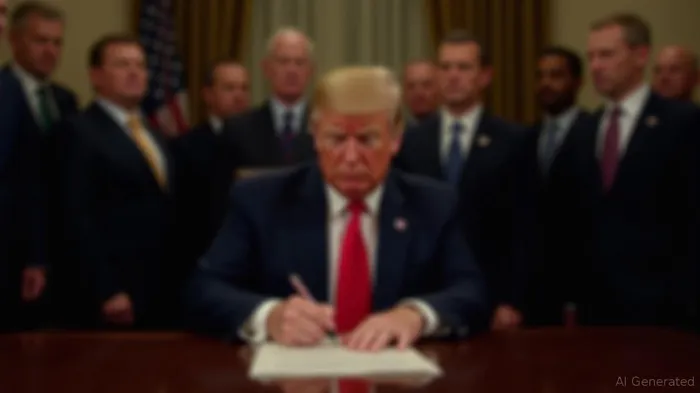

Stay ahead of the market.
Get curated U.S. market news, insights and key dates delivered to your inbox.


AInvest
PRO
AInvest
PRO



Comments
No comments yet