
Trump Signs GENIUS Act Establishing Federal Stablecoin Framework
 Aime Summary
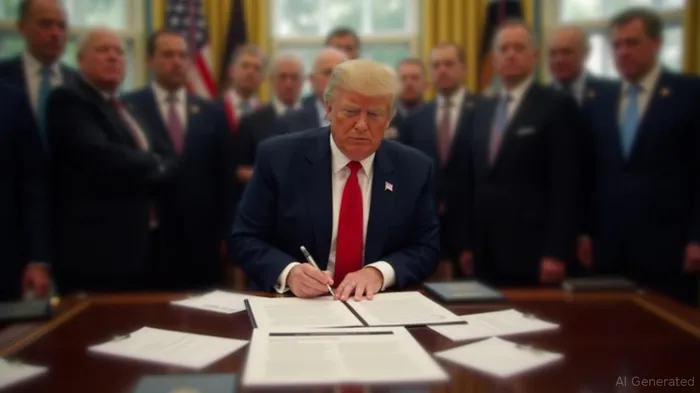
On July 18, 2025, President Donald J. Trump signed the GENIUS Act into law, marking a significant milestone in U.S. crypto regulation. The legislation, officially known as the Guiding and Establishing National Innovation for US Stablecoins Act, is the first federal law focused on stablecoin regulation. This move underscores the U.S. government's commitment to leading the digital finance sector while strengthening the U.S. dollar.
During the signing ceremony, President Trump emphasized the importance of the new law, stating, “Today cements the American dominance in digital assets. It’s good for the dollar and it’s good for the country.” The GENIUS Act establishes a comprehensive federal framework for stablecoins, which are designed to maintain a 1:1 peg to the U.S. dollar. Until now, stablecoins have operated in a legal gray area with minimal consumer protections and regulatory oversight. The new law aims to address these issues by introducing nationwide regulatory standards for stablecoin issuers.
Key provisions of the GENIUS Act include requirements for stablecoin issuers to maintain full reserve backing in U.S. dollars or short-term Treasuries, publicly disclose the composition of their reserves each month, and undergo annual audits if they exceed $50 billion in circulation. Additionally, stablecoin issuers are prohibited from offering interest or yield products, differentiating them from traditional banking or investment vehicles. These measures are designed to enhance transparency, prevent financial instability, and protect consumers from malicious actors.
Supporters of the legislation argue that it will provide much-needed clarity for the digital asset sector while reinforcing the dollar’s global dominance. By requiring reserve assets to be held in dollars or Treasuries, the bill is expected to drive demand for U.S. government debt, effectively tying private innovation to public monetary strength. AI and Crypto Czar David Sacks praised the legislation, stating, “U.S. dollar dominance is the power of this bill.” He also commended the authors of the legislation, Rep. French Hill and Sen. Bill Hagerty, for their efforts.
A key focus of the GENIUS Act is to reinforce the U.S. dollar’s role as the world’s reserve currency. By requiring stablecoins to be fully backed by U.S. dollars and Treasuries, the law creates sustained demand for American debt, tying digital asset growth directly to dollar strength. This approach is designed to extend the global dominance of the dollar by aligning digital asset growth with the strength of U.S. financial infrastructure.
The GENIUS Act also addresses long-standing concerns from regulators and policymakers about the lack of oversight in the stablecoin market. Before its passage, consumer protections were minimal, anti-money laundering standards were inconsistent, and large tech firms faced few limits on issuing and managing digital assets. The law imposes strict compliance obligations on both domestic and foreign issuers, including the ability to freeze or seize assets in response to lawful orders. It also requires stablecoin companies to establish anti-money laundering and sanctions compliance programs, subject to annual certification.
The Treasury Department is granted authority to deem foreign stablecoin issuers noncompliant if they do not cooperate with U.S. enforcement efforts. This could block centralized crypto platforms from facilitating trading of those tokens inside the country. The legislation also addresses the potential for tech firms to gain expanded access to financial markets by banning yield-bearing stablecoin products, prohibiting the commingling of customer funds, and placing limits on affiliate transactions. It affirms that stablecoin issuers remain ineligible for Federal Reserve master accounts, preserving the distinction between banking and commerce.
The GENIUS Act is part of President Trump’s broader pro-crypto policy shift. In March 2025, the president signed an executive order to create a Strategic Bitcoin Reserve and a national digital asset stockpile. The administration has emphasized these efforts as essential to maintaining U.S. leadership in a world increasingly shaped by decentralized technologies. At the GENIUS Act bill signing, President Trump reaffirmed his opposition to central bank digital currencies, stating unequivocally, “I will never allow the creation of a CBDC in America. It will never happen.”
The GENIUS Act marks a turning point in U.S. digital asset regulation, establishing the first federal framework for stablecoins. By tying stablecoin reserves to U.S. Treasuries, the law reinforces dollar strength and extends its role as the world’s reserve currency. It also introduces new standards for consumer protection, financial stability, and national security, signaling a broader U.S. strategy to lead in digital finance. The legislation reflects years of bipartisan negotiation and incorporates input from state regulators and several federal agencies, ensuring a comprehensive and balanced approach to stablecoin regulation.

Stay ahead of the market.
Get curated U.S. market news, insights and key dates delivered to your inbox.


AInvest
PRO
AInvest
PRO



Comments
No comments yet