
Trump Signs GENIUS Act Establishing Federal Stablecoin Framework
 Aime Summary
President Donald Trump is scheduled to sign the GENIUS Act today, July 18, 2025, establishing a federal regulatory framework for stablecoins. This move marks a significant development in the crypto industry, as it introduces national standards for stablecoin issuance and restricts high-yield stablecoins, potentially influencing market dynamics.
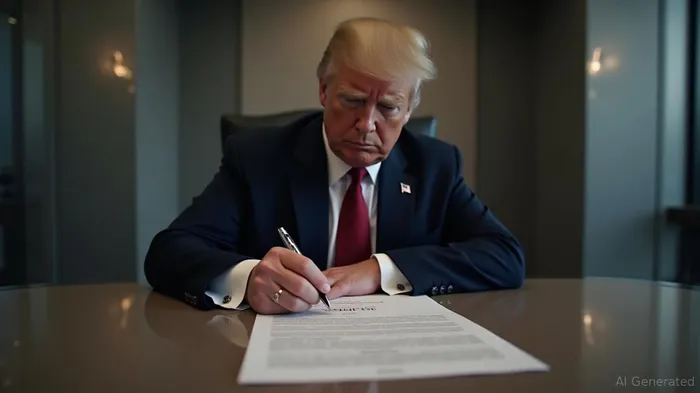
The signing ceremony, set for 2:30 PM ET, underscores the President's commitment to positioning the U.S. as a leader in crypto. The GENIUS Act, which passed the House with bipartisan support, aims to create a federal regulatory framework for stablecoins while banning those offering high-yield returns. The framework requires Fed registration and allows eligible state-chartered entities to issue stablecoins, with potential tax exemptions on smaller transactions to enhance retail usability.
The GENIUS Act introduces a dual federal-state regulatory framework for stablecoin issuance. Federally approved entities, including subsidiaries of federally insured depository institutions and uninsured national banks, will be permitted to issue stablecoins under direct federal supervision. State-regulated entities will also be allowed to issue stablecoins, provided they comply with baseline federal standards. This dual framework aims to promote flexibility while maintaining uniform standards and safeguards.
One of the key provisions of the GENIUS Act is the strict reserve requirements imposed on stablecoin issuers. Issuers must maintain full, 1:1 backing of all outstanding stablecoins with permitted, liquid assets, including U.S. dollars, demand deposits at IDIs, short-term U.S. Treasury obligations, and balances held at the Federal Reserve. These assets must be held in segregated accounts and undergo regular third-party audits, with monthly disclosures to verify reserve sufficiency. The act also prohibits algorithmic stablecoins from being classified as "payment stablecoins," even if backed by 1:1 reserves.
The GENIUS Act has significant implications for foreign entities that issue stablecoins to persons located in the United States. U.S. regulators will have the authority to exercise jurisdiction over such entities to ensure adherence to anti-money laundering (AML), sanctions, and consumer protection standards. Foreign stablecoin issuers may also be subject to federal registration, disclosure, and compliance obligations if they engage in activities that impact U.S. markets or consumers. This framework extends U.S. regulators’ reach beyond domestic borders, requiring foreign stablecoin issuers to reassess their operational models, compliance infrastructure, and legal exposure when offering stablecoin products to U.S. residents.
All payment stablecoin issuers, whether federally or state-regulated, must comply with applicable Bank Secrecy Act requirements, including implementing AML and countering the financing of terrorism programs, and comply with Office of Foreign Assets Control sanctions requirements. The GENIUS Act also prohibits issuers from paying any interest or yield on stablecoins. Federal and state regulators will have the authority to conduct periodic examinations of payment stablecoin issuers and, in appropriate circumstances, bring enforcement actions to restrict unsafe or unlawful activity.
While the statute itself takes immediate effect, key GENIUS Act compliance obligations will be outlined in regulations issued by federal agencies, including the Federal Reserve, OCC, and U.S. Treasury Department. The legislation directs those agencies to issue regulations governing licensing, reserve requirements, disclosures, compliance programs, and enforcement processes within 180 days of the bill becoming law. These regulations are expected to be finalized and become operational by early to mid-2026.
Entities currently engaged in issuing or managing payment stablecoins, and those who plan to enter the U.S. market, should consider taking immediate steps to prepare for the GENIUS Act’s requirements. This includes determining whether the entity qualifies for licensure, assessing existing compliance programs, implementing compliant reserve structures, and aligning operations with monthly reporting and audit mandates. The GENIUS Act was passed as part of a broader focus on cryptocurrency regulation in both the House and Senate, with additional legislation, such as the CLARITY Act, also being considered to set forth standards for cryptocurrency market structure regulation.

Stay ahead of the market.
Get curated U.S. market news, insights and key dates delivered to your inbox.


AInvest
PRO
AInvest
PRO



Comments
No comments yet