
Trump to Sign GENIUS Act Regulating Stablecoins
 Aime Summary
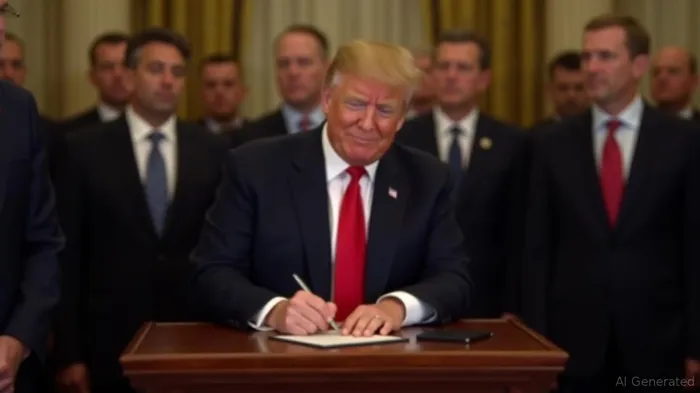
The GENIUS Act, a pivotal piece of legislation aimed at regulating stablecoins, is on the brink of becoming law as President Donald Trump prepares to sign it. This bill, officially known as the Guiding and Establishing National Innovation for US Stablecoins Act, has been approved by the US House and is now awaiting the president's signature to become enforceable. The signing ceremony is scheduled for 2:30 pm on Friday in Washington, DC.
Once signed, the GENIUS Act will come into effect 18 months later or 120 days following the issuance of final regulations by primary federal stablecoin regulators such as the Treasury Department and the Federal Reserve. The Act introduces several key changes that will significantly impact the stablecoin industry both domestically and internationally.
One of the most notable changes is the encouragement for stablecoin issuers to obtain banking licenses. Legal expert Logan Payne from Winston & Strawn explains that the Act promotes stablecoin issuers to pursue formal banking licenses, which would restrict companies strictly to stablecoin issuance. Many issuers currently engage in broader activities, so seeking a national trust bank charterCHTR--, as done by firms like CircleCRCL-- and Ripple, offers a comprehensive regulatory framework allowing wider operations without state-by-state licenses.
Another contentious provision in the Act is the ban on issuing interest or yield on stablecoins. Yield incentives have been powerful tools for attracting users; for example, Circle’s USDC rewards holders on certain exchanges. This ban is expected to lead to significant changes in such yield arrangements moving forward.
The GENIUS Act also introduces ambiguity in how DeFi platforms can handle stablecoins. According to Payne, the legislation deliberately leaves this area undefined for now, prompting uncertainty. However, additional legislation and future regulations, such as the CLARITY Act which clarifies digital asset classification and regulatory authority, are anticipated to address these gaps over time.
Under the Act, authorized stablecoin issuers will be required to back tokens one-to-one with US dollars or equivalent monetary instruments like Treasury bills. They must publicly disclose reserve compositions, have these reviewed by registered accounting firms, and certify report accuracy with relevant federal or state agencies. This provision aims to enhance transparency and trust in the stablecoin market.
Within three years after enactment, stablecoins issued by unapproved entities will be banned from the US market. Foreign stablecoins can be offered only if issuers comply with US legal requirements or originate from countries with comparable regulatory systems. Such issuers will register with the Office of the Comptroller of the Currency (OCC) and maintain sufficient US reserves. This move is designed to protect the US market from unstable or non-compliant foreign stablecoins.
The Act enables a range of regulated entities — including banks, credit unions, and select nonbanks — to issue stablecoins under a combined federal and state oversight framework. Depending on entity type, regulation arises from bodies such as the National Credit Union Administration, the Federal Deposit Insurance Corporation, the OCC, Treasury, or the Federal Reserve. Smaller issuers under $10 billion in stablecoin issuance may opt for state-level regulation, but states are not mandated to establish dedicated stablecoin regulators.
In summary, the GENIUS Act represents a significant step forward in the regulation of stablecoins in the United States. By establishing a comprehensive federal regulatory framework, the Act aims to provide clarity and support the growing use of stablecoins. The Act's provisions, including the encouragement of banking licenses, the ban on interest payments, and the mandatory reserve reporting, are designed to enhance the stability and security of stablecoins. The passage of the GENIUS Act is expected to have a profound impact on the digital asset industry, providing much-needed clarity and stability for stablecoin issuers and users alike.

Stay ahead of the market.
Get curated U.S. market news, insights and key dates delivered to your inbox.




Comments
No comments yet