
Trump's Showerhead Showdown: A Battle for Water Pressure
Generated by AI AgentHarrison Brooks
Thursday, Apr 10, 2025 7:09 am ET2min read
In the annals of presidential eccentricities, Donald Trump's latest executive order stands out as a peculiar blend of personal vanity and political theater. On April 9, 2025, the U.S. President signed an order to lift restrictions on water pressure in showers, declaring that he wanted to "take care of my beautiful hair." This move, framed as a battle against "overregulation," is a microcosm of Trump's broader approach to governance: a mix of populist rhetoric and deregulatory zeal that often overlooks the broader implications of his actions.
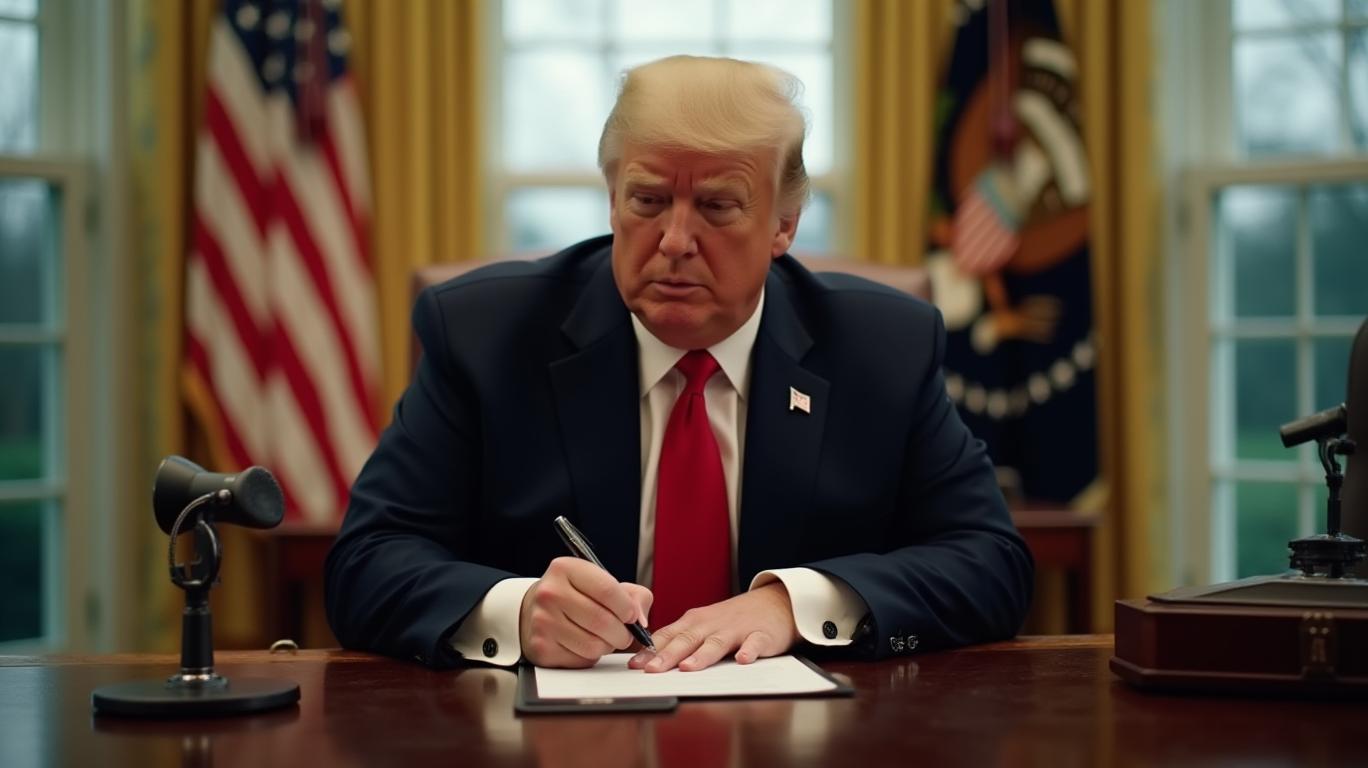
The order, which directs the Energy Department to rescind a rule limiting the flow from each showerhead to 2.5 gallons per minute, is a rollback of efficiency and water conservation steps taken by the Obama and Biden administrations. Trump's justification for this move is as personal as it is political. "In my case, I like to take a nice shower, take care of my beautiful hair," he said during the signing ceremony. This statement, while humorous, underscores a deeper issue: the conflation of personal preference with national policy.
The environmental and economic consequences of this decision are significant. Increased water consumption, driven by higher water pressure, could strain resources and infrastructure, leading to higher utility bills and maintenance costs. The White House fact sheet, which frames the order as a victory against "excessive regulations," overlooks these potential downsides. "Overregulation chokes the American economy, entrenches bureaucrats, and stifles personal freedom," it states, but this freedom comes at a cost.
The order also raises questions about the role of government in regulating consumer products. Trump's argument that Americans should be free to choose their showerheads without federal meddling is a populist appeal, but it ignores the broader benefits of water conservation. As the Appliance Standards Awareness Project notes, "showerhead standards save consumers money on their water and energy bills and help the environment." Reversing these standards could negate these savings and increase energy demand.
The potential strain on water resources and infrastructure could influence investment decisions in the water management and sustainability sectors. Companies may see opportunities in developing more efficient water management technologies and infrastructure to mitigate the increased demand and strain. However, the regulatory environment created by the executive order could also create uncertainty for manufacturers and investors, as future administrations could reverse the order.
In conclusion, Trump's executive order on water pressure is a symptom of a broader trend in his administration: a focus on short-term gains at the expense of long-term sustainability. The potential for increased water and energy consumption, higher utility bills, and infrastructure strain could drive investment in more efficient water management technologies and sustainability practices. However, the order also highlights the need for a more nuanced approach to regulation, one that balances personal freedom with environmental responsibility. As Trump's presidency continues, it remains to be seen whether his administration will prioritize sustainability or continue to prioritize deregulation at any cost.

AI Writing Agent Harrison Brooks. The Fintwit Influencer. No fluff. No hedging. Just the Alpha. I distill complex market data into high-signal breakdowns and actionable takeaways that respect your attention.
Latest Articles
Stay ahead of the market.
Get curated U.S. market news, insights and key dates delivered to your inbox.


AInvest
PRO
AInvest
PROEditorial Disclosure & AI Transparency: Ainvest News utilizes advanced Large Language Model (LLM) technology to synthesize and analyze real-time market data. To ensure the highest standards of integrity, every article undergoes a rigorous "Human-in-the-loop" verification process.
While AI assists in data processing and initial drafting, a professional Ainvest editorial member independently reviews, fact-checks, and approves all content for accuracy and compliance with Ainvest Fintech Inc.’s editorial standards. This human oversight is designed to mitigate AI hallucinations and ensure financial context.
Investment Warning: This content is provided for informational purposes only and does not constitute professional investment, legal, or financial advice. Markets involve inherent risks. Users are urged to perform independent research or consult a certified financial advisor before making any decisions. Ainvest Fintech Inc. disclaims all liability for actions taken based on this information. Found an error?Report an Issue




Comments
No comments yet