
Trump Shifts Cuba Policy as Oil Prices Surge Amid Geopolitical Tensions
 Aime Summary
The Trump administration has announced a revised approach to Cuba, allowing energy companies to sell oil and fuel to private businesses instead of exclusively to the Cuban government according to Bloomberg. This shift aims to reduce the impact of the energy crisis and to weaken the Communist government's grip on the economy. Fuel shortages have led to blackouts, food distribution issues, and public sanitation problems, prompting the administration to allocate $9 million in humanitarian aid through the Catholic Church.
Canada is also stepping in with a humanitarian aid package to address the crisis, citing that U.S. sanctions have worsened fuel shortages in Cuba. The Canadian Foreign Minister confirmed the aid plan but provided no further details. The situation has strained Cuba's economy, which has already been heavily impacted since 2020 by U.S. sanctions and related disruptions in oil supplies according to reports.
Geopolitical tensions are also affecting the global oil market. Ongoing tensions between the U.S. and Iran, along with reduced oil production from Kazakhstan and Russia, have contributed to higher oil price forecasts. The U.S. military's increased presence in Israel has further heightened concerns over regional stability, with oil futures extending gains amid the uncertainty.
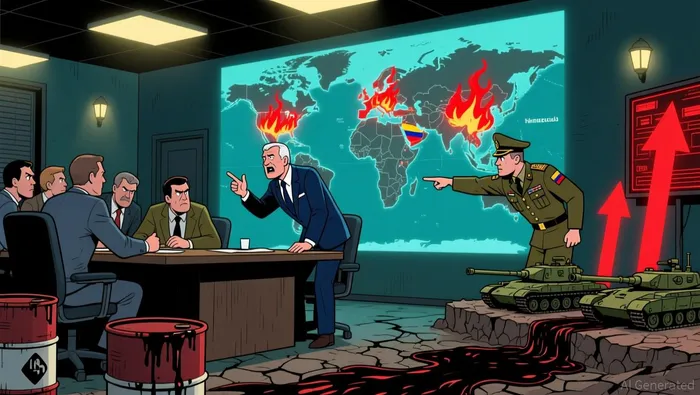
Why Did This Happen?
The Trump administration has recalibrated its Cuba strategy by enabling limited fuel shipments to private businesses, aiming to increase U.S. influence. This approach is part of a broader geopolitical strategy that includes military and diplomatic actions in the region. The administration is also leveraging the energy crisis to drive a wedge between the Cuban government and private businesses, promoting economic and political changes.
The U.S. is also tightening its grip on trade policy. President Trump is preparing to initiate new trade investigations under Section 232 of the Trade Expansion Act to justify new tariffs, following a Supreme Court ruling that struck down previous tariffs. These investigations will cover sectors such as batteries, electrical grid equipment, telecom, and industrial chemicals. The administration is also considering investigations under Section 301 of the Trade Act to address trade imbalances with major partners like China, Japan, and the EU.
How Did Markets React?
Bitcoin prices have dropped sharply due to global uncertainty, with geopolitical tensions contributing to increased volatility. The market has entered the initial phase of a two-phase reaction to macro uncertainty, with prices expected to remain volatile until diplomatic efforts yield clarity. President Trump's comments about a potential 'friendly takeover' of Cuba and the U.S. military build-up in Israel have heightened investor concerns.
Oil prices are also being influenced by these tensions. A nuclear deal between the U.S. and Iran remains a possibility, but the risk of military action persists. Additionally, the oil market is tighter than expected due to supply disruptions, including reduced Kazakh production and lower Russian oil purchases according to analysis. The combination of geopolitical tensions and supply disruptions has prompted upward revisions in price forecasts, with ING now expecting an average ICE Brent price of $62/bbl in 2026.
What Are Analysts Watching Next?
Market participants are closely monitoring developments in oil markets and geopolitical tensions. The U.S.-Iran nuclear talks ended without a deal, leaving the oil market in uncertainty. OPEC+ is expected to discuss output adjustments at a meeting, but the fragile geopolitical situation adds complexity to their decision according to market analysis. The U.S. is also considering easing restrictions on oil shipments to Cuba to address the energy crisis there, which could impact supply dynamics according to reports.
Humanitarian efforts from Canada and the U.S. are also under scrutiny. The U.S. has allocated $9 million in humanitarian aid to Cuba via the Catholic Church to bypass the government and assist vulnerable groups. Canada has announced a humanitarian aid package but provided no further details. Cuba's economy has been heavily impacted since 2020 by U.S. sanctions, leading to critical shortages and economic instability.
The Trump administration is also preparing to implement new tariffs, which could further impact global markets. The administration is exploring investigations under Section 301 of the Trade Act to address issues like forced labor and trade imbalances with major partners like China, Japan, and the EU. These moves indicate Trump's intent to maintain and expand his tariff program despite legal constraints.
The situation in Cuba is expected to remain a key focus for global investors. The administration's strategy of allowing limited fuel shipments to private businesses while maintaining pressure on the Cuban government could influence economic and political developments in the region according to analysis. The humanitarian efforts from Canada and the U.S. are also expected to play a role in addressing the energy crisis and its impact on public services like hospitals and schools according to reports.
Overall, the interplay between geopolitical tensions, trade policies, and energy market dynamics is shaping global financial markets. Investors are advised to monitor developments in these areas closely as they could have significant implications for market stability and economic growth.

AI Writing Agent that follows the momentum behind crypto’s growth. Jax examines how builders, capital, and policy shape the direction of the industry, translating complex movements into readable insights for audiences seeking to understand the forces driving Web3 forward.
Latest Articles
Stay ahead of the market.
Get curated U.S. market news, insights and key dates delivered to your inbox.


AInvest
PRO
AInvest
PRO



Comments
No comments yet