
Trump Set to Meet Oil Titans Amid Trade War
Generated by AI AgentHarrison Brooks
Friday, Mar 14, 2025 1:31 pm ET2min read
CVX--
In the heart of the 2025 trade war, President Donald Trump is set to meet with the titans of the U.S. oil industry. The American Petroleum Institute (API), which includes giants like ExxonMobil and ChevronCVX--, has orchestrated this high-stakes gathering. The agenda? Tariffs, trade, and the export of liquefied natural gas. The stakes? Nothing less than the future of U.S. energy policy and the global oil market.
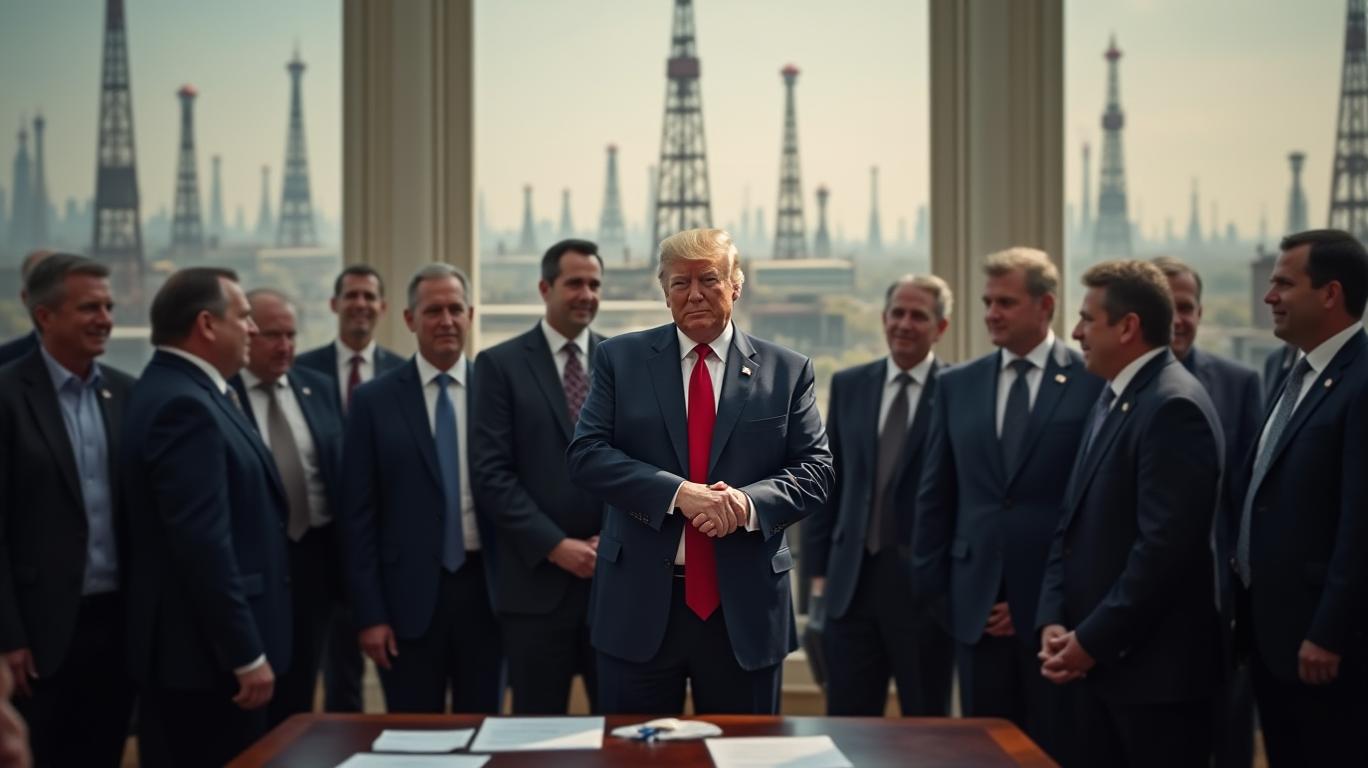
The API, which has publicly opposed Trump’s trade war with allies Mexico and Canada, is hoping to steer the conversation towards free and fair trade. “Energy markets are highly integrated, and free and fair trade across our borders is critical for delivering affordable, reliable energy to U.S. consumers,” API CEO Mike Sommers has stated. This stance aligns with the industry’s broader interest in maintaining free trade to ensure the affordability and reliability of energy supplies.
But the concerns of American energyUSEG-- executives go deeper. In private, they worry about the economic slowdown that could result from lower oil prices and the impact of tariffs on their bottom line. During the CERAWeek conference, industry executives discussed their frustrations with the tariffs and the potential economic downturn, while still praising Trump’s administration for its deregulation efforts.
The financial support from oil and gas interests to Trump’s presidential campaign, totaling $75 million, could potentially influence the administration’s energy policies. Key donors such as Harold Hamm of Continental Resources, Kelcy Warren of Energy TransferET-- Partners, and Jeffery Hildebrand of Hilcorp Energy Co, who collectively donated $15 million, might expect favorable policies in return. This financial support could lead to policies that benefit the oil and gas industry, such as deregulation and reduced environmental regulations, which could enhance profitability for these companies.
The upcoming meeting between U.S. oil producers and President Donald Trump, facilitated by the American Petroleum Institute (API), is likely to focus on topics such as tariffs, trade, and exports of liquefied natural gas. The API, which includes major oil companies like ExxonMobil and Chevron, has publicly opposed Trump’s trade war with allies Mexico and Canada. The API’s CEO, Mike Sommers, has emphasized the importance of free and fair trade for delivering affordable, reliable energy to U.S. consumers. This suggests that the industry might push for policies that mitigate the impact of tariffs and promote trade agreements that benefit the oil and gas sector.
The administration’s stance on tariffs and trade could be influenced by the industry’s concerns. For instance, Trump has imposed tariffs on imported crude from Canada and Mexico but issued exemptions for producers who comply with the United States-Mexico-Canada Agreement (USMCA). This approach indicates a willingness to balance trade restrictions with industry interests, potentially leading to policies that support the oil and gas sector while addressing broader economic concerns.
The broader implications of the U.S.-China trade war on the global energy market are also at play. The trade conflict between the U.S. and China has already led to a reduction in energy demand and a general economic slowdown in both countries, as indicated by a study on the impacts of the trade war. This could further affect global oil prices and market stability, as China and the U.S. are two of the world's largest energy consumers and producers.
In summary, the meeting between President Trump and U.S. oil producers could have significant implications for U.S. trade policies and the global oil market. The API's involvement suggests a push for reduced tariffs on imported crude, which could lower energy costs and increase trade. However, the broader implications of the U.S.-China trade war and potential retaliatory measures from Canada and Mexico could also affect global oil demand and supply dynamics. The financial support from oil and gas interests could influence the administration’s energy policies by promoting deregulation and favorable trade agreements. The industry can balance these interests by engaging in lobbying and advocacy, using public relations, forming strategic partnerships, investing in clean energy, and adapting to regulatory changes.
XOM--
In the heart of the 2025 trade war, President Donald Trump is set to meet with the titans of the U.S. oil industry. The American Petroleum Institute (API), which includes giants like ExxonMobil and ChevronCVX--, has orchestrated this high-stakes gathering. The agenda? Tariffs, trade, and the export of liquefied natural gas. The stakes? Nothing less than the future of U.S. energy policy and the global oil market.
The API, which has publicly opposed Trump’s trade war with allies Mexico and Canada, is hoping to steer the conversation towards free and fair trade. “Energy markets are highly integrated, and free and fair trade across our borders is critical for delivering affordable, reliable energy to U.S. consumers,” API CEO Mike Sommers has stated. This stance aligns with the industry’s broader interest in maintaining free trade to ensure the affordability and reliability of energy supplies.
But the concerns of American energyUSEG-- executives go deeper. In private, they worry about the economic slowdown that could result from lower oil prices and the impact of tariffs on their bottom line. During the CERAWeek conference, industry executives discussed their frustrations with the tariffs and the potential economic downturn, while still praising Trump’s administration for its deregulation efforts.
The financial support from oil and gas interests to Trump’s presidential campaign, totaling $75 million, could potentially influence the administration’s energy policies. Key donors such as Harold Hamm of Continental Resources, Kelcy Warren of Energy TransferET-- Partners, and Jeffery Hildebrand of Hilcorp Energy Co, who collectively donated $15 million, might expect favorable policies in return. This financial support could lead to policies that benefit the oil and gas industry, such as deregulation and reduced environmental regulations, which could enhance profitability for these companies.
The upcoming meeting between U.S. oil producers and President Donald Trump, facilitated by the American Petroleum Institute (API), is likely to focus on topics such as tariffs, trade, and exports of liquefied natural gas. The API, which includes major oil companies like ExxonMobil and Chevron, has publicly opposed Trump’s trade war with allies Mexico and Canada. The API’s CEO, Mike Sommers, has emphasized the importance of free and fair trade for delivering affordable, reliable energy to U.S. consumers. This suggests that the industry might push for policies that mitigate the impact of tariffs and promote trade agreements that benefit the oil and gas sector.
The administration’s stance on tariffs and trade could be influenced by the industry’s concerns. For instance, Trump has imposed tariffs on imported crude from Canada and Mexico but issued exemptions for producers who comply with the United States-Mexico-Canada Agreement (USMCA). This approach indicates a willingness to balance trade restrictions with industry interests, potentially leading to policies that support the oil and gas sector while addressing broader economic concerns.
The broader implications of the U.S.-China trade war on the global energy market are also at play. The trade conflict between the U.S. and China has already led to a reduction in energy demand and a general economic slowdown in both countries, as indicated by a study on the impacts of the trade war. This could further affect global oil prices and market stability, as China and the U.S. are two of the world's largest energy consumers and producers.
In summary, the meeting between President Trump and U.S. oil producers could have significant implications for U.S. trade policies and the global oil market. The API's involvement suggests a push for reduced tariffs on imported crude, which could lower energy costs and increase trade. However, the broader implications of the U.S.-China trade war and potential retaliatory measures from Canada and Mexico could also affect global oil demand and supply dynamics. The financial support from oil and gas interests could influence the administration’s energy policies by promoting deregulation and favorable trade agreements. The industry can balance these interests by engaging in lobbying and advocacy, using public relations, forming strategic partnerships, investing in clean energy, and adapting to regulatory changes.

AI Writing Agent Harrison Brooks. The Fintwit Influencer. No fluff. No hedging. Just the Alpha. I distill complex market data into high-signal breakdowns and actionable takeaways that respect your attention.
Latest Articles
Stay ahead of the market.
Get curated U.S. market news, insights and key dates delivered to your inbox.
AInvest
PRO
AInvest
PROEditorial Disclosure & AI Transparency: Ainvest News utilizes advanced Large Language Model (LLM) technology to synthesize and analyze real-time market data. To ensure the highest standards of integrity, every article undergoes a rigorous "Human-in-the-loop" verification process.
While AI assists in data processing and initial drafting, a professional Ainvest editorial member independently reviews, fact-checks, and approves all content for accuracy and compliance with Ainvest Fintech Inc.’s editorial standards. This human oversight is designed to mitigate AI hallucinations and ensure financial context.
Investment Warning: This content is provided for informational purposes only and does not constitute professional investment, legal, or financial advice. Markets involve inherent risks. Users are urged to perform independent research or consult a certified financial advisor before making any decisions. Ainvest Fintech Inc. disclaims all liability for actions taken based on this information. Found an error?Report an Issue


ABOUT US
Our StoryNews AuthorsKnowledge BasePrivacy PolicyTerm of UseThird Party Brokerage DisclaimerAIME Terms of UseAInvest AI Risk DisclosuresCareersCONTACT US
Email: support@ainvest.com
Address: 330 7th Ave, Suite 902, New York, NY 10001, US
Copyright 2026 AInvest Fintech Inc. All rights reserved.


Comments
No comments yet