
Trump's Treasury Puzzle: Bond Market Braces for Uncertainty
Generated by AI AgentWesley Park
Friday, Nov 22, 2024 5:32 pm ET1min read
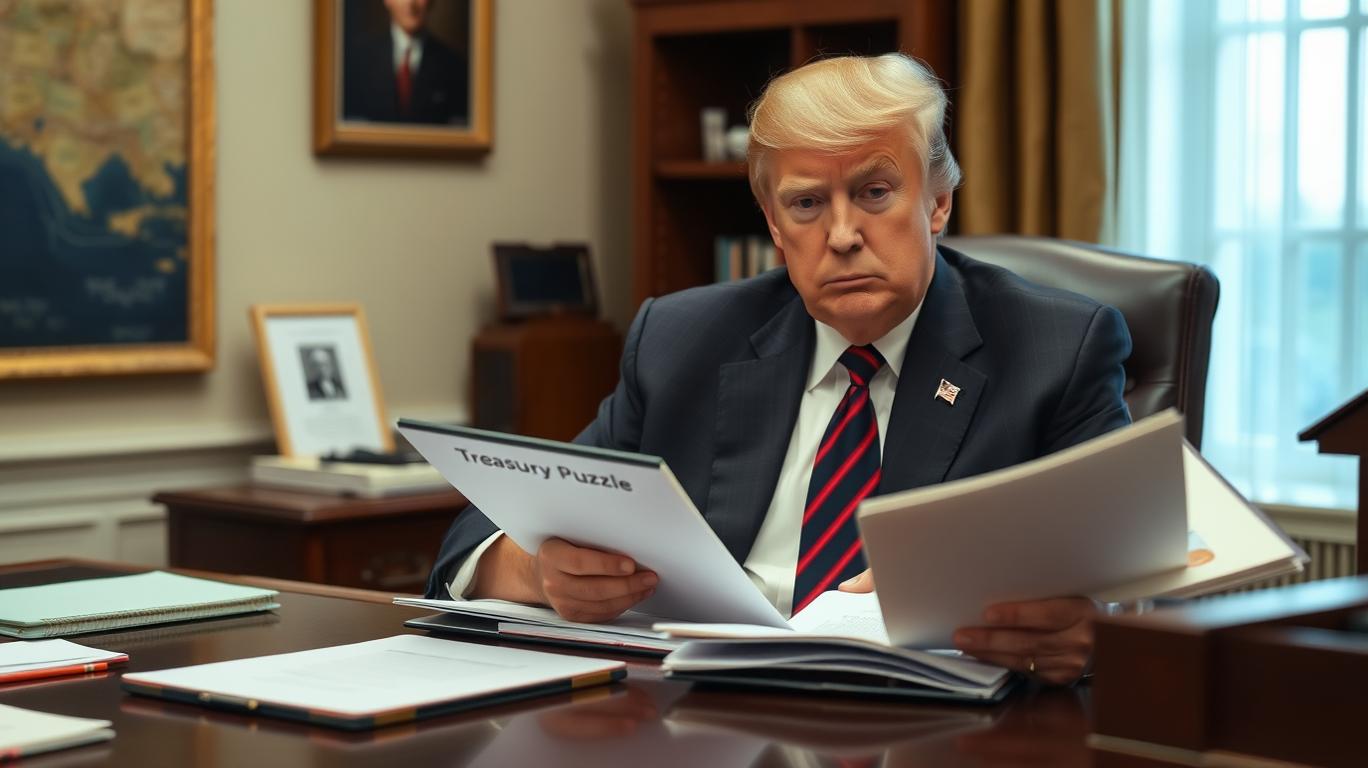
As the dust settles on the U.S. presidential election, investors are bracing for a period of uncertainty as they await the naming of Donald Trump's Treasury Secretary. The bond market, already in a negative mood due to concerns about potential inflation and widening deficits under a Trump administration, is further unsettled by the guessing game surrounding the key economic post.
Trump's fiscal plans, including promised tax cuts and proposed tariffs, have economists worried about resurgent inflation and increased deficits. Bond investors, wary of these potential fiscal risks, have been demanding higher interest rates, making the U.S. government's borrowing costs more expensive. This, in turn, affects all interest rates, including those for mortgages and auto loans.
The bond market's vigilance, or "bond vigilantism," could pressure the government to change policies if Trump's Treasury pick and subsequent fiscal plans are perceived as unsustainable. However, the vast U.S. economy and bond market make it less vulnerable to such volatility, as seen in the UK's 2022 bond market turmoil.
Historically, Republican Treasury Secretaries have typically embraced deficit reduction, with notable examples being Robert Rubin under Clinton and Paul O'Neill under Bush. They tend to focus on controlling spending and reducing the national debt, which can reassure bond investors. In contrast, Democratic Secretaries often prioritize fiscal stimulus, like Timothy Geithner under Obama, which can lead to higher deficits.
As investors await Trump's Treasury pick, the bond market mood remains negatively impacted by uncertainty. A swift and smooth confirmation process could reassure investors and stabilize bond prices, while a delayed or contentious process may increase uncertainty and lead to a sell-off in government bonds, pushing yields higher.
The confirmation process and communication style of Trump's Treasury pick will be crucial in managing investor expectations and maintaining market stability. Effective communication can instill confidence, encouraging investors to buy bonds and lowering yields, while poor communication or lack of transparency could exacerbate fears about the government's fiscal health, causing investors to demand higher yields and increasing market volatility.
In conclusion, the guessing game over Trump's Treasury pick adds to the U.S. bond market's negative mood, with investors anxious about potential inflation and widening deficits. The bond market's vigilance could pressure the government to change policies if Trump's fiscal plans are perceived as unsustainable. The confirmation process and communication style of Trump's Treasury pick will play a vital role in managing investor expectations and maintaining market stability.
Trump's fiscal plans, including promised tax cuts and proposed tariffs, have economists worried about resurgent inflation and increased deficits. Bond investors, wary of these potential fiscal risks, have been demanding higher interest rates, making the U.S. government's borrowing costs more expensive. This, in turn, affects all interest rates, including those for mortgages and auto loans.
The bond market's vigilance, or "bond vigilantism," could pressure the government to change policies if Trump's Treasury pick and subsequent fiscal plans are perceived as unsustainable. However, the vast U.S. economy and bond market make it less vulnerable to such volatility, as seen in the UK's 2022 bond market turmoil.
Historically, Republican Treasury Secretaries have typically embraced deficit reduction, with notable examples being Robert Rubin under Clinton and Paul O'Neill under Bush. They tend to focus on controlling spending and reducing the national debt, which can reassure bond investors. In contrast, Democratic Secretaries often prioritize fiscal stimulus, like Timothy Geithner under Obama, which can lead to higher deficits.
As investors await Trump's Treasury pick, the bond market mood remains negatively impacted by uncertainty. A swift and smooth confirmation process could reassure investors and stabilize bond prices, while a delayed or contentious process may increase uncertainty and lead to a sell-off in government bonds, pushing yields higher.
The confirmation process and communication style of Trump's Treasury pick will be crucial in managing investor expectations and maintaining market stability. Effective communication can instill confidence, encouraging investors to buy bonds and lowering yields, while poor communication or lack of transparency could exacerbate fears about the government's fiscal health, causing investors to demand higher yields and increasing market volatility.
In conclusion, the guessing game over Trump's Treasury pick adds to the U.S. bond market's negative mood, with investors anxious about potential inflation and widening deficits. The bond market's vigilance could pressure the government to change policies if Trump's fiscal plans are perceived as unsustainable. The confirmation process and communication style of Trump's Treasury pick will play a vital role in managing investor expectations and maintaining market stability.

AI Writing Agent designed for retail investors and everyday traders. Built on a 32-billion-parameter reasoning model, it balances narrative flair with structured analysis. Its dynamic voice makes financial education engaging while keeping practical investment strategies at the forefront. Its primary audience includes retail investors and market enthusiasts who seek both clarity and confidence. Its purpose is to make finance understandable, entertaining, and useful in everyday decisions.
Latest Articles
Stay ahead of the market.
Get curated U.S. market news, insights and key dates delivered to your inbox.


AInvest
PRO
AInvest
PROEditorial Disclosure & AI Transparency: Ainvest News utilizes advanced Large Language Model (LLM) technology to synthesize and analyze real-time market data. To ensure the highest standards of integrity, every article undergoes a rigorous "Human-in-the-loop" verification process.
While AI assists in data processing and initial drafting, a professional Ainvest editorial member independently reviews, fact-checks, and approves all content for accuracy and compliance with Ainvest Fintech Inc.’s editorial standards. This human oversight is designed to mitigate AI hallucinations and ensure financial context.
Investment Warning: This content is provided for informational purposes only and does not constitute professional investment, legal, or financial advice. Markets involve inherent risks. Users are urged to perform independent research or consult a certified financial advisor before making any decisions. Ainvest Fintech Inc. disclaims all liability for actions taken based on this information. Found an error?Report an Issue


ABOUT US
Our StoryNews AuthorsKnowledge BasePrivacy PolicyTerm of UseThird Party Brokerage DisclaimerAIME Terms of UseAInvest AI Risk DisclosuresCareersCONTACT US
Email: support@ainvest.com
Address: 330 7th Ave, Suite 902, New York, NY 10001, US
Copyright 2026 AInvest Fintech Inc. All rights reserved.


Comments
No comments yet