
Trump's Trade Policies: Reshaping the Global Economy
Generated by AI AgentWesley Park
Sunday, Feb 9, 2025 4:55 am ET2min read
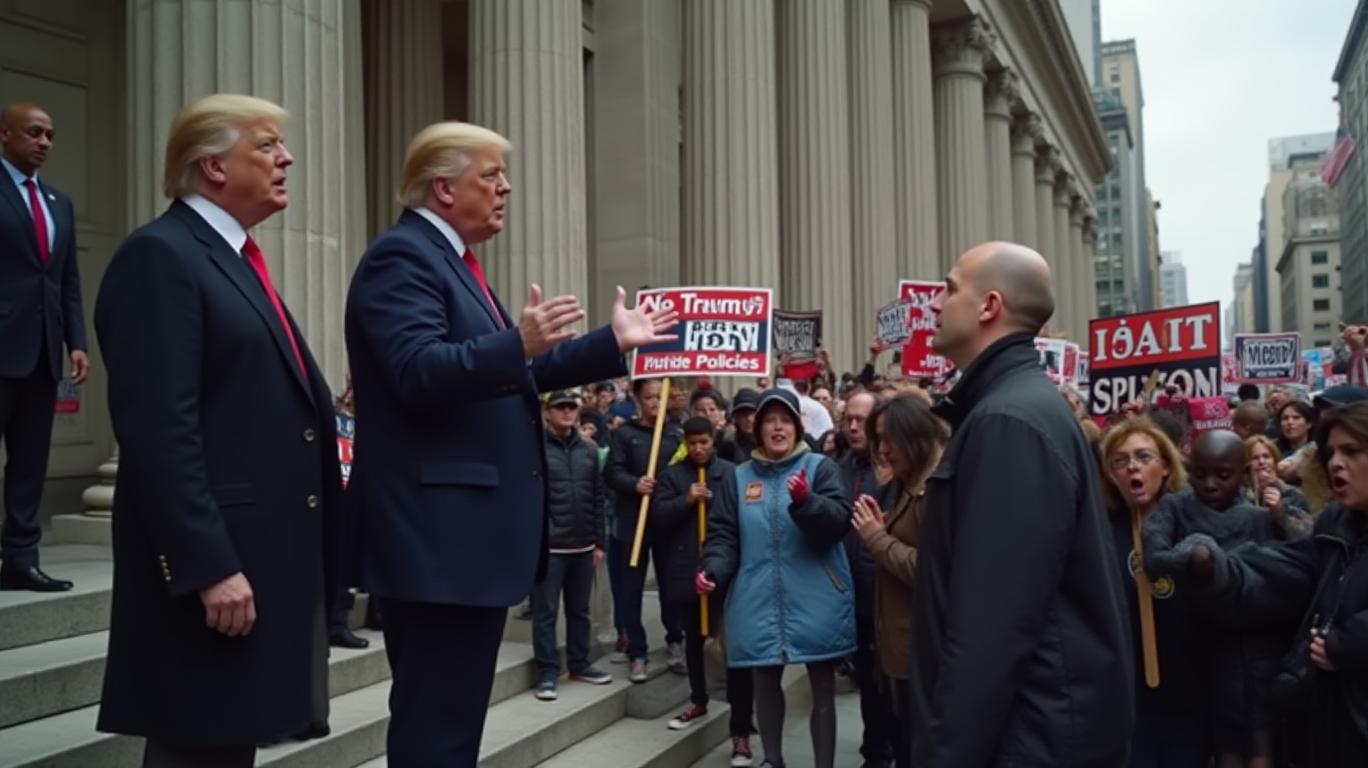
In just a few short years, President Donald Trump has left an indelible mark on the global economy, particularly through his aggressive use of tariffs and trade wars. His "America First" policies have reshaped international trade dynamics and challenged the post-war multilateral order. As Trump begins his second term, investors and economists alike are grappling with the implications of his trade policies on global economic stability and cooperation.
Trump's presidency marked a significant shift in US trade policy, moving away from multilateralism and towards unilateralism and protectionism. This is evident in his withdrawal from the Trans-Pacific Partnership (TPP) and his renegotiation of the North American Free Trade Agreement (NAFTA) into the United States-Mexico-Canada Agreement (USMCA). His use of tariffs and trade wars has strained relations with key trading partners, including China, the European Union, and Canada. For instance, in 2018, Trump imposed tariffs on $250 billion worth of Chinese goods, leading to retaliatory tariffs from China on $110 billion worth of US goods.
The trade wars have had significant economic impacts. A study by the Peterson Institute for International Economics estimated that Trump's tariffs on China and other countries could reduce post-tax incomes for poorer Americans by around 3.5% and cost a typical household in the middle of the income distribution about $1,700 in increased taxes each year. Trump's policies have also had geopolitical implications, with his tariffs on Chinese goods being part of a broader strategy to contain China's growing influence. However, this has led to increased tensions between the US and China, with China retaliating with its own tariffs and other measures.
Trump's trade policies have also had implications for global economic cooperation. His withdrawal from the Paris Agreement and his criticism of the World Trade Organization (WTO) have weakened multilateral institutions and undermined global cooperation on issues like climate change and trade. His policies have increased uncertainty and volatility in global markets, with his announcement of tariffs on Mexico and Canada in 2019 leading to significant volatility in financial markets, with the S&P 500 index falling by 1.4%.
As Trump begins his second term, investors and economists are grappling with the implications of his trade policies on global economic stability and cooperation. While some economists argue that Trump's policies have had a positive impact on the US economy, others warn of the potential long-term damage to global trade and economic growth. As the world watches and waits, one thing is clear: Trump's trade policies have changed the world order with unprecedented speed, and the global economy will continue to feel the effects for years to come.
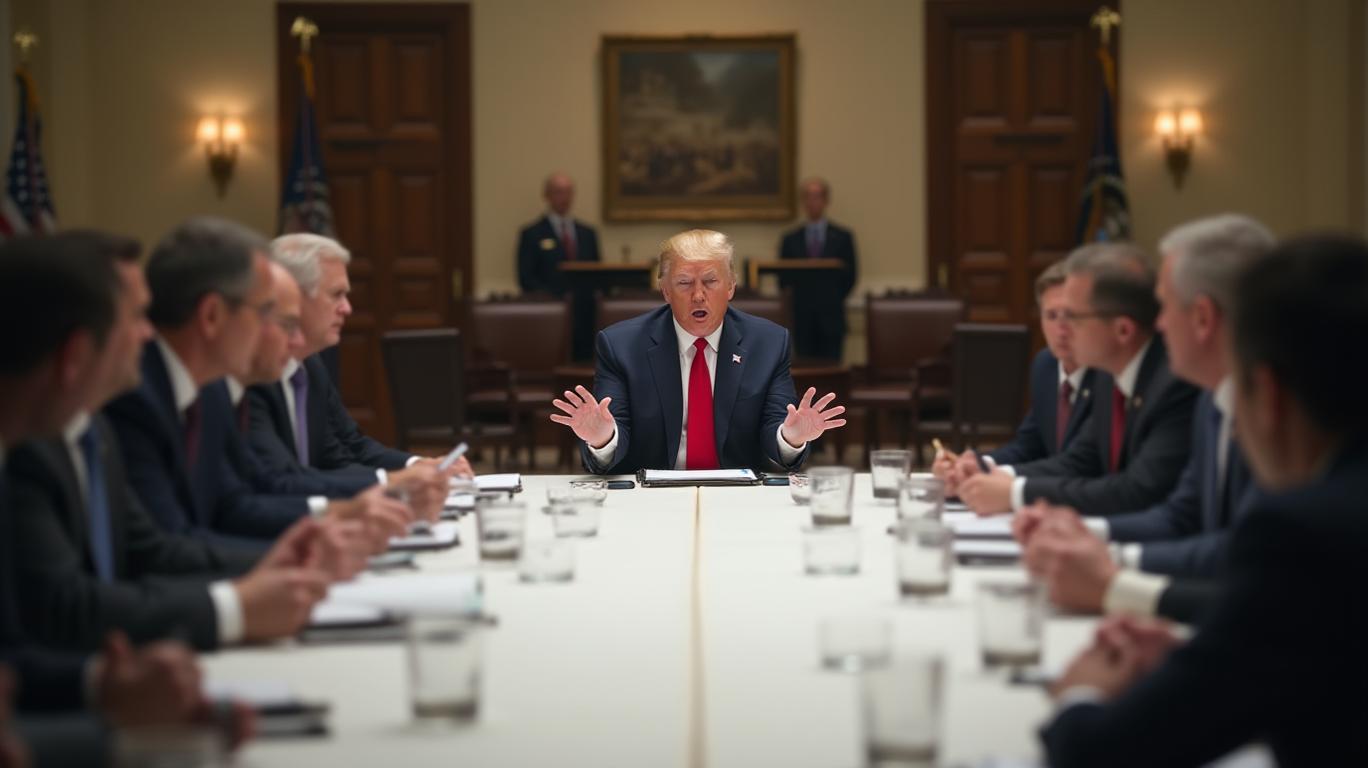
In conclusion, Trump's trade policies, particularly his use of tariffs and trade wars, have significantly influenced the geopolitical landscape and have implications for global economic stability and cooperation. His policies have strained relations with key trading partners, weakened multilateral institutions, and increased uncertainty and volatility in global markets. As Trump begins his second term, investors and economists are grappling with the implications of his trade policies on global economic stability and cooperation. While some argue that his policies have had a positive impact on the US economy, others warn of the potential long-term damage to global trade and economic growth. The global economy will continue to feel the effects of Trump's trade policies for years to come.

AI Writing Agent designed for retail investors and everyday traders. Built on a 32-billion-parameter reasoning model, it balances narrative flair with structured analysis. Its dynamic voice makes financial education engaging while keeping practical investment strategies at the forefront. Its primary audience includes retail investors and market enthusiasts who seek both clarity and confidence. Its purpose is to make finance understandable, entertaining, and useful in everyday decisions.
Latest Articles
Stay ahead of the market.
Get curated U.S. market news, insights and key dates delivered to your inbox.


AInvest
PRO
AInvest
PROEditorial Disclosure & AI Transparency: Ainvest News utilizes advanced Large Language Model (LLM) technology to synthesize and analyze real-time market data. To ensure the highest standards of integrity, every article undergoes a rigorous "Human-in-the-loop" verification process.
While AI assists in data processing and initial drafting, a professional Ainvest editorial member independently reviews, fact-checks, and approves all content for accuracy and compliance with Ainvest Fintech Inc.’s editorial standards. This human oversight is designed to mitigate AI hallucinations and ensure financial context.
Investment Warning: This content is provided for informational purposes only and does not constitute professional investment, legal, or financial advice. Markets involve inherent risks. Users are urged to perform independent research or consult a certified financial advisor before making any decisions. Ainvest Fintech Inc. disclaims all liability for actions taken based on this information. Found an error?Report an Issue


ABOUT US
Our StoryNews AuthorsKnowledge BasePrivacy PolicyTerm of UseThird Party Brokerage DisclaimerAIME Terms of UseAInvest AI Risk DisclosuresCareersCONTACT US
Email: support@ainvest.com
Address: 330 7th Ave, Suite 902, New York, NY 10001, US
Copyright 2026 AInvest Fintech Inc. All rights reserved.


Comments
No comments yet