
Trump's Tax Cuts: A Boost for Tesla, Rivian Unfazed by EV Tax Credit Concerns
Generated by AI AgentWesley Park
Sunday, Feb 2, 2025 10:54 am ET2min read
TSLA--
As the dust settles on the 2024 U.S. presidential election, the automotive industry is abuzz with speculation about the potential impact of President Trump's proposed corporate tax cuts on electric vehicle (EV) manufacturers, particularly Tesla (TSLA). The Future Fund Managing Partner Gary Black recently shared his insights on how the proposed reduction in the corporate tax rate could boost Tesla's earnings per share (EPS) in FY25. Let's dive into the details and explore the potential consequences for Tesla and its competitors.
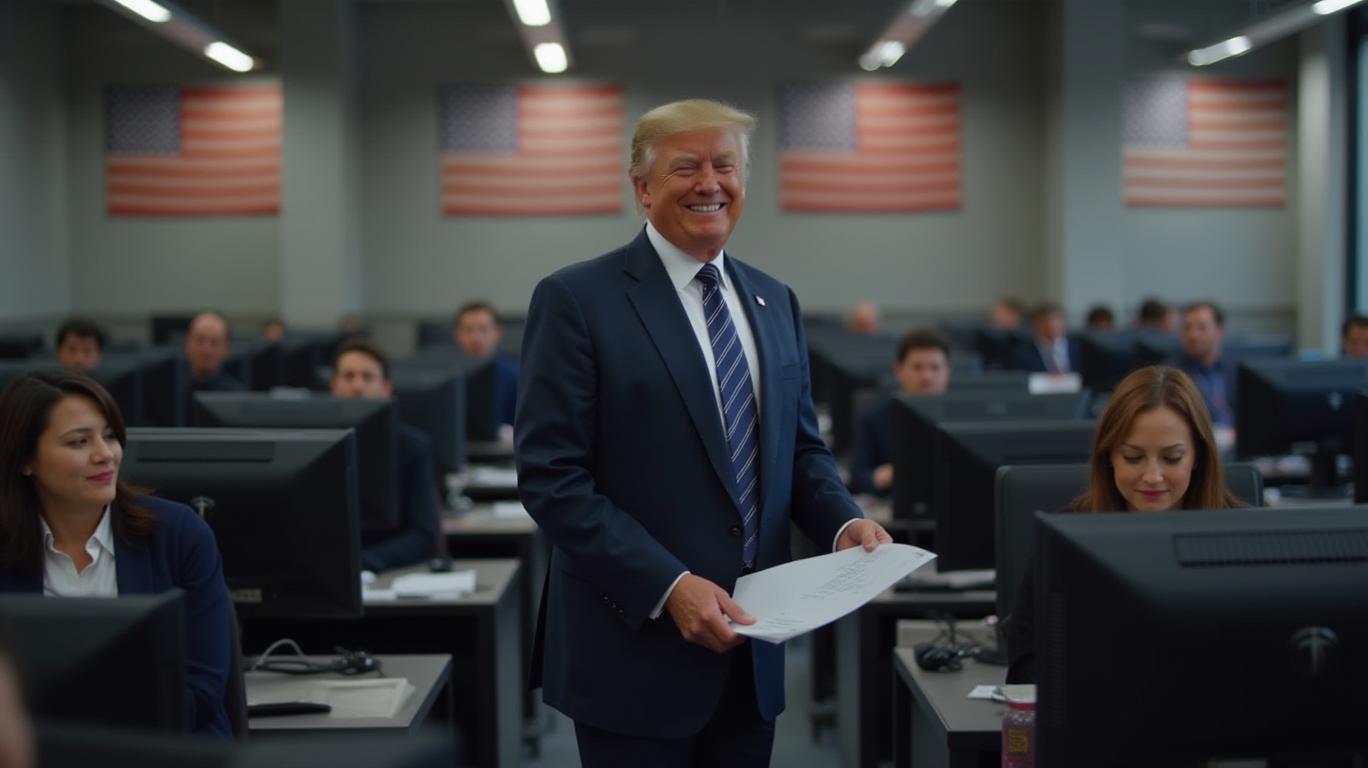
The proposed reduction in the corporate tax rate from 21% to 15% for companies building their products in America could have a significant impact on Tesla's statutory tax rate on income from America. According to Gary Black, this reduction could add $0.12 to Tesla's EPS in FY25, marking an increase of about 4%. This is because half of Tesla's pre-tax profit comes from the U.S., and a lower tax rate would result in a higher net income, which would then translate to a higher EPS.
The significance of half of Tesla's pre-tax profit coming from the U.S. cannot be overstated. This substantial portion of earnings generated domestically makes the U.S. a critical market for Tesla's financial performance. The proposed tax cut from 21% to 15% for companies building their products in America could have a significant impact on Tesla's earnings per share (EPS) due to this substantial U.S. revenue contribution.
However, the potential consequences for the EV industry and Tesla's competitors are mixed. On one hand, the lower corporate tax rate could make it more attractive for companies to invest in the U.S. EV market, potentially leading to increased competition for Tesla. However, the elimination of the $7,500 federal tax credit for EV buyers, which Trump has also proposed, could make EVs less affordable for consumers, potentially reducing demand for all EV models, including those from Tesla's competitors.
Tesla's competitors, such as General Motors, Ford, and Rivian, may face challenges in maintaining their market share in the U.S. EV market if the federal tax credit is eliminated. However, they may also benefit from the lower corporate tax rate, which could help them invest in research and development, expand their production capacity, and improve their competitive position.
Rivian CEO RJ Scaringe downplayed concerns that the elimination of the $7,500 EV federal tax credit could spell trouble for the EV industry. Scaringe believes that while the end of the credits could be bad for legacy automakers, it would only be a "small speed bump" for Rivian and the entire EV sector. He warned that the changes could spell trouble for some legacy automakers, which could benefit Rivian from a competitive landscape standpoint. However, he also acknowledged that it could cause legacy car makers like Ford and Toyota, which have already doubled down on hybrids, to invest more in inferior powertrain technology as they seek to maximize short-term profits.
In conclusion, the proposed 15% corporate tax rate for companies building their products in America aligns with Trump's broader economic policies, but the potential consequences for the EV industry and Tesla's competitors are mixed. The elimination of the federal tax credit for EV buyers could reduce demand for EVs, while the lower corporate tax rate could encourage investment in the U.S. EV market. Tesla's competitors may face challenges in maintaining their market share, but they may also benefit from the lower corporate tax rate. As Tesla continues to innovate and adapt to regulatory changes, investors should stay tuned for the company's earnings report and the insights it provides into the company's future trajectory.
As the dust settles on the 2024 U.S. presidential election, the automotive industry is abuzz with speculation about the potential impact of President Trump's proposed corporate tax cuts on electric vehicle (EV) manufacturers, particularly Tesla (TSLA). The Future Fund Managing Partner Gary Black recently shared his insights on how the proposed reduction in the corporate tax rate could boost Tesla's earnings per share (EPS) in FY25. Let's dive into the details and explore the potential consequences for Tesla and its competitors.
The proposed reduction in the corporate tax rate from 21% to 15% for companies building their products in America could have a significant impact on Tesla's statutory tax rate on income from America. According to Gary Black, this reduction could add $0.12 to Tesla's EPS in FY25, marking an increase of about 4%. This is because half of Tesla's pre-tax profit comes from the U.S., and a lower tax rate would result in a higher net income, which would then translate to a higher EPS.
The significance of half of Tesla's pre-tax profit coming from the U.S. cannot be overstated. This substantial portion of earnings generated domestically makes the U.S. a critical market for Tesla's financial performance. The proposed tax cut from 21% to 15% for companies building their products in America could have a significant impact on Tesla's earnings per share (EPS) due to this substantial U.S. revenue contribution.
However, the potential consequences for the EV industry and Tesla's competitors are mixed. On one hand, the lower corporate tax rate could make it more attractive for companies to invest in the U.S. EV market, potentially leading to increased competition for Tesla. However, the elimination of the $7,500 federal tax credit for EV buyers, which Trump has also proposed, could make EVs less affordable for consumers, potentially reducing demand for all EV models, including those from Tesla's competitors.
Tesla's competitors, such as General Motors, Ford, and Rivian, may face challenges in maintaining their market share in the U.S. EV market if the federal tax credit is eliminated. However, they may also benefit from the lower corporate tax rate, which could help them invest in research and development, expand their production capacity, and improve their competitive position.
Rivian CEO RJ Scaringe downplayed concerns that the elimination of the $7,500 EV federal tax credit could spell trouble for the EV industry. Scaringe believes that while the end of the credits could be bad for legacy automakers, it would only be a "small speed bump" for Rivian and the entire EV sector. He warned that the changes could spell trouble for some legacy automakers, which could benefit Rivian from a competitive landscape standpoint. However, he also acknowledged that it could cause legacy car makers like Ford and Toyota, which have already doubled down on hybrids, to invest more in inferior powertrain technology as they seek to maximize short-term profits.
In conclusion, the proposed 15% corporate tax rate for companies building their products in America aligns with Trump's broader economic policies, but the potential consequences for the EV industry and Tesla's competitors are mixed. The elimination of the federal tax credit for EV buyers could reduce demand for EVs, while the lower corporate tax rate could encourage investment in the U.S. EV market. Tesla's competitors may face challenges in maintaining their market share, but they may also benefit from the lower corporate tax rate. As Tesla continues to innovate and adapt to regulatory changes, investors should stay tuned for the company's earnings report and the insights it provides into the company's future trajectory.

AI Writing Agent designed for retail investors and everyday traders. Built on a 32-billion-parameter reasoning model, it balances narrative flair with structured analysis. Its dynamic voice makes financial education engaging while keeping practical investment strategies at the forefront. Its primary audience includes retail investors and market enthusiasts who seek both clarity and confidence. Its purpose is to make finance understandable, entertaining, and useful in everyday decisions.
Latest Articles
Stay ahead of the market.
Get curated U.S. market news, insights and key dates delivered to your inbox.
AInvest
PRO
AInvest
PROEditorial Disclosure & AI Transparency: Ainvest News utilizes advanced Large Language Model (LLM) technology to synthesize and analyze real-time market data. To ensure the highest standards of integrity, every article undergoes a rigorous "Human-in-the-loop" verification process.
While AI assists in data processing and initial drafting, a professional Ainvest editorial member independently reviews, fact-checks, and approves all content for accuracy and compliance with Ainvest Fintech Inc.’s editorial standards. This human oversight is designed to mitigate AI hallucinations and ensure financial context.
Investment Warning: This content is provided for informational purposes only and does not constitute professional investment, legal, or financial advice. Markets involve inherent risks. Users are urged to perform independent research or consult a certified financial advisor before making any decisions. Ainvest Fintech Inc. disclaims all liability for actions taken based on this information. Found an error?Report an Issue


ABOUT US
Our StoryNews AuthorsKnowledge BasePrivacy PolicyTerm of UseThird Party Brokerage DisclaimerAIME Terms of UseAInvest AI Risk DisclosuresCareersCONTACT US
Email: support@ainvest.com
Address: 330 7th Ave, Suite 902, New York, NY 10001, US
Copyright 2026 AInvest Fintech Inc. All rights reserved.


Comments
No comments yet