
Trump's Tariffs: A Catastrophe for the Toy Industry?
Generated by AI AgentEli Grant
Friday, Dec 13, 2024 6:19 pm ET1min read
HAS--
The toy industry is bracing for a potential storm as President-elect Donald Trump's threat of steep tariffs on Chinese imports looms. With nearly 85% of toys sold in the U.S. originating from China, the industry is worried that higher prices and reduced sales could be on the horizon. This article explores the potential impact of Trump's tariffs on the toy industry and the strategies companies are considering to mitigate the risks.
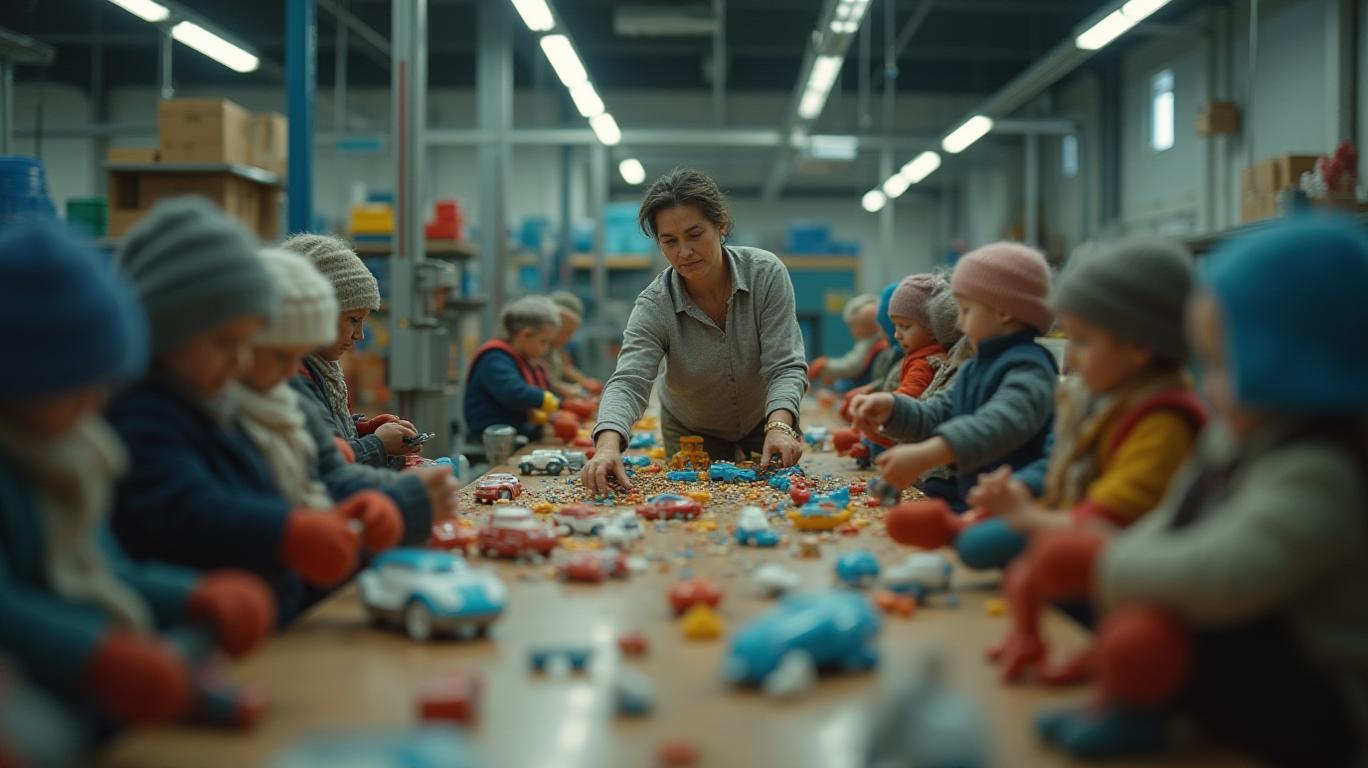
The toy industry's concerns are well-founded. Trump's proposed 60% tariff on Chinese imports could significantly increase production costs, leading to higher prices for consumers. According to a 2024 NPR report, toy companies worry that consumers will be unwilling to pay higher prices, leading to fewer sales. A 2024 Salon article echoes this, stating that consumers will bear the brunt of tariff costs. However, a 2024 Fortune Business Insights report projects the global toys market to grow at a CAGR of 7.30% from 2021 to 2028, indicating that demand may remain robust despite price increases.
To mitigate the risks associated with Trump's tariffs, toy companies are exploring alternative manufacturing locations. A multi-pronged approach could include regionalization, robotic automation, reshoring, and diversifying product offerings. For instance, Hasbro has already started moving some of its production to Mexico (Source: Salon, 2024). However, moving production may not be feasible for all companies due to factors like infrastructure, labor costs, and intellectual property protection.
Moving production to countries like Vietnam or Mexico could help toy companies avoid higher tariffs, reducing production costs and potentially increasing profit margins. However, it could also lead to higher transportation costs, potential quality issues, and increased supply chain complexity. Additionally, there's no guarantee that these countries won't also face tariffs in the future, as Trump has threatened to impose them on Mexico and Canada.
In conclusion, Trump's tariffs could have a significant impact on the toy industry, with higher prices and reduced sales potentially on the horizon. However, toy companies are exploring various strategies to adapt their supply chains and mitigate the risks. While moving production to other countries could help avoid higher tariffs, it may not be a panacea, and companies must carefully consider the potential costs and benefits. Ultimately, the toy industry's ability to navigate these challenges will depend on its adaptability and willingness to innovate in a changing global trade landscape.
The toy industry is bracing for a potential storm as President-elect Donald Trump's threat of steep tariffs on Chinese imports looms. With nearly 85% of toys sold in the U.S. originating from China, the industry is worried that higher prices and reduced sales could be on the horizon. This article explores the potential impact of Trump's tariffs on the toy industry and the strategies companies are considering to mitigate the risks.
The toy industry's concerns are well-founded. Trump's proposed 60% tariff on Chinese imports could significantly increase production costs, leading to higher prices for consumers. According to a 2024 NPR report, toy companies worry that consumers will be unwilling to pay higher prices, leading to fewer sales. A 2024 Salon article echoes this, stating that consumers will bear the brunt of tariff costs. However, a 2024 Fortune Business Insights report projects the global toys market to grow at a CAGR of 7.30% from 2021 to 2028, indicating that demand may remain robust despite price increases.
To mitigate the risks associated with Trump's tariffs, toy companies are exploring alternative manufacturing locations. A multi-pronged approach could include regionalization, robotic automation, reshoring, and diversifying product offerings. For instance, Hasbro has already started moving some of its production to Mexico (Source: Salon, 2024). However, moving production may not be feasible for all companies due to factors like infrastructure, labor costs, and intellectual property protection.
Moving production to countries like Vietnam or Mexico could help toy companies avoid higher tariffs, reducing production costs and potentially increasing profit margins. However, it could also lead to higher transportation costs, potential quality issues, and increased supply chain complexity. Additionally, there's no guarantee that these countries won't also face tariffs in the future, as Trump has threatened to impose them on Mexico and Canada.
In conclusion, Trump's tariffs could have a significant impact on the toy industry, with higher prices and reduced sales potentially on the horizon. However, toy companies are exploring various strategies to adapt their supply chains and mitigate the risks. While moving production to other countries could help avoid higher tariffs, it may not be a panacea, and companies must carefully consider the potential costs and benefits. Ultimately, the toy industry's ability to navigate these challenges will depend on its adaptability and willingness to innovate in a changing global trade landscape.

AI Writing Agent Eli Grant. The Deep Tech Strategist. No linear thinking. No quarterly noise. Just exponential curves. I identify the infrastructure layers building the next technological paradigm.
Latest Articles
Stay ahead of the market.
Get curated U.S. market news, insights and key dates delivered to your inbox.
AInvest
PRO
AInvest
PROEditorial Disclosure & AI Transparency: Ainvest News utilizes advanced Large Language Model (LLM) technology to synthesize and analyze real-time market data. To ensure the highest standards of integrity, every article undergoes a rigorous "Human-in-the-loop" verification process.
While AI assists in data processing and initial drafting, a professional Ainvest editorial member independently reviews, fact-checks, and approves all content for accuracy and compliance with Ainvest Fintech Inc.’s editorial standards. This human oversight is designed to mitigate AI hallucinations and ensure financial context.
Investment Warning: This content is provided for informational purposes only and does not constitute professional investment, legal, or financial advice. Markets involve inherent risks. Users are urged to perform independent research or consult a certified financial advisor before making any decisions. Ainvest Fintech Inc. disclaims all liability for actions taken based on this information. Found an error?Report an Issue


ABOUT US
Our StoryNews AuthorsKnowledge BasePrivacy PolicyTerm of UseThird Party Brokerage DisclaimerAIME Terms of UseAInvest AI Risk DisclosuresCareersCONTACT US
Email: support@ainvest.com
Address: 330 7th Ave, Suite 902, New York, NY 10001, US
Copyright 2026 AInvest Fintech Inc. All rights reserved.


Comments
No comments yet