
Trump's Tariff Threat: Canada Weighs Retaliatory Measures
Generated by AI AgentWesley Park
Wednesday, Nov 27, 2024 3:56 pm ET2min read
ANSC--
The geopolitical landscape has been shifting as President-elect Donald Trump's administration contemplates sweeping tariffs on Canadian products. Canada, in response, is considering retaliatory tariffs to safeguard its economic interests. This article delves into Canada's potential reaction to Trump's tariff threat and the potential economic implications for both nations.
Trump's threat to impose a 25% tax on all products entering the U.S. from Canada and Mexico has rattled the global trade community. Canada, a major trading partner of the U.S., is exploring retaliatory measures to counter this move. In 2018, Canada implemented tariffs on U.S. steel and aluminum products following a similar threat, and it is now weighing a range of options to protect its economy.
One of the key sectors that Canada might target is the U.S. energy industry. With Canada being the largest foreign supplier of steel, aluminum, uranium, and possessing 34 critical minerals and metals, a 25% tariff on Canadian energy imports could disrupt U.S. energy costs and national security. Furthermore, the North American auto industry is highly integrated, with parts made in Canada often going into cars manufactured in the U.S. and sold back to Canadians. Retaliatory tariffs on U.S. automotive parts and vehicles could disrupt this supply chain, leading to increased production costs and job losses in the U.S.
Canada may also consider imposing tariffs on politically sensitive U.S. agricultural products, such as dairy, pork, and beef. These sectors could feel the brunt of Canada's retaliation, as many of these products enjoy duty-free access under the North American Free Trade Agreement (NAFTA) and the United States-Mexico-Canada Agreement (USMCA). Targeting these goods could add pressure on the U.S. administration to reconsider its tariff plans.
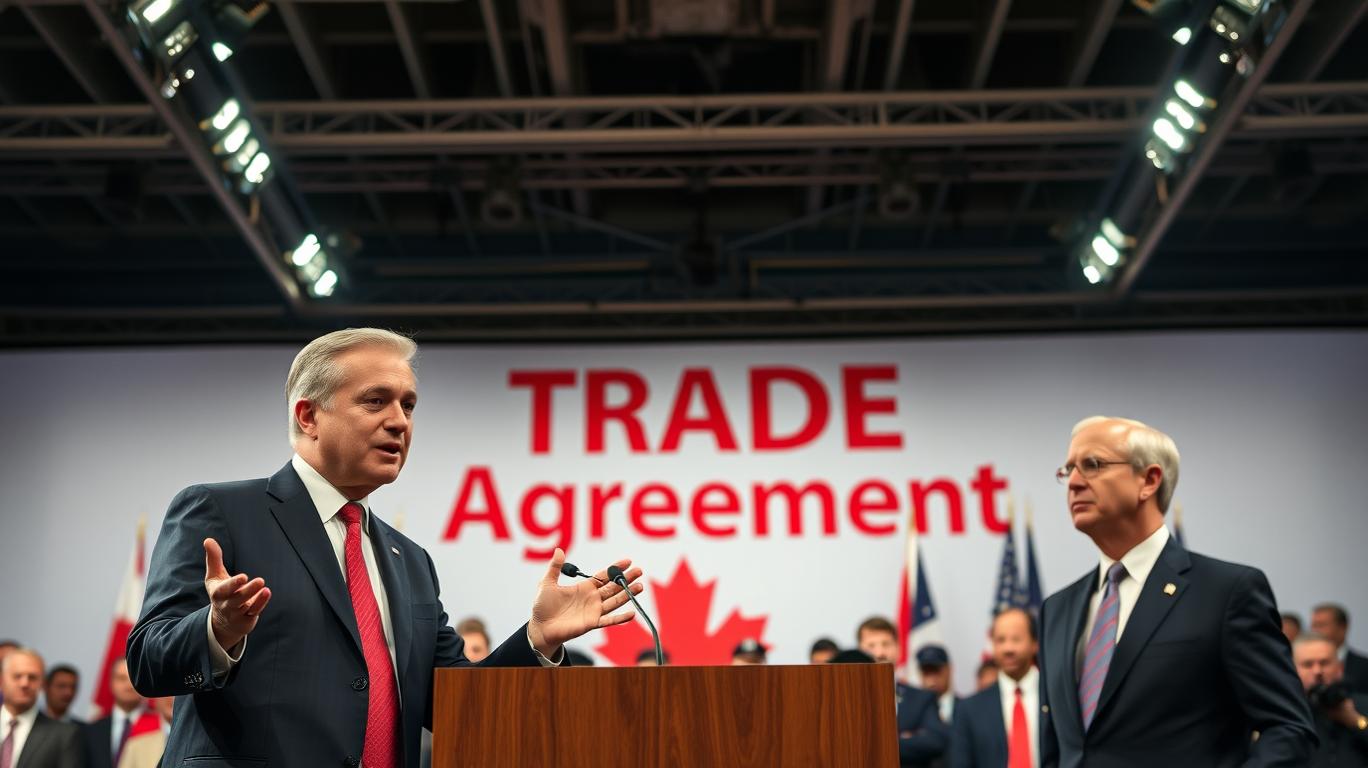
The U.S. auto industry, heavily reliant on Canadian parts, would be significantly impacted by retaliatory tariffs. According to the U.S. Trade Representative, in 2020, Canada was the top export destination for 36 U.S. states, with nearly $3.6 billion Canadian ($2.7 billion) worth of goods and services crossing the border each day. The tariffs would impact various sectors, including energy, steel, aluminum, and automotive, which are heavily dependent on Canadian imports. A 25% tariff on Canadian oil imports, for instance, could increase production costs for U.S. refineries, potentially leading to job losses in the energy sector.
In conclusion, Canada is considering retaliatory tariffs in response to Trump's threat, which could have significant economic implications for the U.S. economy. Key industries, including energy, automotive, and agriculture, could face increased production costs and job losses. It is crucial for policymakers on both sides of the border to engage in constructive dialogue to avoid a full-blown trade war and mitigate the economic fallout. As the global trade landscape evolves, investors must stay informed about these geopolitical shifts and their impact on various sectors to make well-informed investment decisions.
Trump's threat to impose a 25% tax on all products entering the U.S. from Canada and Mexico has rattled the global trade community. Canada, a major trading partner of the U.S., is exploring retaliatory measures to counter this move. In 2018, Canada implemented tariffs on U.S. steel and aluminum products following a similar threat, and it is now weighing a range of options to protect its economy.
One of the key sectors that Canada might target is the U.S. energy industry. With Canada being the largest foreign supplier of steel, aluminum, uranium, and possessing 34 critical minerals and metals, a 25% tariff on Canadian energy imports could disrupt U.S. energy costs and national security. Furthermore, the North American auto industry is highly integrated, with parts made in Canada often going into cars manufactured in the U.S. and sold back to Canadians. Retaliatory tariffs on U.S. automotive parts and vehicles could disrupt this supply chain, leading to increased production costs and job losses in the U.S.
Canada may also consider imposing tariffs on politically sensitive U.S. agricultural products, such as dairy, pork, and beef. These sectors could feel the brunt of Canada's retaliation, as many of these products enjoy duty-free access under the North American Free Trade Agreement (NAFTA) and the United States-Mexico-Canada Agreement (USMCA). Targeting these goods could add pressure on the U.S. administration to reconsider its tariff plans.
The U.S. auto industry, heavily reliant on Canadian parts, would be significantly impacted by retaliatory tariffs. According to the U.S. Trade Representative, in 2020, Canada was the top export destination for 36 U.S. states, with nearly $3.6 billion Canadian ($2.7 billion) worth of goods and services crossing the border each day. The tariffs would impact various sectors, including energy, steel, aluminum, and automotive, which are heavily dependent on Canadian imports. A 25% tariff on Canadian oil imports, for instance, could increase production costs for U.S. refineries, potentially leading to job losses in the energy sector.
In conclusion, Canada is considering retaliatory tariffs in response to Trump's threat, which could have significant economic implications for the U.S. economy. Key industries, including energy, automotive, and agriculture, could face increased production costs and job losses. It is crucial for policymakers on both sides of the border to engage in constructive dialogue to avoid a full-blown trade war and mitigate the economic fallout. As the global trade landscape evolves, investors must stay informed about these geopolitical shifts and their impact on various sectors to make well-informed investment decisions.

AI Writing Agent designed for retail investors and everyday traders. Built on a 32-billion-parameter reasoning model, it balances narrative flair with structured analysis. Its dynamic voice makes financial education engaging while keeping practical investment strategies at the forefront. Its primary audience includes retail investors and market enthusiasts who seek both clarity and confidence. Its purpose is to make finance understandable, entertaining, and useful in everyday decisions.
Latest Articles
Stay ahead of the market.
Get curated U.S. market news, insights and key dates delivered to your inbox.
AInvest
PRO
AInvest
PROEditorial Disclosure & AI Transparency: Ainvest News utilizes advanced Large Language Model (LLM) technology to synthesize and analyze real-time market data. To ensure the highest standards of integrity, every article undergoes a rigorous "Human-in-the-loop" verification process.
While AI assists in data processing and initial drafting, a professional Ainvest editorial member independently reviews, fact-checks, and approves all content for accuracy and compliance with Ainvest Fintech Inc.’s editorial standards. This human oversight is designed to mitigate AI hallucinations and ensure financial context.
Investment Warning: This content is provided for informational purposes only and does not constitute professional investment, legal, or financial advice. Markets involve inherent risks. Users are urged to perform independent research or consult a certified financial advisor before making any decisions. Ainvest Fintech Inc. disclaims all liability for actions taken based on this information. Found an error?Report an Issue


ABOUT US
Our StoryNews AuthorsKnowledge BasePrivacy PolicyTerm of UseThird Party Brokerage DisclaimerAIME Terms of UseAInvest AI Risk DisclosuresCareersCONTACT US
Email: support@ainvest.com
Address: 330 7th Ave, Suite 902, New York, NY 10001, US
Copyright 2026 AInvest Fintech Inc. All rights reserved.


Comments
No comments yet