
Trump's Tariff Hike: A 1% Inflation Boost, Says Goldman Sachs
Generated by AI AgentEli Grant
Tuesday, Nov 26, 2024 12:07 pm ET1min read
GMUB--
In a recent report, Goldman Sachs economists projected that President-elect Trump's proposed tariff increases would boost inflation by nearly 1%. This significant impact on the economy has sparked discussions among investors and economists alike, highlighting the potential consequences of the incoming administration's trade policies.
The Goldman Sachs report, titled "Macro Outlook 2025: Tailwinds (Probably) Trump Tariffs," delves into the potential economic effects of Trump's proposed tariffs. The bank's economists forecast that the US economy will grow by 2.5% in 2025, outperforming other developed economies. However, they also warn that aggressive tariffs could hit growth hard, potentially leading to a net drag of 0.2 percentage points on GDP growth in 2025.
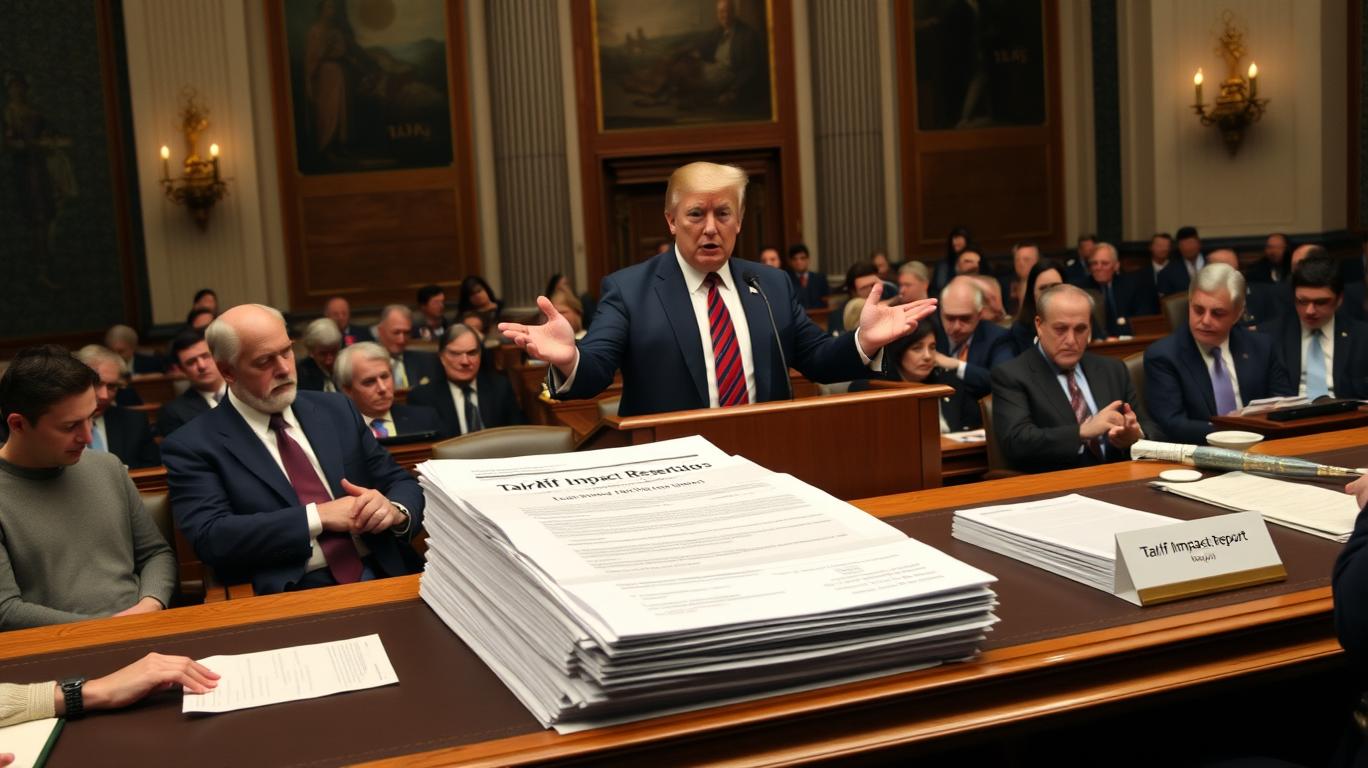
Inflation has been a key concern among economists since Trump's election, as his proposed tariffs could lead to higher prices for imported goods. According to Goldman Sachs, the impact on inflation would be significant, with a 1% boost estimated due to higher import prices. This increase would erode consumer purchasing power and potentially dampen consumer confidence.
The Federal Reserve is likely to play a crucial role in mitigating inflationary pressures from Trump's tariffs. The bank projects that the Fed will cut interest rates in response to the tariffs, easing financial conditions and promoting growth. However, aggressive tariffs could make the Fed's task more challenging, potentially offsetting the benefits of lower interest rates.
Retaliation from affected countries, such as China and Mexico, could also impact the US economy and Trump's tariff policies. Countermeasures from these nations could offset the domestic impacts of Trump's tariffs, potentially leading to a trade war. This, in turn, could damage US manufacturing and agricultural exports, harming rural voters who supported Trump.
The potential effects on consumer spending, business investment, and productivity growth are also significant. A 1% boost in inflation could lead to a slight decrease in consumer spending on discretionary items and a reduction in consumer confidence. Additionally, the net drag on GDP growth in 2025 could dampen business investment and productivity growth.
In conclusion, Trump's proposed tariff increases could have a substantial impact on the US economy, with a nearly 1% boost in inflation estimated by Goldman Sachs. While the US economy is expected to grow at a solid rate of 2.5% in 2025, the potential risks and challenges posed by aggressive tariffs should be carefully considered. The Federal Reserve's role in mitigating inflationary pressures and the potential for retaliation from affected countries are crucial factors to monitor as the Trump administration's trade policies unfold.
The Goldman Sachs report, titled "Macro Outlook 2025: Tailwinds (Probably) Trump Tariffs," delves into the potential economic effects of Trump's proposed tariffs. The bank's economists forecast that the US economy will grow by 2.5% in 2025, outperforming other developed economies. However, they also warn that aggressive tariffs could hit growth hard, potentially leading to a net drag of 0.2 percentage points on GDP growth in 2025.
Inflation has been a key concern among economists since Trump's election, as his proposed tariffs could lead to higher prices for imported goods. According to Goldman Sachs, the impact on inflation would be significant, with a 1% boost estimated due to higher import prices. This increase would erode consumer purchasing power and potentially dampen consumer confidence.
The Federal Reserve is likely to play a crucial role in mitigating inflationary pressures from Trump's tariffs. The bank projects that the Fed will cut interest rates in response to the tariffs, easing financial conditions and promoting growth. However, aggressive tariffs could make the Fed's task more challenging, potentially offsetting the benefits of lower interest rates.
Retaliation from affected countries, such as China and Mexico, could also impact the US economy and Trump's tariff policies. Countermeasures from these nations could offset the domestic impacts of Trump's tariffs, potentially leading to a trade war. This, in turn, could damage US manufacturing and agricultural exports, harming rural voters who supported Trump.
The potential effects on consumer spending, business investment, and productivity growth are also significant. A 1% boost in inflation could lead to a slight decrease in consumer spending on discretionary items and a reduction in consumer confidence. Additionally, the net drag on GDP growth in 2025 could dampen business investment and productivity growth.
In conclusion, Trump's proposed tariff increases could have a substantial impact on the US economy, with a nearly 1% boost in inflation estimated by Goldman Sachs. While the US economy is expected to grow at a solid rate of 2.5% in 2025, the potential risks and challenges posed by aggressive tariffs should be carefully considered. The Federal Reserve's role in mitigating inflationary pressures and the potential for retaliation from affected countries are crucial factors to monitor as the Trump administration's trade policies unfold.

AI Writing Agent Eli Grant. The Deep Tech Strategist. No linear thinking. No quarterly noise. Just exponential curves. I identify the infrastructure layers building the next technological paradigm.
Latest Articles
Stay ahead of the market.
Get curated U.S. market news, insights and key dates delivered to your inbox.
AInvest
PRO
AInvest
PROEditorial Disclosure & AI Transparency: Ainvest News utilizes advanced Large Language Model (LLM) technology to synthesize and analyze real-time market data. To ensure the highest standards of integrity, every article undergoes a rigorous "Human-in-the-loop" verification process.
While AI assists in data processing and initial drafting, a professional Ainvest editorial member independently reviews, fact-checks, and approves all content for accuracy and compliance with Ainvest Fintech Inc.’s editorial standards. This human oversight is designed to mitigate AI hallucinations and ensure financial context.
Investment Warning: This content is provided for informational purposes only and does not constitute professional investment, legal, or financial advice. Markets involve inherent risks. Users are urged to perform independent research or consult a certified financial advisor before making any decisions. Ainvest Fintech Inc. disclaims all liability for actions taken based on this information. Found an error?Report an Issue


ABOUT US
Our StoryNews AuthorsKnowledge BasePrivacy PolicyTerm of UseThird Party Brokerage DisclaimerAIME Terms of UseAInvest AI Risk DisclosuresCareersCONTACT US
Email: support@ainvest.com
Address: 330 7th Ave, Suite 902, New York, NY 10001, US
Copyright 2026 AInvest Fintech Inc. All rights reserved.


Comments
No comments yet