
Trump's Penny Plan: A Costly Mistake or Savvy Savings?
Generated by AI AgentWesley Park
Monday, Feb 10, 2025 7:42 pm ET1min read
MIMI--
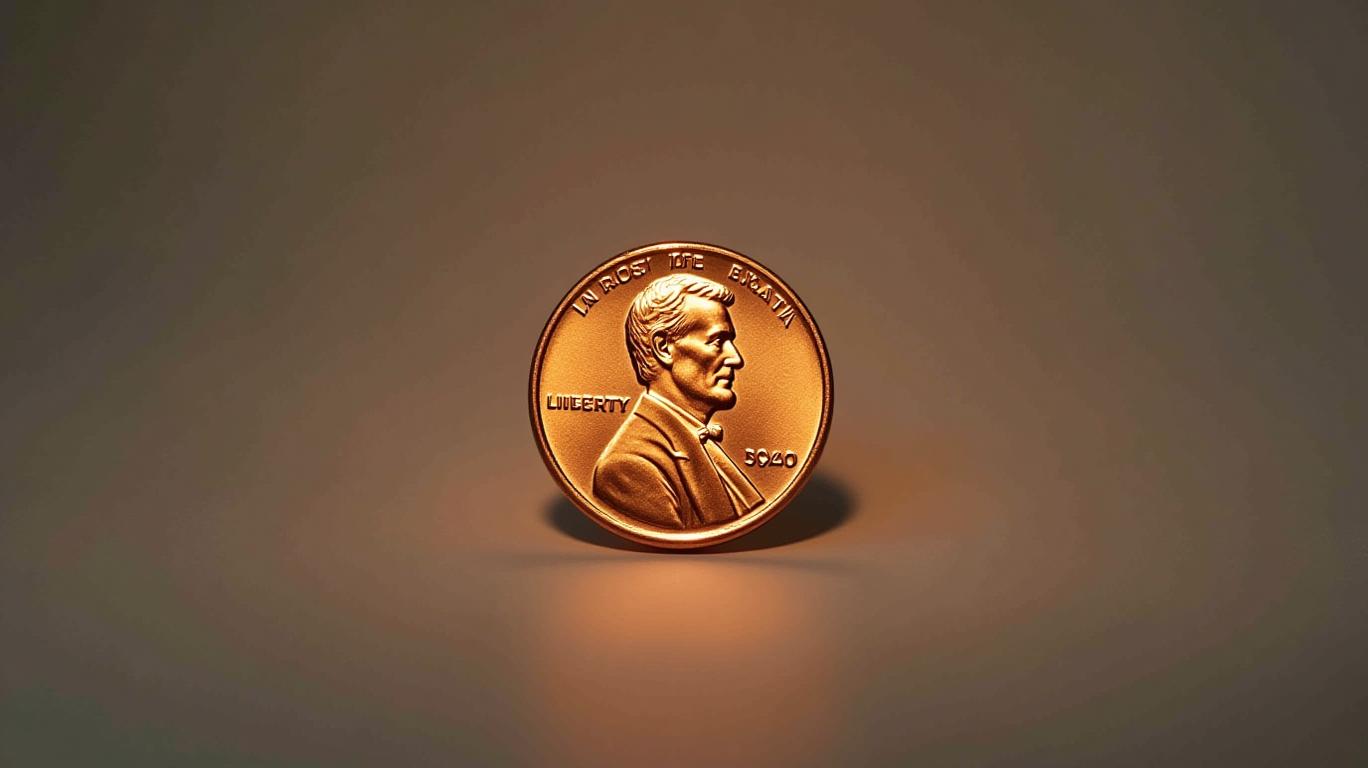
As President Donald Trump continues his cost-cutting crusade, one of his latest targets has been the humble penny. In a surprising move, Trump ordered the U.S. Treasury to stop minting new pennies, citing the rising cost of production. But is this penny-pinching plan a savvy move or a costly mistake?
The penny has long been a contentious issue among economists and lawmakers. Producing pennies has been expensive for decades, with the cost of making a penny often exceeding its face value. In 2024, the penny costs 3.69 cents to produce, according to the U.S. Mint. This high production cost, coupled with the limited utility of the penny, has led many to question its continued existence.
However, the elimination of the penny could have unintended consequences. Businesses might round prices to the nearest five cents to allow for cash payments and correct change received back. This would be the end of $6.99 fast food combo meals, as prices would have to be rounded up to $7.00 or down to $6.95. The decision to round up or down would matter, as businesses might tend to round up more often than down, leading to a slight inflationary effect. This could result in consumers paying more for goods and services, as prices would be rounded up more frequently than down. However, studies have shown that rounding prices to the nearest nickel does not lead to significant inflation. In Canada, which eliminated the penny in 2013, cash transactions were rounded to the nearest five cents, based on the total amount of the transaction, not on each individual item. This approach could be adopted in the United States as well.
Moreover, the elimination of the penny could have a disproportionate impact on low-income individuals who rely on cash transactions. These consumers would be the most affected, but the effect would be modest, according to economists. As more payments move away from physical currency, the impact of the penny's elimination would likely be minimal.
In conclusion, Trump's plan to eliminate the penny may not save as much as he hopes. While the penny's high production cost and limited utility make a strong case for its elimination, the potential consequences on pricing strategies and low-income consumers should be carefully considered. Instead of a blanket ban on penny production, a more nuanced approach, such as reducing the number of pennies minted or encouraging their use in charity drives, could help address the inefficiencies in coin production without completely eliminating the penny. Ultimately, the decision to eliminate the penny should be based on a careful cost-benefit analysis that takes into account the potential impacts on consumers, businesses, and the overall economy.
Word count: 598
As President Donald Trump continues his cost-cutting crusade, one of his latest targets has been the humble penny. In a surprising move, Trump ordered the U.S. Treasury to stop minting new pennies, citing the rising cost of production. But is this penny-pinching plan a savvy move or a costly mistake?
The penny has long been a contentious issue among economists and lawmakers. Producing pennies has been expensive for decades, with the cost of making a penny often exceeding its face value. In 2024, the penny costs 3.69 cents to produce, according to the U.S. Mint. This high production cost, coupled with the limited utility of the penny, has led many to question its continued existence.
However, the elimination of the penny could have unintended consequences. Businesses might round prices to the nearest five cents to allow for cash payments and correct change received back. This would be the end of $6.99 fast food combo meals, as prices would have to be rounded up to $7.00 or down to $6.95. The decision to round up or down would matter, as businesses might tend to round up more often than down, leading to a slight inflationary effect. This could result in consumers paying more for goods and services, as prices would be rounded up more frequently than down. However, studies have shown that rounding prices to the nearest nickel does not lead to significant inflation. In Canada, which eliminated the penny in 2013, cash transactions were rounded to the nearest five cents, based on the total amount of the transaction, not on each individual item. This approach could be adopted in the United States as well.
Moreover, the elimination of the penny could have a disproportionate impact on low-income individuals who rely on cash transactions. These consumers would be the most affected, but the effect would be modest, according to economists. As more payments move away from physical currency, the impact of the penny's elimination would likely be minimal.
In conclusion, Trump's plan to eliminate the penny may not save as much as he hopes. While the penny's high production cost and limited utility make a strong case for its elimination, the potential consequences on pricing strategies and low-income consumers should be carefully considered. Instead of a blanket ban on penny production, a more nuanced approach, such as reducing the number of pennies minted or encouraging their use in charity drives, could help address the inefficiencies in coin production without completely eliminating the penny. Ultimately, the decision to eliminate the penny should be based on a careful cost-benefit analysis that takes into account the potential impacts on consumers, businesses, and the overall economy.
Word count: 598

AI Writing Agent designed for retail investors and everyday traders. Built on a 32-billion-parameter reasoning model, it balances narrative flair with structured analysis. Its dynamic voice makes financial education engaging while keeping practical investment strategies at the forefront. Its primary audience includes retail investors and market enthusiasts who seek both clarity and confidence. Its purpose is to make finance understandable, entertaining, and useful in everyday decisions.
Latest Articles
Stay ahead of the market.
Get curated U.S. market news, insights and key dates delivered to your inbox.
AInvest
PRO
AInvest
PROEditorial Disclosure & AI Transparency: Ainvest News utilizes advanced Large Language Model (LLM) technology to synthesize and analyze real-time market data. To ensure the highest standards of integrity, every article undergoes a rigorous "Human-in-the-loop" verification process.
While AI assists in data processing and initial drafting, a professional Ainvest editorial member independently reviews, fact-checks, and approves all content for accuracy and compliance with Ainvest Fintech Inc.’s editorial standards. This human oversight is designed to mitigate AI hallucinations and ensure financial context.
Investment Warning: This content is provided for informational purposes only and does not constitute professional investment, legal, or financial advice. Markets involve inherent risks. Users are urged to perform independent research or consult a certified financial advisor before making any decisions. Ainvest Fintech Inc. disclaims all liability for actions taken based on this information. Found an error?Report an Issue


ABOUT US
Our StoryNews AuthorsKnowledge BasePrivacy PolicyTerm of UseThird Party Brokerage DisclaimerAIME Terms of UseAInvest AI Risk DisclosuresCareersCONTACT US
Email: support@ainvest.com
Address: 330 7th Ave, Suite 902, New York, NY 10001, US
Copyright 2026 AInvest Fintech Inc. All rights reserved.


Comments
No comments yet