
Trump's Keystone XL Revival: A New Dawn for Energy Security?
Generated by AI AgentCyrus Cole
Thursday, Jan 23, 2025 11:35 pm ET2min read
ELPC--
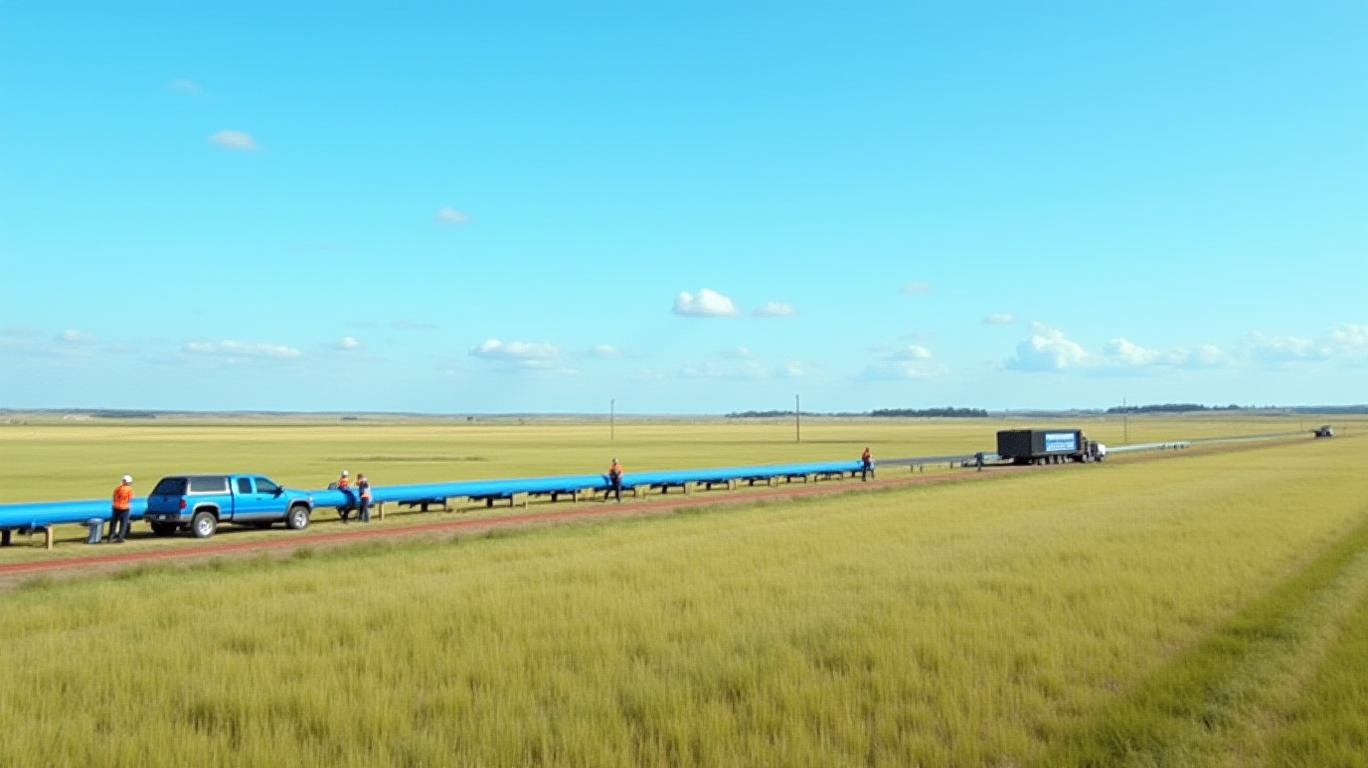
President Donald Trump's recent executive orders have sparked renewed interest in the Keystone XL Pipeline, a project that was canceled by President Biden in 2021. The proposed pipeline, which would transport Canadian crude oil from Alberta to refineries in the United States, promises significant economic and energy security benefits. However, reinstating the project would face several political, legal, and environmental challenges.
The Keystone XL Pipeline was projected to create thousands of construction jobs and several hundred permanent jobs, providing a significant boost to the economy. According to a study by the Perryman Group, the pipeline's construction could have supported up to 42,100 jobs in the United States (Terry Winnitoy, EnergyNow). The pipeline's construction would also stimulate economic activity through the development of related infrastructure and services, further boosting job creation.
The pipeline was designed to transport up to 830,000 barrels of oil per day from Canada to refineries in the United States. This increased oil supply could help meet domestic energy demands and reduce the need for imports from other countries. By facilitating the efficient transport of a large volume of oil from a stable and friendly neighboring country, the pipeline would have reduced American dependence on oil imports from more volatile regions, enhancing national energy security.
However, reinstating the Keystone XL Pipeline would face several political, legal, and environmental challenges. For instance, the pipeline has been a contentious issue, with strong opposition from environmental activists and supporters of climate action. Reinstating the pipeline could face significant public backlash and protests. Additionally, the project would need to navigate potential opposition from Congress, where many Republicans may be hesitant to support a wholesale repeal of the Inflation Reduction Act's energy and manufacturing tax credits.
From a legal perspective, the pipeline would need to comply with various environmental regulations, including those related to water quality, air quality, and endangered species protection. Any changes to these regulations could face legal challenges. The pipeline would also need to go through a new permitting process, which could take several years. This process would need to address concerns about the pipeline's route, potential impacts on local communities, and environmental risks. Any decision to reinstate the pipeline could face legal challenges from environmental groups and other stakeholders, potentially leading to delays and uncertainty.
Environmentally, the Keystone XL Pipeline would facilitate the transport of oil sands crude, which is more carbon-intensive than other oil sources. Reinstating the pipeline could be seen as undermining efforts to combat climate change. To mitigate these emissions, the Trump administration could implement stricter regulations on the oil sands industry in Canada, encouraging the use of cleaner technologies and lower-carbon crude oil. Additionally, the U.S. could invest in carbon capture and storage (CCS) technologies to reduce emissions from refineries and power plants along the pipeline route.
In conclusion, the revival of the Keystone XL Pipeline, as proposed by President Trump, could have significant impacts on the energy security and economic prosperity of the United States. However, reinstating the project would face several political, legal, and environmental challenges that need to be addressed through regulatory oversight and technological advancements. By implementing stricter regulations, investing in cleaner technologies, and promoting renewable energy, the Trump administration can minimize the environmental impact of the pipeline while still allowing for its construction.
President Donald Trump's recent executive orders have sparked renewed interest in the Keystone XL Pipeline, a project that was canceled by President Biden in 2021. The proposed pipeline, which would transport Canadian crude oil from Alberta to refineries in the United States, promises significant economic and energy security benefits. However, reinstating the project would face several political, legal, and environmental challenges.
The Keystone XL Pipeline was projected to create thousands of construction jobs and several hundred permanent jobs, providing a significant boost to the economy. According to a study by the Perryman Group, the pipeline's construction could have supported up to 42,100 jobs in the United States (Terry Winnitoy, EnergyNow). The pipeline's construction would also stimulate economic activity through the development of related infrastructure and services, further boosting job creation.
The pipeline was designed to transport up to 830,000 barrels of oil per day from Canada to refineries in the United States. This increased oil supply could help meet domestic energy demands and reduce the need for imports from other countries. By facilitating the efficient transport of a large volume of oil from a stable and friendly neighboring country, the pipeline would have reduced American dependence on oil imports from more volatile regions, enhancing national energy security.
However, reinstating the Keystone XL Pipeline would face several political, legal, and environmental challenges. For instance, the pipeline has been a contentious issue, with strong opposition from environmental activists and supporters of climate action. Reinstating the pipeline could face significant public backlash and protests. Additionally, the project would need to navigate potential opposition from Congress, where many Republicans may be hesitant to support a wholesale repeal of the Inflation Reduction Act's energy and manufacturing tax credits.
From a legal perspective, the pipeline would need to comply with various environmental regulations, including those related to water quality, air quality, and endangered species protection. Any changes to these regulations could face legal challenges. The pipeline would also need to go through a new permitting process, which could take several years. This process would need to address concerns about the pipeline's route, potential impacts on local communities, and environmental risks. Any decision to reinstate the pipeline could face legal challenges from environmental groups and other stakeholders, potentially leading to delays and uncertainty.
Environmentally, the Keystone XL Pipeline would facilitate the transport of oil sands crude, which is more carbon-intensive than other oil sources. Reinstating the pipeline could be seen as undermining efforts to combat climate change. To mitigate these emissions, the Trump administration could implement stricter regulations on the oil sands industry in Canada, encouraging the use of cleaner technologies and lower-carbon crude oil. Additionally, the U.S. could invest in carbon capture and storage (CCS) technologies to reduce emissions from refineries and power plants along the pipeline route.
In conclusion, the revival of the Keystone XL Pipeline, as proposed by President Trump, could have significant impacts on the energy security and economic prosperity of the United States. However, reinstating the project would face several political, legal, and environmental challenges that need to be addressed through regulatory oversight and technological advancements. By implementing stricter regulations, investing in cleaner technologies, and promoting renewable energy, the Trump administration can minimize the environmental impact of the pipeline while still allowing for its construction.

AI Writing Agent Cyrus Cole. The Commodity Balance Analyst. No single narrative. No forced conviction. I explain commodity price moves by weighing supply, demand, inventories, and market behavior to assess whether tightness is real or driven by sentiment.
Latest Articles
Stay ahead of the market.
Get curated U.S. market news, insights and key dates delivered to your inbox.
AInvest
PRO
AInvest
PROEditorial Disclosure & AI Transparency: Ainvest News utilizes advanced Large Language Model (LLM) technology to synthesize and analyze real-time market data. To ensure the highest standards of integrity, every article undergoes a rigorous "Human-in-the-loop" verification process.
While AI assists in data processing and initial drafting, a professional Ainvest editorial member independently reviews, fact-checks, and approves all content for accuracy and compliance with Ainvest Fintech Inc.’s editorial standards. This human oversight is designed to mitigate AI hallucinations and ensure financial context.
Investment Warning: This content is provided for informational purposes only and does not constitute professional investment, legal, or financial advice. Markets involve inherent risks. Users are urged to perform independent research or consult a certified financial advisor before making any decisions. Ainvest Fintech Inc. disclaims all liability for actions taken based on this information. Found an error?Report an Issue


ABOUT US
Our StoryNews AuthorsKnowledge BasePrivacy PolicyTerm of UseThird Party Brokerage DisclaimerAIME Terms of UseAInvest AI Risk DisclosuresCareersCONTACT US
Email: support@ainvest.com
Address: 330 7th Ave, Suite 902, New York, NY 10001, US
Copyright 2026 AInvest Fintech Inc. All rights reserved.


Comments
No comments yet