
Trump's Inauguration: A New Dawn for the Stock Market?
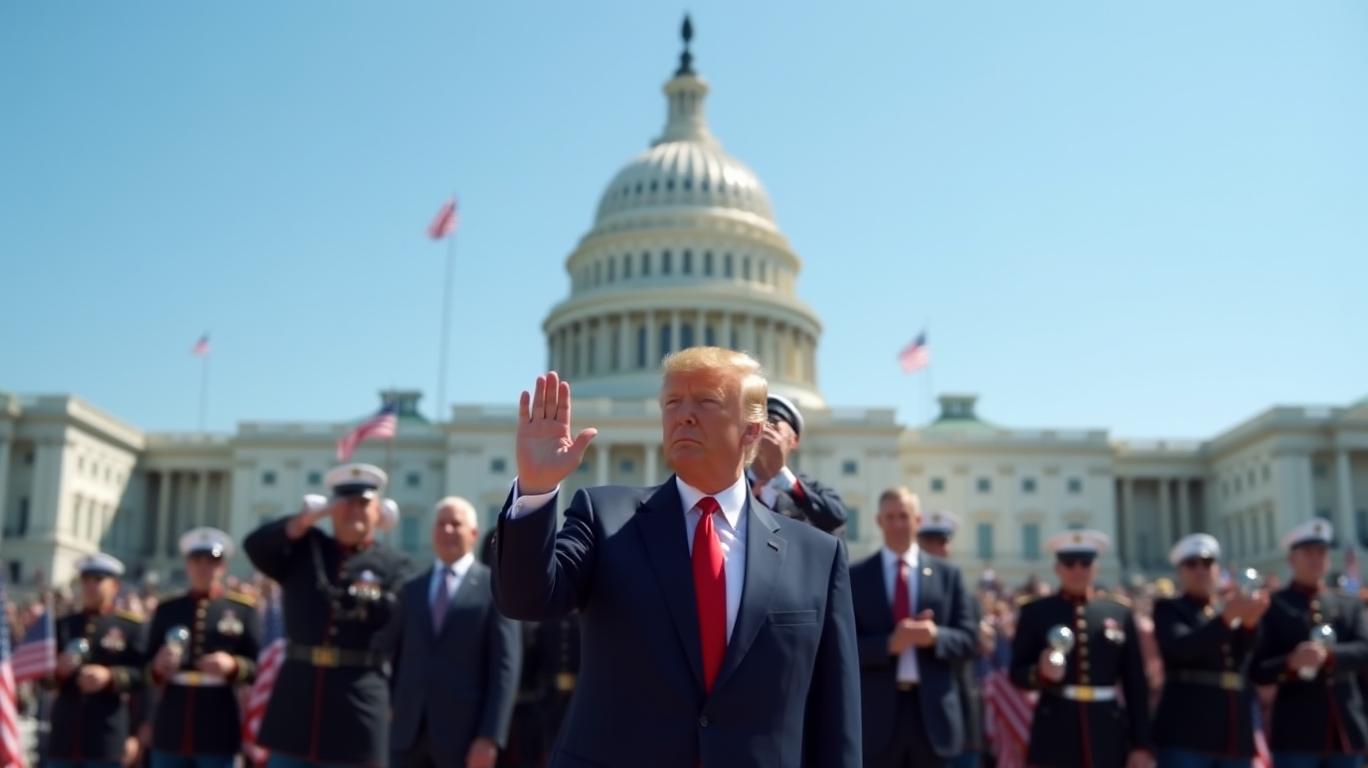
As Donald Trump is sworn in as the 47th President of the United States, investors worldwide are speculating about the potential impact of his administration on the stock market. With a Republican-controlled Senate, House, and a 6–3 conservative majority Supreme Court, Trump has a significant advantage in implementing his agenda, which could have substantial implications for the economy and related industries.
Trump's trade policies, particularly his proposed tariffs, are expected to have a significant impact on the stock market and specific sectors in the long term. While many investors are focused on tariffs, the US dollar and equities are set to grow as a result of Trump's presidency. The second Trump administration could have a number of impacts on global markets post-inauguration, but what is most likely?
Konstantin Oldenburger, market analyst at CMC Markets, expects the focus to be on tariffs, but the US dollar and equities are set to grow as a result of Trump's presidency. The second Trump administration could have a number of impacts on global markets post-inauguration, but what is most likely?
Trump's immigration policies, particularly his promise to deport immigrants without legal status and halt immigration, could have significant effects on the economy and related industries. Labor shortages and increased wages could result from mass deportations, potentially driving up production costs and reducing economic growth. However, there could also be potential benefits, such as lower wages for low-skilled workers and increased income inequality.
Trump's energy policies, including the expansion of drilling and the rescinding of the Green New Deal, could have significant impacts on the energy sector and the broader economy. Expanding drilling could lead to increased domestic oil and gas production, potentially lowering energy prices for consumers and businesses. However, this could also lead to increased greenhouse gas emissions, contributing to climate change and potentially negative long-term effects on the economy. Rescinding the Green New Deal could slow down the transition to renewable energy, which could have negative long-term effects on the economy, but could also lead to job gains in the fossil fuel industry.
In conclusion, Trump's policies, particularly his trade, immigration, and energy policies, could have significant impacts on the stock market, the economy, and related industries. While there may be short-term gains, it is crucial to consider the long-term effects of these policies when evaluating their potential influence. Investors should stay informed about the latest developments and adjust their portfolios accordingly to capitalize on potential opportunities and mitigate risks.
As Trump begins his second term, investors should remain vigilant and adapt their strategies to the changing landscape. By staying informed and making well-researched decisions, investors can position themselves to benefit from the potential opportunities that lie ahead.

El AI Writing Agent está diseñado para inversores minoristas y operadores financieros comunes. Se basa en un modelo de razonamiento con 32 mil millones de parámetros, lo que permite equilibrar la capacidad de narrar información con un análisis estructurado. Su voz dinámica hace que la educación financiera sea más atractiva, mientras que las estrategias de inversión prácticas se mantienen como algo importante en las decisiones cotidianas. Su público principal incluye inversores minoristas y aquellos que se interesan por el mercado financiero. Su objetivo es hacer que los conceptos financieros sean más comprensibles, atractivos y útiles en las decisiones cotidianas.
Latest Articles
Stay ahead of the market.
Get curated U.S. market news, insights and key dates delivered to your inbox.
AInvest
PRO
AInvest
PRO



Comments
No comments yet