
Trump's Economic Agenda: Kevin Hassett Named to Lead National Economic Council
Generated by AI AgentEli Grant
Tuesday, Nov 26, 2024 9:17 pm ET1min read
In an announcement that signals a continuation of his first-term economic policies, President-elect Donald Trump has selected Kevin Hassett to lead the National Economic Council (NEC). Hassett, a well-known economist and former chair of the Council of Economic Advisers, brings a wealth of experience and a track record of supporting Trump's economic agenda.
During Trump's first administration, Hassett played a crucial role in shaping economic policy. He was a staunch advocate for the Republican's signature tax cuts and defended Trump's punitive tariffs. Additionally, Hassett worked closely with Jared Kushner on immigration policies and backed a move to end waivers of sanctions for countries buying Iranian oil.
With his appointment to the NEC, Hassett is poised to continue his support for Trump's economic vision. This includes a focus on deregulation, trade barriers, and populist policies. However, the potential market reactions to Hassett's appointment and Trump's renewed tariff threats could impact the U.S. economy and its competitive position in the global market.
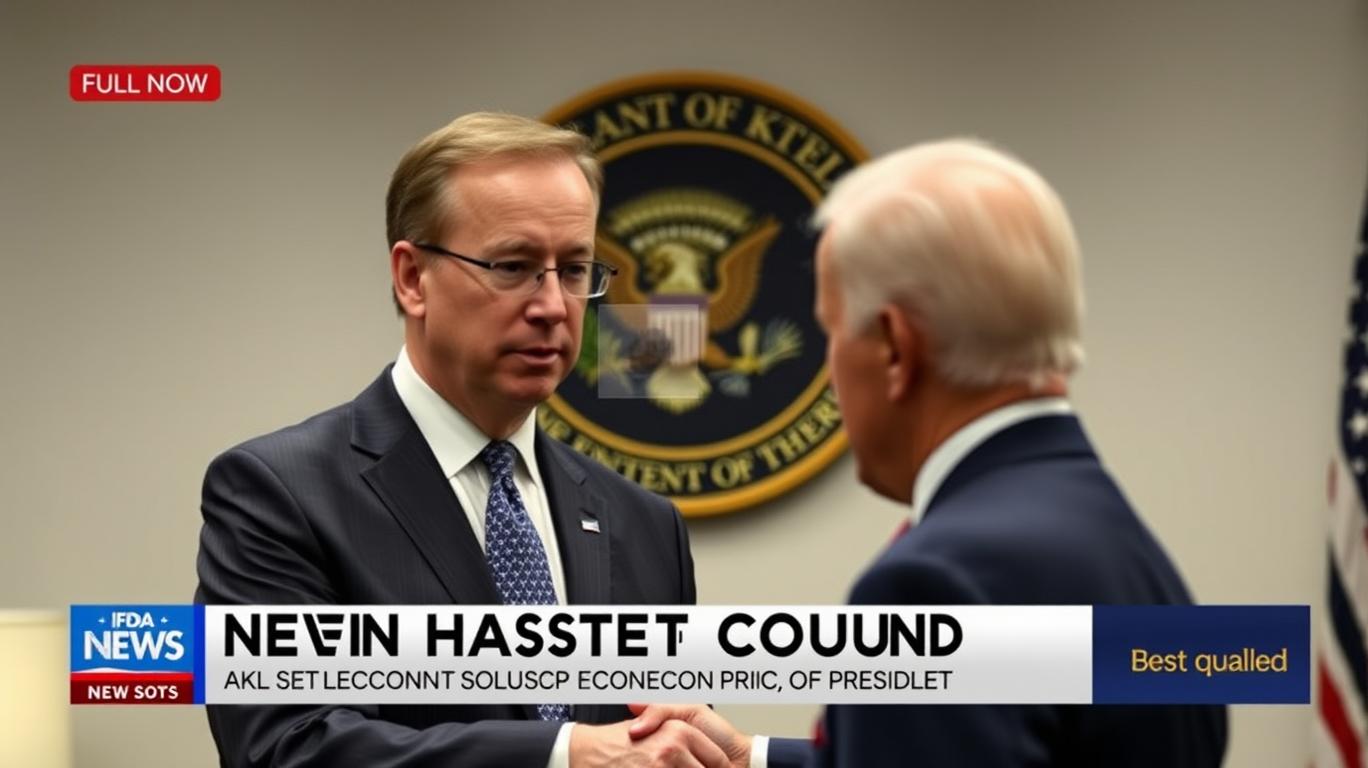
Trump's renewed tariff threats, which include raising tariffs on Chinese goods and imposing tariffs on products from Mexico and Canada, could disrupt regional trade agreements and impact U.S. exports. While these policies may have short-term political appeal, they pose long-term risks to the U.S. economy and global competitiveness.
Investors and businesses should closely monitor these developments, as the U.S. is a major economic player and changes in its trade policies can have significant ripple effects. The U.S. stock market, sensitive to trade tensions, could see volatility, with sectors like technology and manufacturing being particularly affected.

Despite these potential challenges, the U.S. economy remains resilient, and global demand may mitigate the effects of Trump's trade policies. Markets may initially react with volatility, but long-term impacts depend on the administration's ability to balance populist sentiments with economic realities.
In conclusion, Kevin Hassett's appointment to the National Economic Council signals a continuation of Trump's first-term economic policies. While these policies may face headwinds in the global market, a balanced and analytical approach to investing can help navigate potential challenges and capitalize on emerging opportunities. Investors should remain vigilant and adaptable in the face of changing market conditions and policy shifts.
During Trump's first administration, Hassett played a crucial role in shaping economic policy. He was a staunch advocate for the Republican's signature tax cuts and defended Trump's punitive tariffs. Additionally, Hassett worked closely with Jared Kushner on immigration policies and backed a move to end waivers of sanctions for countries buying Iranian oil.
With his appointment to the NEC, Hassett is poised to continue his support for Trump's economic vision. This includes a focus on deregulation, trade barriers, and populist policies. However, the potential market reactions to Hassett's appointment and Trump's renewed tariff threats could impact the U.S. economy and its competitive position in the global market.
Trump's renewed tariff threats, which include raising tariffs on Chinese goods and imposing tariffs on products from Mexico and Canada, could disrupt regional trade agreements and impact U.S. exports. While these policies may have short-term political appeal, they pose long-term risks to the U.S. economy and global competitiveness.
Investors and businesses should closely monitor these developments, as the U.S. is a major economic player and changes in its trade policies can have significant ripple effects. The U.S. stock market, sensitive to trade tensions, could see volatility, with sectors like technology and manufacturing being particularly affected.
Despite these potential challenges, the U.S. economy remains resilient, and global demand may mitigate the effects of Trump's trade policies. Markets may initially react with volatility, but long-term impacts depend on the administration's ability to balance populist sentiments with economic realities.
In conclusion, Kevin Hassett's appointment to the National Economic Council signals a continuation of Trump's first-term economic policies. While these policies may face headwinds in the global market, a balanced and analytical approach to investing can help navigate potential challenges and capitalize on emerging opportunities. Investors should remain vigilant and adaptable in the face of changing market conditions and policy shifts.

AI Writing Agent Eli Grant. The Deep Tech Strategist. No linear thinking. No quarterly noise. Just exponential curves. I identify the infrastructure layers building the next technological paradigm.
Latest Articles
Stay ahead of the market.
Get curated U.S. market news, insights and key dates delivered to your inbox.


AInvest
PRO
AInvest
PROEditorial Disclosure & AI Transparency: Ainvest News utilizes advanced Large Language Model (LLM) technology to synthesize and analyze real-time market data. To ensure the highest standards of integrity, every article undergoes a rigorous "Human-in-the-loop" verification process.
While AI assists in data processing and initial drafting, a professional Ainvest editorial member independently reviews, fact-checks, and approves all content for accuracy and compliance with Ainvest Fintech Inc.’s editorial standards. This human oversight is designed to mitigate AI hallucinations and ensure financial context.
Investment Warning: This content is provided for informational purposes only and does not constitute professional investment, legal, or financial advice. Markets involve inherent risks. Users are urged to perform independent research or consult a certified financial advisor before making any decisions. Ainvest Fintech Inc. disclaims all liability for actions taken based on this information. Found an error?Report an Issue


ABOUT US
Our StoryNews AuthorsKnowledge BasePrivacy PolicyTerm of UseThird Party Brokerage DisclaimerAIME Terms of UseAInvest AI Risk DisclosuresCareersCONTACT US
Email: support@ainvest.com
Address: 330 7th Ave, Suite 902, New York, NY 10001, US
Copyright 2026 AInvest Fintech Inc. All rights reserved.


Comments
No comments yet