
Trump revokes $4.9B loan for Grain Belt wind transmission project amid political backlash
 Aime Summary
The $11 billion Grain Belt Express, the largest electric transmission project in U.S. history, is now under threat after the Trump administration revoked its $4.9 billion federal loan guarantee [1]. The 800-mile line, designed to stretch from Kansas to Indiana, would carry clean energy from the central U.S. “wind belt” to the populous Midwest and beyond. With 95% of land acquisition completed and state permits approved, the project has been largely advanced by developer Invenergy [1].
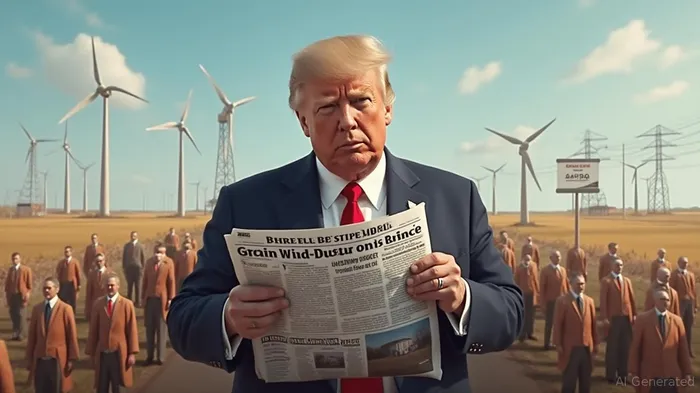
However, the administration’s decision, made in late July, has raised concerns that politics are being used to suppress renewable energy infrastructure [1]. The official reasons cited included rushed approvals under the Biden administration and concerns over “eminent domain” land purchases. Yet, President Trump’s well-documented opposition to wind energy appears to be a key factor in the move. Trump has repeatedly criticized wind turbines, calling them “the worst form of energy” and asserting that “windmills should not be allowed” [1].
Political opposition to the project has surged, particularly in Missouri, where Republican U.S. Senator Josh Hawley and Republican State Attorney General Andrew Bailey have labeled it a “reckless green energy scam.” Hawley reportedly pushed for the revocation of the loan guarantee by lobbying Energy Secretary Chris Wright and Trump [1]. Invenergy responded by arguing that the cancellation undermines the country’s ability to build major infrastructure, stating that “America will lose the test of its will to build” [1].
The administration’s stance has also drawn criticism from industry experts. Jason Grumet, CEO of the American Clean Power Association, said the government’s actions are attacking both clean energy generation and the infrastructure that supports it. He emphasized that “you can’t give electrons a [political] loyalty test to decide whether or not they belong on the nation’s electric grid” [1]. The Department of Energy defended its decision by stating the loan guarantee was unnecessary and could become a taxpayer liability, adding that it would continue to support projects that enhance grid reliability and reduce energy costs [1].
Despite the setback, Invenergy remains committed to proceeding with the project on a private financing basis. The company argues that Grain Belt will advance Trump’s vision of American energy and technological dominance while creating jobs and lowering energy costs [1]. Still, the uncertainty caused by the administration’s actions has already had ripple effects. Quanta ServicesPWR--, Invenergy’s construction contractor, opted not to include the project in its official project backlog, citing the political risks [1].
Industry analysts highlight the growing need for new transmission infrastructure to meet rising electricity demands—particularly from sectors like AI and data centers. Brett Castelli, an energy analyst with MorningstarMORN--, noted that while transmission construction spending is at an all-time high, spending on new lines is near a decade low due to a focus on modernization rather than expansion [1]. He emphasized that more projects like SunZia and Grain Belt are essential to keep pace with demand.
Grumet reiterated that the only way forward is for the government to support private sector-led infrastructure development. “The only way we’re going to build big infrastructure and modernize the country is if we return to this idea that the government should support the private sector and build any infrastructure the country needs,” he said [1].
The Grain Belt Express project has now become a litmus test for the U.S.’s ability to build large-scale infrastructure in a polarized political environment. Its success or failure could shape the future of energy policy and the broader national ambition to secure a stable and clean energy supply.
Source: [1] Trump’s hatred of wind energy means ‘America will lose the test of its will to build,’ says company whose project was targeted by the White House (https://fortune.com/2025/08/14/grain-belt-express-wind-transmission-trump-white-house/)

Stay ahead of the market.
Get curated U.S. market news, insights and key dates delivered to your inbox.
AInvest
PRO
AInvest
PRO



Comments
No comments yet