
Trump Revives GENIUS Act Support 11-12 House Republicans Back Cryptocurrency Bills
 Aime Summary
President Donald Trump has successfully convinced Republican lawmakers to back the GENIUS Act and other cryptocurrency-related bills, marking a significant turnaround in the legislative process. After a meeting with 11 out of 12 representatives in the Oval Office, Trump announced that the lawmakers agreed to vote in favor of the GENIUS Act, the CLARITY Act, and the Anti-CBDC Surveillance Act. The House vote, initially delayed, has been rescheduled for midday today. The GENIUS Act, formally known as the Guiding and Establishing National Innovation for U.S. Stablecoins Act, aims to provide a regulatory framework for stablecoins and other digital assets.
The main reason behind the initial withdrawal of support was concerns regarding the lack of a "hard ban" on central bank digital currencies (CBDCs). Republican Marjorie Taylor Green expressed her dissatisfaction, stating that the GENIUS Act does not align with President Trump's executive order because it does not ban a CBDC. Additionally, several lawmakers wanted to combine the GENIUS Act with the other two bills, which contributed to the delay. However, Trump's intervention during a late-evening meeting with Republicans at the White House appeared to revive the bills, with the House agreeing to expedite the GENIUS Act while setting aside its own stablecoin legislation, known as the STABLE Act.
The GENIUS Act has garnered bipartisan support in the Senate, with several Democrats joining most Republicans in backing the proposed federal rules. This indicates a broad consensus on the need for regulatory clarity in the cryptocurrency space. Trump, who has pledged to position the U.S. as the global "crypto capital," sees the passage of these bills as a significant step towards achieving this goal. However, the path to passage was not without obstacles. A group of 211 House Republicans voted against an amendment that was attached to a cryptocurrency and defense budget bill, raising questions about the legitimacy of their opposition. This move was seen by some as political theater, given the high stakes involved in cryptocurrency regulation.
The Senate's role in this legislative process remains crucial. While the House has shown willingness to advance the GENIUS Act, the Senate has yet to fully endorse the bill. The outcome in the Senate will determine the final shape of the legislation and its impact on the cryptocurrency industry. Trump's influence and the bipartisan support in the Senate suggest that the GENIUS Act has a strong chance of becoming law, potentially reshaping the regulatory landscape for digital assets in the U.S. The passage of these bills would provide much-needed regulatory clarity for the cryptocurrency industry, which has long been seeking a clear framework for stablecoins and other digital assets. The outcome of the vote will be closely watched by industry stakeholders and policymakers alike, as it could set the tone for future cryptocurrency regulation in the U.S. 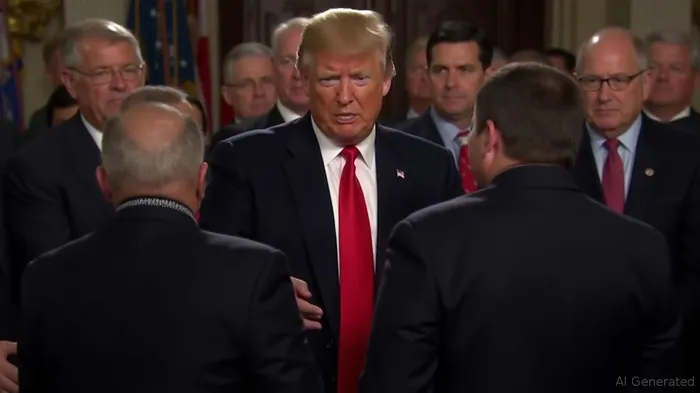

Stay ahead of the market.
Get curated U.S. market news, insights and key dates delivered to your inbox.


AInvest
PRO
AInvest
PRO



Comments
No comments yet