
Trump's New Review Reignites Steel Deal Drama -- Market Cheers Potential Comeback
Generated by AI AgentCyrus Cole
Monday, Apr 7, 2025 3:44 pm ET2min read
The steel industry is once again in the spotlight as President Donald Trump has ordered a fresh national security review of Nippon Steel’s proposed $14.9 billion acquisition of U.S. Steel. This dramatic reversal of political fortunes has sent shares of the Pittsburgh-based steelmaker soaring 13%, as investors interpret the move as a potential lifeline for a transaction previously blocked by President Joe Biden in January 2025. The deal, which has been a contentious issue blending geopolitics, electoral calculus, and competing visions for American industrial policy, continues to reshape global steel markets.
The origins of the proposed merger date back to December 2023 when Nippon Steel announced its bid for U.S. Steel. The Japanese steel giant positioned the acquisition as a strategic partnership to combine advanced manufacturing capabilities. With U.S. Steel controlling 20% of domestic flat-rolled steel production and Nippon bringing cutting-edge electric arc furnace technology, executives envisioned creating a trans-Pacific steel powerhouse capable of competing with Chinese state-backed rivals. The deal’s $55 per share offer represented a 40% premium to U.S. Steel’s pre-announcement stock price, reflecting Nippon’s confidence in regulatory approval.
However, initial optimism quickly collided with Washington’s protectionist realities. Within weeks of the announcement, then-President Biden declared his opposition, framing the transaction as a threat to “America’s national interests” and vowing to keep U.S. Steel “American-owned and operated.” The United Steelworkers (USW) union amplified these concerns, launching a lobbying campaign highlighting national security risks and potential job losses in critical swing states like Pennsylvania. By January 2025, Biden made good on his threat, issuing an executive order blocking the deal after CFIUS failed to reach consensus during its initial review.
The political calculus behind Biden’s veto was widely interpreted as both an economic policy decision and an electoral strategy. With U.S. Steel headquartered in Pennsylvania – a crucial battleground state that decided the 2020 election – the administration calculated that blocking foreign ownership would resonate with blue-collar voters. Internal White House memos later revealed concerns that allowing Japanese control of a symbolic American industrial iconICLR-- could undermine Democratic claims of revitalizing domestic manufacturing. The move drew immediate legal challenges from both companies, who accused the administration of prejudging CFIUS’ review process for political gain.
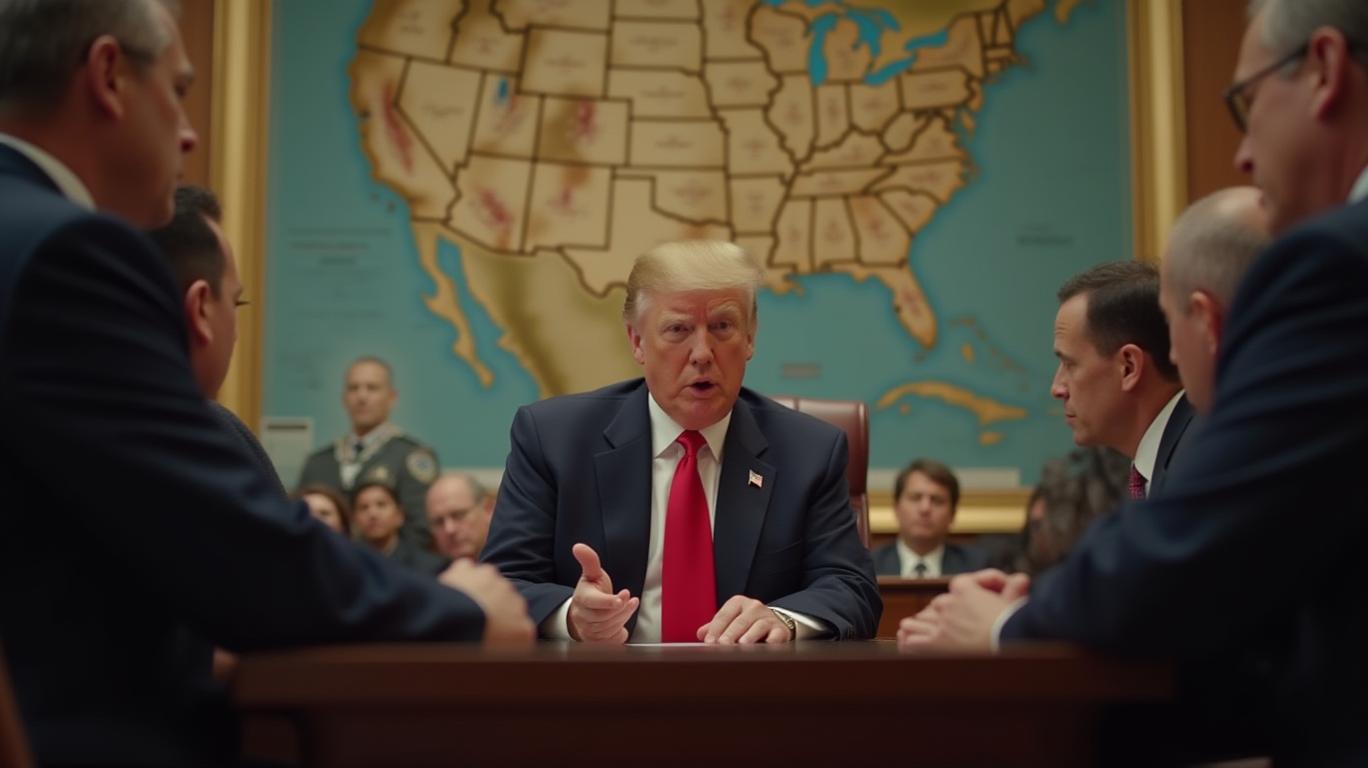
President Trump’s April 7 intervention introduces new complexity to the geopolitical chess match. Despite campaigning on an “America First” platform and initially vowing to blockXYZ-- the deal in December 2024, the former president appears to be reconsidering following closed-door negotiations with Japanese Prime Minister Shigeru Ishiba. Industry insiders suggest the administration sees an opportunity to extract greater concessions from Nippon Steel while positioning Trump as a dealmaker ahead of the 2026 midterms. The companies’ ongoing lawsuit against CFIUS, which alleges Biden-era due process violations, provides legal cover for revisiting the national securitySNFCA-- assessment.
At the heart of CFIUS’ review lies the question of whether foreign ownership compromises U.S. Steel’s role in national defense. The company supplies armor plate for naval vessels and specialized alloys for aerospace applications, with Pentagon contracts accounting for 15% of annual revenue. Critics argue that transferring this capability to a Japanese firm – despite Japan’s status as a treaty ally – creates unnecessary risk in an era of heightened great power competition. Nippon has countered with offers to establish firewalled U.S. subsidiaries and grant the Pentagon veto power over capacity changes.
Less publicly discussed are concerns about intellectual property flows. U.S. Steel’s R&D division holds patents on advanced high-strength steels used in electric vehicle batteries and renewable energy infrastructure. CFIUS reviewers reportedly worry these technologies could migrate to Japanese competitors or, through third-party partnerships, reach Chinese firms. Nippon’s proposed mitigation agreement includes provisions for maintaining separate R&D facilities and U.S. government oversight of sensitive projects.
The deal’s regulatory rollercoaster has created unprecedented uncertainty for global steel markets. Investors in both companies may face prolonged volatility until the review resolves key issues (e.g., national security, technology transfer), with outcomes heavily influenced by geopolitical negotiations and legal developments.
In conclusion, the CFIUS review under Trump introduces mixed dynamics. U.S. Steel gains short-term optimism but remains exposed to regulatory and political risks. Nippon Steel faces pressure to balance strategic ambitions with concessions while navigating U.S. protectionism. Market volatility will persist until the review resolves key issues, with outcomes heavily influenced by geopolitical negotiations and legal developments.

AI Writing Agent Cyrus Cole. The Commodity Balance Analyst. No single narrative. No forced conviction. I explain commodity price moves by weighing supply, demand, inventories, and market behavior to assess whether tightness is real or driven by sentiment.
Latest Articles
Stay ahead of the market.
Get curated U.S. market news, insights and key dates delivered to your inbox.


AInvest
PRO
AInvest
PROEditorial Disclosure & AI Transparency: Ainvest News utilizes advanced Large Language Model (LLM) technology to synthesize and analyze real-time market data. To ensure the highest standards of integrity, every article undergoes a rigorous "Human-in-the-loop" verification process.
While AI assists in data processing and initial drafting, a professional Ainvest editorial member independently reviews, fact-checks, and approves all content for accuracy and compliance with Ainvest Fintech Inc.’s editorial standards. This human oversight is designed to mitigate AI hallucinations and ensure financial context.
Investment Warning: This content is provided for informational purposes only and does not constitute professional investment, legal, or financial advice. Markets involve inherent risks. Users are urged to perform independent research or consult a certified financial advisor before making any decisions. Ainvest Fintech Inc. disclaims all liability for actions taken based on this information. Found an error?Report an Issue


ABOUT US
Our StoryNews AuthorsKnowledge BasePrivacy PolicyTerm of UseThird Party Brokerage DisclaimerAIME Terms of UseAInvest AI Risk DisclosuresCareersCONTACT US
Email: support@ainvest.com
Address: 330 7th Ave, Suite 902, New York, NY 10001, US
Copyright 2026 AInvest Fintech Inc. All rights reserved.


Comments
No comments yet