
Trump's Return Sparks 10% Value Stock Underperformance
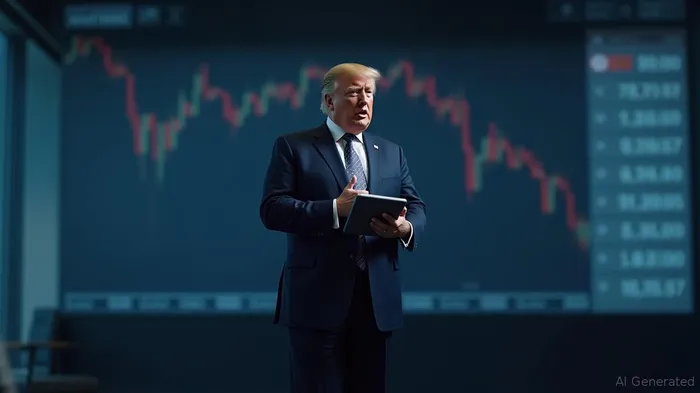
In the era of "Trump 2.0," macroeconomic trends have proven to be highly unpredictable, leaving many investors and traders scrambling to adapt. The return of Donald Trump to the political arena has introduced unprecedented levels of uncertainty, with policy shifts occurring rapidly and without clear direction. This has led to a situation where traditional macroeconomic strategies have become ineffective, and even the most seasoned traders are finding it difficult to keep up.
Trump's re-emergence has brought about a series of policy changes that have left the market in a state of flux. From fluctuating trade tariffs to sudden shifts in diplomatic relations and inconsistent tax policies, each new development has disrupted established trading strategies. For instance, Trump's recent outburst over the "TACO" trade deal and a legal ruling threatening his core tariff policies initially caused market jitters. However, strong corporate earnings and confidence in economic resilience eventually led to a rebound in risk appetite, demonstrating the market's resilience despite Trump's aggressive stance.
This rollercoaster ride of market reactions highlights a harsh reality: traditional macroeconomic investment strategies are no longer reliable. PriyaPRI-- Misra, an investment portfolio manager at Morgan StanleyMS--, commented, "Macro trading has never been easy, but it's become even more challenging now. You can bet on trends, but you must absolutely avoid being repeatedly hit by market swings."
The market's performance in May further underscored the failure of defensive strategies. In April, many investors turned to value stocks, put options, fixed-income hedging tools, and inflation-linked trades to hedge against risks. However, these strategies backfired in May, as U.S. Treasury prices plummeted, and market concerns over U.S. debt sustainability intensified. Defensive stocks underperformed cyclical stocks by 10 percentage points, marking one of the worst performances since the 2009 bull market began. Even popular volatility-linked tools, such as the two largest Cboe Volatility Index (VIX) related ETFs, saw declines of at least 25%, dealing a significant blow to investors who had rushed to buy these protective funds earlier in the year.
In the midst of this chaos, retail investors have surprisingly emerged as winners. Data shows that during the market lows in April, retail investors bought aggressively, and since May, over 100 million dollars has flowed into Vanguard S&P 500 ETF (VOO), a popular choice among retail investors. The S&P 500 index has risen 2% since Trump's election, but this figure masks significant volatility—missing the worst fiveFIVE-- days would result in a 20% return, while missing the best five days would lead to a 16% loss. This extreme market timing challenge has led many investors to conclude that trying to predict Trump's next move is futile, and that a more prudent approach is to simply observe and wait.
Ed Al-Hussainy, a rate strategist at Columbia Threadneedle, summed it up succinctly: "The biggest mistake traders make is underestimating the natural resilience of the economy." He quoted a military adage, "Slow is smooth, and smooth is fast," to remind his peers that aggressive trading often backfires in such volatile markets. In this environment, the best strategy may be to do nothing at all, allowing the market's inherent resilience to guide the way forward.

Stay ahead of the market.
Get curated U.S. market news, insights and key dates delivered to your inbox.




Comments
No comments yet